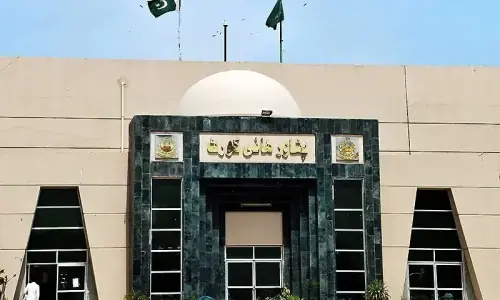
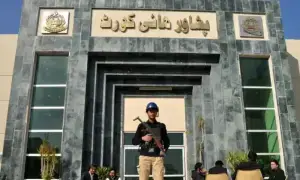
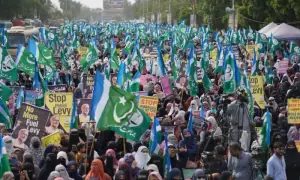
PESHAWAR: A Peshawar High Court bench on Friday admitted for hearing a writ petition filed by a member of the Pakhtun Tahaffuz Movement (PTM) requesting for quashing of a case registered against several leaders of the movement, including two members of the National Assembly.
The PTM leaders were charged with multiple offences, including rioting and removing the country’s flag from a building after a public meeting in Swabi, a few days ago.
The bench comprising Justice Qalandar Ali Khan and Justice Nasir Mahfooz issued notices to the Khyber Pakhtunkhwa home department, Swabi district police officer and the SHO concerned, asking them to submit relevant record of the case.
Petitioner Dr Mushtaq stated that though nothing objectionable had taken place in the Swabi public meeting on Aug 13 an FIR was registered at the Swabi police station against several leaders of PTM, including Manzoor Pashteen, Dr Said Alam Mehsud and MNAs Ali Wazir and Mohsin Dawar.
The FIR was registered under different sections of the Pakistan Penal Code, including 123-B (removing national flag from a building), 131 (seducing soldiers for mutiny), 147 (rioting), 149 (unlawful assembly), 153 (provocation to rioting), 341 (wrongful restraint) and 506 (criminal intimidation).
Advocate Muhammad Ayaz Khan, who appeared for the petitioner, contended that the FIR was based on rumours and not facts. He argued that the petitioner and other members of PTM had exercised their fundamental rights of freedom of expression. He said in the said public meeting nothing objectionable had taken place.
He contended that certain elements tried to provoke peaceful workers of PTM by trying to disrupt their public meeting, but the movement’s members remained peaceful. He said that no incident of removal of the national flag had taken place during that meeting. He argued that a fake case was lodged against the PTM leaders.
He pointed out that the superintendent of police (investigation), Swabi, had sent a letter to the administration of North and South Waziristan tribal districts asking them to arrest the said leaders as they had been absconding. He argued that none of these leaders had been absconding from law.
Published in Dawn, September 15th, 2018