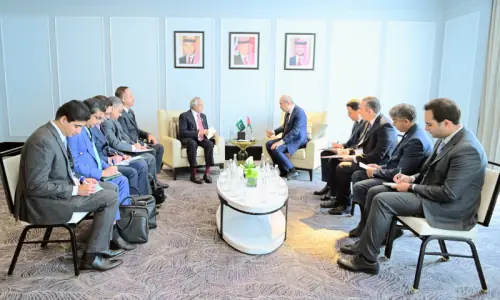
SEEMINGLY against the odds, the Afghanistan-Pakistan Action Plan for Peace and Solidarity has moved from a conceptual framework for bilateral engagement to the implementation phase. Based on seven principles and six working groups, APAPPS could create a much-needed stability in relations between Pakistan and Afghanistan and improve security, intelligence and economic cooperation between the two. Certainly, no quick or easy breakthroughs should be expected. Political uncertainty and worsening insecurity in Afghanistan when paired with a teetering democratic process in Pakistan is not a recipe for a stable environment in which incremental movement can be made towards peace and solidarity. Hard decisions lie ahead, trust will have to be established and both sides will need to demonstrate a willingness to compromise to achieve common goals. Quiet but intensive diplomacy and keeping discussions away from the media glare that can often lead to counterproductive posturing seem to have been key to the progress Afghanistan and Pakistan have made with APAPPS. Behind the scenes, it is likely that outside powers have nudged the South Asian neighbours towards the new dialogue format, which allows for movement in one area not to be affected by stalled talks in another.
Yet, no dialogue and no dialogue format will be able to overcome reluctance on the part of Afghanistan or Pakistan to address the core security problems. Afghanistan needs an intra-Afghan peace process to be urgently restarted while both countries must address the problem of cross-border militancy and military sanctuaries on the other’s soil. America’s recent decision to block Pakistan’s request in the UN to have the leader of the anti-Pakistan Jamaatul Ahrar, Umar Khorasani, listed by a UN sanctions committee will have deepened doubts whether reciprocal action is possible rather than just unilateral cooperative steps by Pakistan. Positive early gestures by Afghanistan and Pakistan could help pave the way to a sustainable dialogue that can address bigger issues. Also welcome is the emphasis that APAPPS appears to have laid on economic cooperation. Regional ties can only truly be made interdependent if geo-economic advantages are utilised. Afghanistan’s medium-term economic future is tied to the possibilities of trade regionally, while Pakistan’s CPEC infrastructure can and should be extended to neighbouring countries. The promise of APAPPS is its emphasis on Afghanistan and Pakistan forging a joint path to regional peace and solidarity. Too many years of war have gone by without meaningful attempts at a lasting peace. That must change.
Published in Dawn, May 17th, 2018