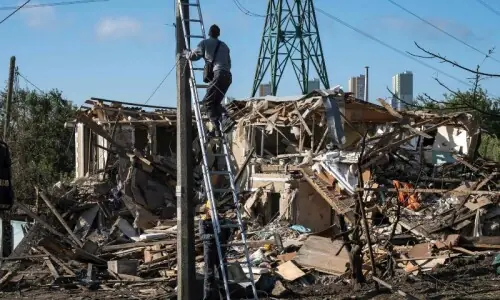
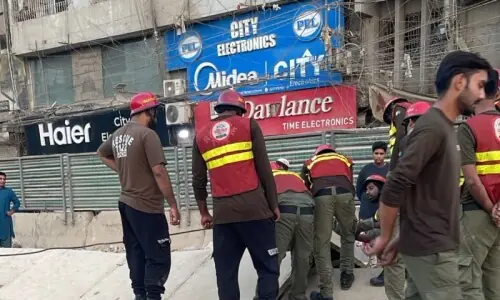
SURABAYA: A family of six including two young daughters staged suicide bombings at three Indonesian churches during Sunday services, killing at least 13 people and wounding dozens in attacks claimed by the militant Islamic State (IS) group.
The bombings at three churches in Surabaya were Indonesia’s deadliest for years, as the world’s biggest Muslim-majority country grapples with homegrown militancy and rising intolerance towards religious minorities.
The bombers — a mother and father, two daughters aged nine and 12, and two sons aged 16 and 18 — were linked to local extremist network Jamaah Ansharut Daulah (JAD) which supports IS, said national police chief Tito Karnavian.
Local media reports say they may have returned from Syria, where hundreds of Indonesians have flocked in recent years to fight alongside IS in its bid to carve out a caliphate ruled by Islamic law.
The mother, identified as Puji Kuswati, and her two daughters were wearing face veils and had bombs strapped to their waists as they entered the grounds of the Kristen Indonesia Diponegoro Church and blew themselves up, Karnavian said.
The father, JAD cell leader Dita Priyanto, drove a bomb-laden car into the Surabaya Centre Pentecostal Church while his sons rode motorcycles into Santa Maria church, where they detonated explosives they were carrying, Karnavian said.
“All were suicide attacks but the types of bombs are different,” he said.
The militant group, led by jailed radical Aman Abdurrahman, has been linked to several deadly incidents, including a 2016 gun and suicide attack in the capital Jakarta that left four attackers and four civilians dead. That was the first assault claimed by IS in Southeast Asia.
Police on Sunday said four suspected JAD members were killed in a shootout during raids linked to a deadly prison riot this week.
Five members of Indonesia’s elite anti-terrorism squad and a prisoner were killed in clashes that saw Islamist inmates take a guard hostage at a high-security jail on the outskirts of Jakarta. IS claimed responsibility.
Karnavian said Sunday’s attacks might have been revenge for the arrest of some of JAD’s leaders and for the prison crisis which eventually saw the surrender of the radical inmates.
“The incident angered them... and there were instructions from IS in Syria, so they waited for a moment to take revenge,” he added.
Published in Dawn, May 14th, 2018