Police 'encounters' indicate failure of criminal justice system: A.D. Khowaja



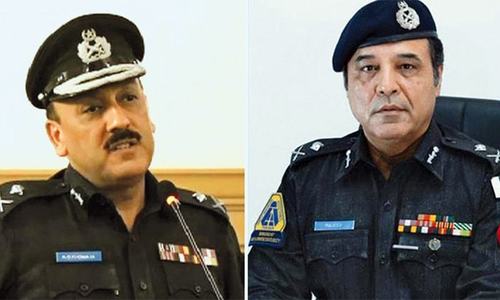
Sindh Inspector General (IG) of Police A.D. Khowaja on Saturday said that police 'encounters' indicate a failure of the criminal justice system as a whole and not of police.
Speaking at a seminar organised by the Citizens Police Liaison Committee (CPLC) titled Effective and Accountable Policing, the IG opined that it was ‘extremely difficult’ to strike a balance between effective policing, due process and people’s expectations.
Citing three recent high-profile cases namely Naqeebullah Mehsud, Intizar Ahmed and Maqsood — all of whom were killed in police shootouts — the IG admitted shortcomings on the part of police but also emphasised that this was perhaps the first time that police has offered itself for accountability before the judiciary and society.
Referring to civil society’s petitions through which he was granted ‘administrative autonomy’ over provincial police by the Supreme Court, Khowaja explained that transfers and postings were not the only jobs of the IG office and that his role also demands strategic planning.
He also complained about a lack of financial autonomy and wondered how the police could operate when its proposals for financing are declined.
The IG pointed out that six months ago, Rs10 million in compensation was announced for each martyred policeman but the Sindh home department has yet to honour that promise.
“We have serious problems but we have to improve efficiency and everybody has to play their role,” the IG said.
He remarked that policing was the responsibility of the entire community. Citing the Police Rules 1934, he said police's job is to assist the community in prevention and detection of crimes. If certain officers create problems, then "we have to work together to get rid of them".
“Together we have to stand for the rule of law,” he added.
Khowaja said policing was not an easy task and reminded his audience that 1,183 policemen have been killed in Sindh since 2007, with a bulk of the deaths taking place in Karachi.
Meanwhile, DIG South Azad Khan while giving a presentation about Naqeebullah Mehsud, Intizar and Maqsood murder cases said that the police officials involved in the incidents have been proceeded against under criminal charges and departmental proceedings.
“Positive criticism is always welcome, however, undue criticism lowers the morale of police and has a negative bearing on police performance and law and order,” he said.
Sindh police are currently in a transition from regime policing to "democratic policing" and need strong public support in this regard, he said.
DIG Khan regretted that police are still being governed by the Police Act of 1861, which was not consistent with principles of democratic policing and suggested promulgation of a ‘modern’ law that made police truly accountable before the law and public.