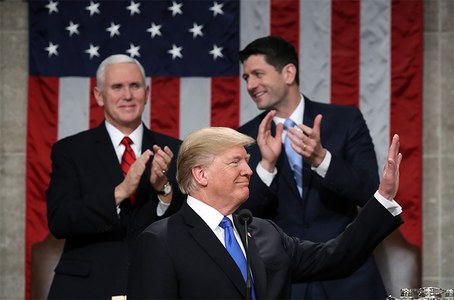
US PRESIDENT Donald Trump’s first State of the Union address was an opportunity to allay the anxieties of much of the outside world that has been roiled by a presidency that veers from isolationism to threatening behaviour. It was a missed opportunity.
While Mr Trump’s speech has been received relatively positively inside the US and the president was disciplined enough to read from a prepared script, there were enough signals to suggest that the disruption unleashed by his administration in many parts of the world will not abate.
Three particular international issues stood out.
On the decision to move the US embassy in Israel to Jerusalem, an occupied city that the majority of countries have refused to move their embassies to, Mr Trump threatened an aid cut-off to those who opposed the US move in the UN. The very idea that countries must automatically align themselves with America’s divisive policies is anathema to national sovereignty. Pakistan has already faced an aid cut-off for separate reasons, but, as the US media has noted, if Mr Trump is to deliver on his promise, Congress would have to authorise a cut-off of aid to Afghanistan, Iraq, Egypt and Jordan. That is unlikely and calls into question the value and purpose of Mr Trump’s threat. Is it really worth aggravating other states merely because of pique, arrogance and disdain?
Similarly, Mr Trump again attacked the Iran nuclear deal, demanding that Congress address unspecified critical flaws in the consensus document. Congress and Mr Trump both appear to be fundamentally hostile to the idea of any deal with Iran, no matter how meticulously crafted.
Read: Trump keeps Iran nuclear deal, for now
But it is difficult to reject a deal when other countries party to it, many of them close allies of the US, are committed to upholding the agreement. The possibility of Mr Trump petulantly deciding to unilaterally scrap the Iran nuclear agreement could have damaging repercussions, but it may yet happen.
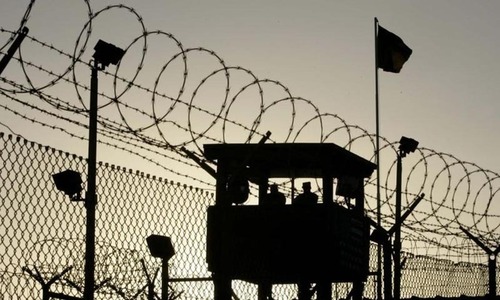
Finally, the decision to add to the prison population of Guantanamo reverses former president Barack Obama’s halting and ultimately failed effort to close down the facility. From a constitutional and human rights perspective, Guantanamo has posed a challenge to the rule of law in the US. But Guantanamo also became a rallying cry for jihadists and militants across the world. Its expanded use will undoubtedly further militant propaganda and could also boost the recruitment of militants.
The marginal benefit to the US in terms of seeming strong to its domestic population is surely overwhelmed by the negative external effects. The Guantanamo prison should be closed.
Published in Dawn, February 1st, 2018