LAHORE: “It is nobody else on this planet but him [Imran Ali]. The DNA shows a match and that is the gold standard,” says Dr Muhammad Ashraf Tahir, director general of the Punjab Forensic Science Agency (PFSA).
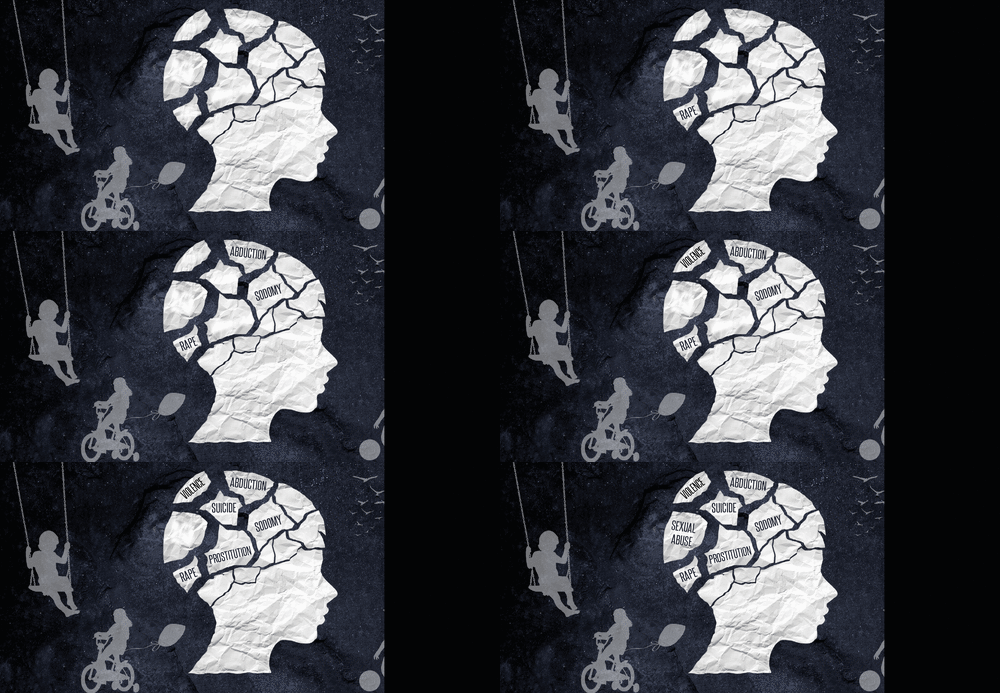
Dr Tahir is referring to the suspect in the rape and murder of eight-year-old Zainab Ameen. She was brutally raped and killed after being abducted from her neighbourhood in Kasur’s Road Kot area.
“Every contact leaves a trace, and forensic scientists find traces to make associations,” he adds.
But while the DG takes pride in the capabilities of his state-of-the-art forensics lab — a sprawling structure built in 2011 with a budget of Rs2.5 billion — he is frustrated by how little importance Pakistan’s criminal justice system assigns to evidence.
“Ocular evidence [eyewitness testimony] is considered number one in our courts, which is really ridiculous to hear because ocular evidence can be totally false,” he says.
“I have never seen a genuine eyewitness. And even if it is a genuine eyewitness, how can someone explain or recall for instance the colour of a shirt if the interaction has been for a short time? And here people claim that they have witnessed a murder in the dark of the night.”
He calls for a reshaping of the law to give priority to physical evidence. “Physical evidence is a silent witness in a court of law. Fingerprints, saliva etc speak against perpetrators.”
Hurdles in collection and dependence on police Senior scientist Nasir Siddique, who heads the DNA section at the PFSA, says there are challenges in the collection process.
“Our forensic teams are trained and equipped to collect and store samples. But in majority of the cases, doctors and police are the ones to send the evidence over to us,” says Siddique.
“They don’t send well-packaged, exact or timely evidence to our section. So, if there is a rape case for example, we need to correctly preserve swabs and clothing but the police often don’t perform the correct procedures,” he claims.
Manager of the pathology department at the agency, Dr Nasir Iqbal says the delays are detrimental to an investigation. “DNA samples should not be delayed.”
Dr Iqbal says the PFSA has satellite centres at the division level throughout Punjab. But they are only activated when the police inform the technical teams of the crime. “Our teams go to crime scenes and collect samples if they are informed but if the police don’t ask us to go, we cannot -- we are dependent on them.”
The DG also admits that in “at least 60pc of cases”, evidence is collected by police.
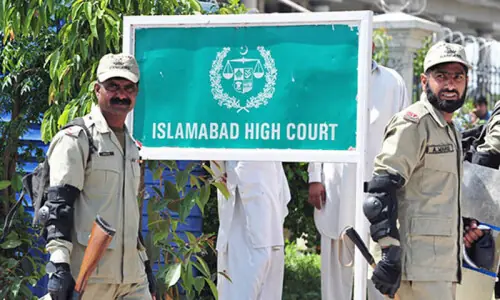
“We are a support service for law-enforcement agencies. We visit crime scenes upon request of police. A lot of times, the police don’t call us. In the beginning they were hesitant but now they are picking up,” says Dr Tahir.
He adds: “If samples are not collected properly, stored properly, packaged properly and evidence gets lost, the chances of solving cases are low.”
Dr Tahir says, however, that efforts have been made to train LEAs. The PFSA has trained 14,000 personnel in the last four years.
“It is in our benefit, because if we get the right evidence it is easy for us to work. Our existence is only on the basis of successful prosecution. If we cannot provide evidence for prosecution, this is a waste of money and resources,” he says.
Published in Dawn, January 25th, 2018