FOREIGN policy is an aspect of national policy. If national governance is dysfunctional foreign policy cannot deliver. This is because no coherent political framework for a successful foreign policy will be available. This is the norm in Pakistan.
As long as Pakistan’s military-intelligence complex (the ‘deep state’) overwhelms civil and political society in terms of per-capita resource allocations, strategic perceptions, and policy influence, the national perspective will remain distorted. This negatively impacts on foreign policy.
Those who see this state of affairs as a given that cannot be changed are wrong. Those who regard mere national survival as national resilience are equally wrong. Low expectations are a national curse. The prevalence of institutional agendas over national agendas has ensured national humiliation and isolation.
Elections alone can never transform bad governance into good governance. Without the rule of law, political accountability, and a sufficiently informed and minimally educated public opinion there can be no working democracy, including a credible foreign policy. Talking strategy becomes meaningless.
The importance of Pakistan is a function of its size, potential and location. The success of its foreign policy is a function of how it utilises these assets. Pakistan has a population of over 200 million which makes it a significant country. But its economy is externally dependent and its social indices are woeful.
Accordingly, Pakistan is a less than sovereign country. This excludes the possibility of an independent foreign policy whatever postures are adopted. The blame game substitutes for policy while extremism threatens to capture an increasingly soft state. India has a field day!
The success of the country’s foreign policy is a function of how it utilises its assets.
The potential of Pakistan is enormous. But it has been consistently wasted and is becoming irrelevant. Similarly, Pakistan’s location is strategically important. But if this is not made an asset it becomes a liability.
Pakistan has five neighbours: China, India, Iran, Afghanistan and the US which is a global neighbour. Except for China, Pakistan has relations ranging from unsatisfactory to dangerous with the other four. This places an enormous burden on the China-Pakistan relationship — a burden that, unless addressed, a globally emerging China could find too distracting, onerous and risky to sustain.
Pakistan is an important strategic partner for China. But an ungovernable Pakistan will not be able to maintain this partnership. CPEC is seen as a ‘soft option’ to industrialise and modernise without the leadership having to provide good governance, human resource development, political reform and capacity building.
India is the perennial enemy. But Pakistan seems to believe that merely blaming a blameworthy India, instead of maximising its longer-term foreign policy options through development, is good enough policy. Both India and Kashmir are inherently longer-term challenges for Pakistan. There are no short-term solutions. Moreover, there are no zero-sum solutions that favour Pakistan.
However, a corrupt and dishonest leadership will never speak this truth because it has not got the moral standing to inform the people about diplomatic, economic and military realities. It prefers to deceive them rather than develop the country to a point where it can negotiate with India and solicit international support for its stand on a more equal and effective basis. Should India remain arrogant and obdurate towards a more internationally credible Pakistan the world would increasingly take note of it.
But this requires an order of commitment and confidence that the leadership of Pakistan does not have. Next year being an election year a decrepit political system is unlikely to produce any leadership or policy improvement.
Afghanistan is a foreign policy embarrassment. President Ashraf Ghani made a courageous and even visionary attempt in 2014 to reorient Pak-Afghan relations in a positive direction. He was vulnerable at home. He needed a sustained positive response from Pakistan to overcome deep domestic opposition to Pakistan. India — a long-standing friend of the Kabul regime — was appalled at Ghani’s initiative towards Pakistan, which included initiating security and political cooperation.
But Pakistan was unable or unwilling to fulfil its promises to Ghani leaving him totally exposed to the fierce criticism of his bitter rivals who are in an unstable political and governmental alliance with him. He has never forgiven Pakistan for his humiliation, and a full-blown blame game now rages between Kabul and Islamabad. The prime beneficiary is India which is now more firmly entrenched in Kabul than ever.
Pakistan seems completely unable or unwilling to learn that the Afghan Taliban can never be a policy asset for it. Or maybe power centres have become too involved with them to allow a realistic Afghanistan policy. Today, there is an alliance of the US, Afghanistan and India against Pakistan. Moreover, Pakistan’s standing throughout Afghanistan is at its lowest ebb ever. Pakistan, whatever its reservations, has no option but to substantially improve its relations with Kabul for peace in Afghanistan.
The stand-off with Trump’s America is also pretty much the worst ever. The Modi-Trump joint statement of last June, the Trump Afghanistan and South Asia policy statement in August and his December National Security Strategy specifically target Pakistan and elevate India in the strategic calculus of the US. There is no countervailing pro-Pakistan constituency in the US. A viable non-strategic relationship with the US is an imperative. Rhetorical defiance is mere deception.
Pakistan’s fragile economy, the falling rupee and rising external debt will require it to stand again, cap in hand, at the doors of US-dominated international financial institutions. Can CPEC deliver Pakistan from this beggary? It can help to a great extent provided Pakistan can help itself through decent governance and an independent and balanced foreign policy.
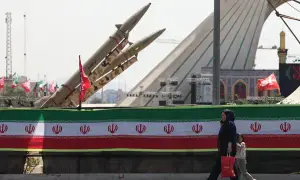
Iran sees Pakistan as directly and indirectly under the thumb of its enemies: Saudi Arabia and the US. It views Pakistan as an untrustworthy neighbour and a rival in Afghanistan. Accordingly, it is providing India access to Afghanistan and Central Asia, bypassing Pakistan. Developing confidence and cooperation between Iran and Pakistan is essential.
Saudi Arabia is more master than friend. It has both helped and harmed Pakistan.
Any foreign policy improvement in 2018 will be a pleasant surprise.
The writer is a former ambassador to the US, India and China and head of UN missions in Iraq and Sudan.
Published in Dawn, December 30th, 2017