10
10

I have to travel across the Faizabad Interchange everyday to get to work and the commute usually takes less than 30 minutes.
That changed dramatically after the first weekend of this month when the capital came under virtual siege with the followers of a cleric blocking the expressway that connects Islamabad with Rawalpindi.
After spending hours and hours in traffic for the first few days after the start of the sit-in, I decided that enough was enough. I asked a colleague of mine as to how he was managing to find a way around the circus to get to work. He explained the faster and cheaper modus operandi and I followed suit.

The adventure began as I boarded a Faizabad-bound wagon. It all went smoothly, until we reached the interchange. This is where the writ of the state essentially stops. The interchange, which is normally packed with vehicles and commuters, was relatively deserted.
The empty Metro station made me wonder if we had built these structures of ‘economic progress’ to abandon them at the slightest sign of challenge to the government.
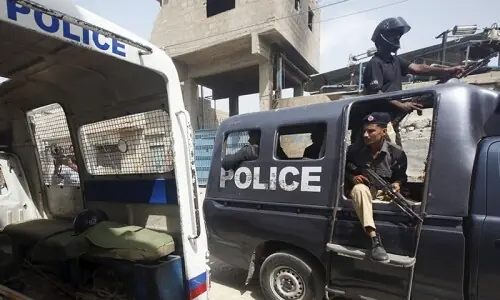
I was ‘greeted’ at the interchange by security; they checked my bag and frisked me, as well as the other commuters. Down the road, the path was blocked by containers, preventing people from going any further.
But, there are many who have no choice. Not everyone can enjoy the luxury of sitting at home and not go to work and about their daily routines just because the city is under siege.


One one side of the blocked highway is a ravine, which leads to a shallow brook. People have to descend to the stream and walk on the slippery stones to get to other side. On rainy days, the brook is deeper and one has to wade through knee-height water.
There is no lighting arrangement and at night, people have to use torches and cellphone light to navigate their way through the dark .
The first time I crossed the stream at night, I came across a young lady with a toddler in her arms. She was visibly scared and I volunteered to carry her baby, while she made her way through the water bare feet.
Editorial: The politics of siege
The proceedings are just as interesting on the other side of the highway, where a downward path through the trees leads to a field and a dirty and deep nallah. There’s a drain pipe going over the water, which has turned into a makeshift bridge for not just pedestrians but also bikes.
Although the pipe is big, it’s not safe - certainly not pleasant - to walk on. I have seen numerous scared men and women trying to scramble across, continuously ushered by the hopeful voices on each end that they can make it through.
This is what ordinary citizens have been reduced to.
After taking these two routes to work and back, I realised that these are rather metaphoric of life in Pakistan. Common people, in this country, have to somehow bridge over stagnant waters all the time. In a way, the latest dharna in Islamabad has taught us nothing new.


Has your life been affected by the Islamabad sit-in? Share your experiences with us at blog@dawn.com