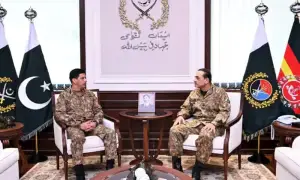
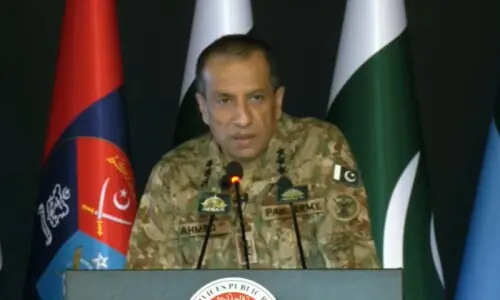
Chief of Army Staff (COAS) Gen Qamar Javed Bajwa said Pakistan needs to expand its tax base, bring in financial discipline and ensure continuity of economic policies to be able to break the begging bowl, military's media wing reported.
"The economy is showing mixed indicators. Growth has picked up but the debts are sky high. Infrastructure and energy have improved considerably but the current account balance is not in our favour," the army chief reportedly said while addressing a seminar on the interplay of economy and security on Wednesday.
"Our tax to GDP ratio is abysmally low and this needs to change if we are to break the begging bowl," read the text of Bajwa's speech shared by Inter-Services Public Relations.
He also shared that economy remains a major concern during National Security Council meetings, also revealing that he reads the business and economy page of the newspaper right after the main page because of its importance.
"Pakistan is capable of creating sufficient fiscal space to address underlying structural problems through tax reforms, documenting economy, diversifying the export base, and encouraging savings to finance a level of investment that could sustain growth rate higher than the rise of population," but the benefits should also reach all parts of Pakistan including interior Sindh, Fata, Balochistan and Southern Punjab, he said.
Gen Bajwa said that after the end of cold war people were claiming that economic interests alone would dictate national security but the "reappearance of age-old fault lines and reassertion of ancient parochial passions of race, language, religion and identity" has led to security once again becoming "the foremost business and task of the state".
"We have to continuously ensure a viable balance between economy and security," the army chief said, focusing on the security-economy nexus. "Only then will we arrive at a future that ensures sustained peace and happiness for our people."
Many of the planned measures of the National Action Plan (NAP) will contribute directly to the economic and political stability of the country, he said, giving examples of police, judicial and madrassah reforms.
"We cannot afford to leave a large segment of our youth with limited options — madrassahs must enable their students to become useful members of the society who are not left behind in any field of life."
He cited the peaceful commencement of Muharram, Bohra community holding its annual gathering in Pakistan and sports and cultural events as examples of peace reiterating in the country.
The China-Pakistan Economic Corridor (CPEC) is "a complete development platform that has the potential to act as a powerful springboard for shared development in the entire Central Asia-South Asia region," Gen Bajwa said.
"Our destinies are inextricably linked," he told India and Afghanistan, adding that he sincerely believes that the region "will sink or sail together."