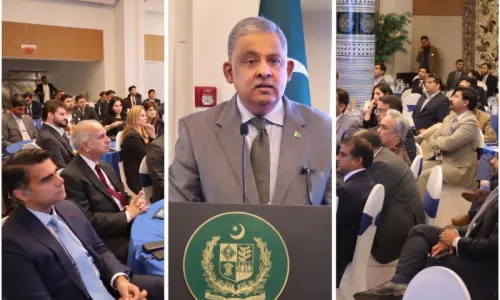
ISLAMABAD: A group of Chinese hybrid-rice researchers and experts along with local scientists has visited more than 100 rice farms across the country under the ‘Travelling Rice Seminar’ initiative.
The travelling seminar was designed by Pakistan Agriculture Research Council (PARC) and Chinese Yuan Longping High-tech Agriculture Company and aims to boost hybrid rice cultivation in the country.
According to Programme Coordinator and Member Plant Science PARC Dr Anjum Ali, the experts also visited research stations, agricultural universities and seed outlets of different companies to exploit the cultivation of hybrid rice.
The Chinese experts travelled to Khyber Pakhtunkhawa, Punjab, Sindh and Balochistan in order to create awareness about the cultivation of hybrid rice among growers.
“This was a month-long activity in which a group of hybrid rice researchers from China comprising 12 scientists trained the local scientists, seed producers and field extension departments of the provincial governments,” he added.
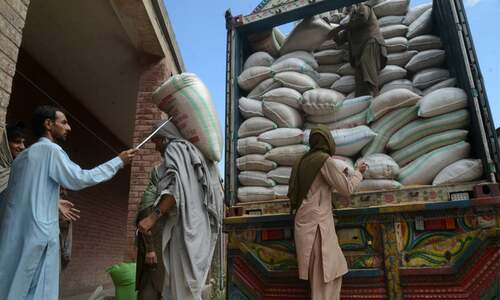
He said the main aim of this joint initiative is to enhance per acre crop productivity, increase profitability and produce surplus commodity for exports enhancement.
“In order to further enhance the local rice output, China and Pakistan have decided to work together for conducting joint awareness programmes to adopt hybrid rice seeds,” he added.
The Chinese scientists trained 30 Pakistani agriculture scientists who were selected from across the country.
Dr Ali said the Chinese experts will also impart training to the members of the provincial field extension departments on hybrid rice cultivation.
In addition, the activity will also help in capacity building of local experts from all over the country in order to promote hybrid rice techniques.
Road-shows and field visits were organised across rice-growing areas to address issues and challenges faced in promotion of hybrid rice seed, he added.
He further said a revolutionary hybrid rice seed has been developed recently by the Chinese researchers, which would help Pakistani farmers to enhance significantly their per acre yield, hence the country would be able to export more rice, he added.
Published in Dawn, October 3rd, 2017