London hunts for ways to stop deadly youth stabbings


 0
0
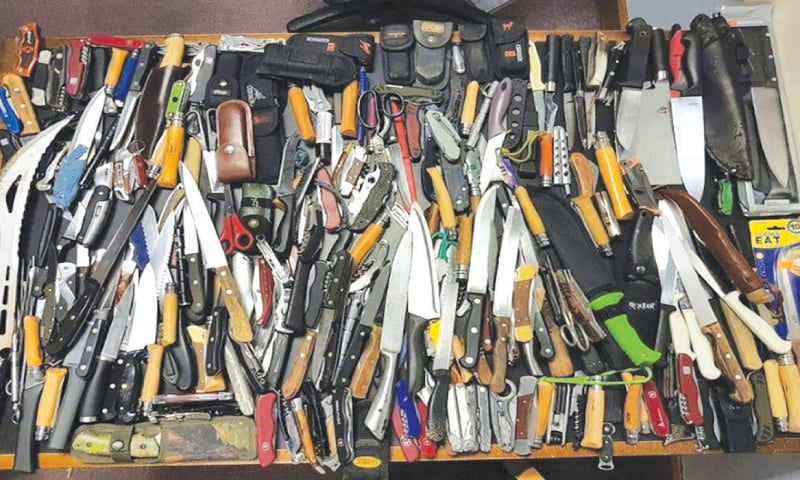

LONDON: Nearly one young person a week has been stabbed to death in London so far this year, leaving British authorities hunting for ways to stop the increasing violence.
Twenty-seven people under the age of 25 have been stabbed to death in London since the start of 2017, according to figures from city hall.
The alarming figure is but “the tip of the iceberg”, according to Patrick Green from the Ben Kinsella Trust, an educational organisation set up in memory of a teenage stabbing victim.
Police registered more than 12,100 knife attacks which left 4,400 people injured between April last year and March, the highest figure in five years.
“Many of the victims of stabbing are left with permanent disabilities, permanent scars, and the most awful disability which isn’t reported is the mental trauma,” Green told AFP.
“The fact that you recover doesn’t mean that you return to your normal life,” he added.
In contrast to widely held perceptions, the majority of attacks are unrelated to organised crime. Three out of four cases involve individuals who carry a knife because they believe it will make them feel safer.
“This can be a self-fulfilling prophecy, where young people equip themselves with a knife and in doing so significantly up the ante of their chances of becoming a knife victim,” said Bernard Hogan Howe, the former head of London’s Metropolitan Police who retired last year.
Metal detectors at schools
One proposal to cut knife crime was announced on Tuesday by Interior Minister Amber Rudd, who wants to ban the possession of outlawed weapons such as zombie knives — often curved blades inspired by horror films — and knuckledusters on private properties.
As part of a planned consultation on knife crime, the government will also examine whether to extend a ban on possessing a knife in public places and schools to include universities.
London Mayor Sadiq Khan has spearheaded a seven-million-pound programme, which includes schools where knife crime is prevalent being given metal detectors.
In announcing the plans last month, the mayor hit out at government cuts which he said had led to the closure of 30 youth centres that could have stopped young people turning to crime.
“The only way we can truly beat the scourge of knife crime on our streets is by properly funding youth services,” Khan said.
Police have been visiting hundreds of schools as part of their “Operation Sceptre”, involving everything from quizzes on criminal responsibility to self-esteem classes.
The operation to tackle knife crime was launched in July 2015 and also sees officers carry out checks on businesses selling knives, in addition to confiscating weapons sold illegally.
Bins have been left in public places for people to dump any banned weapons without fear of being arrested.
But at the same time, the crackdown is facing an uphill struggle with knife attacks increasing by 24 per cent last year.
Since 2010 the number of police officers in the British capital has been cut by 14pc.
“It would be a naive answer to say that if you cut a significant amount out of an organisation you don’t have any consequences,” said Martin Hewitt, assistant police commissioner.
With funds limited, the police have teamed up with hospitals to collect and share anonymous information on each new attack. The database is intended to help emergency services both prevent and better respond to knife crime.
“Austerity creates a catalyst for change, and hopefully that can be a positive change,” said John Poyton, director of the RedThread charity which addresses youth violence.
Published in Dawn, July 23rd, 2017