0
0


ISLAMABAD: The army said on Tuesday that it was making steady progress in fencing the border with Afghanistan to prevent unauthorised crossings.
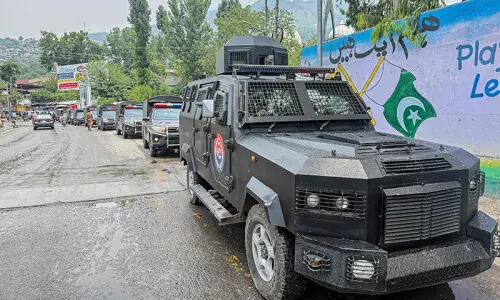
“Measures to improve security situation along the Pak-Afg border are continuing,” the military’s public relations wing ISPR said as it released pictures of parts of the border that have been fenced.
Fencing of the 2,611km porous border is being done in phases. In the first phase, 237km of a high infiltration-prone zone in Khyber, Bajaur and Mohmand tribal regions is being fenced. The total distance falling in the tribal region adjoining Khyber Pakhtunkhwa is 1,230km, whereas 1,381km falls in Balochistan.
Military says hundreds of new forts and posts also planned
The fencing was started at the end of April and a source in the field said almost 50km of the border in the high infiltration-prone zone had been fenced.
“In phase 2, fencing of remaining border areas in KP and Balochistan will be done,” an Inter-Services Public Relations official said.
Both Pakistan and Afghanistan have in the past accused each other of not doing enough to prevent cross-border movement of terrorists. The fencing, a military official maintains, shows Pakistan’s commitment to improving border management.
“A secure Pak-Afghan border is in common interest of both countries and a well coordinated border security mechanism is essential for enduring peace and stability,” the ISPR said.
Border fencing has been a sensitive issue in relations with Afghanistan. Kabul disputes the Durand Line as the international border. Attempts in the past to regulate the border led to angry protests from Afghanistan and occasional border skirmishes. Some of those skirmishes have been deadly with fatalities on both sides.
Pakistan insists that the Durand Line is the internationally recognised border separating the two countries. Moreover, the Pakistani position has been that the fencing activity is taking place on its own soil and, therefore, Kabul has no right to object.
Besides fencing, the ISPR said the Pakistan Army and Frontier Corps in KP were also constructing new forts and border posts to improve surveillance and defensibility.
So far 43 border posts and forts have been constructed, whereas another 63 are under construction. The army plans to build another 338 border posts and forts by 2019.
Our Peshawar Bureau adds: The ISPR statement said the fencing of the border had been started on the directives of Chief of the Army Staff Gen Qamar Javed Bajwa. His predecessor Gen Raheel Sharif had announced the fencing plan to stop cross-border movement of terrorists in the wake of attacks on security forces from Afghan soil in the Mohmand region.
Sources said the government had sanctioned Rs12 billion for the fencing and border management.
Published in Dawn, June 21st, 2017