THERE may be many strands to the latest crisis engulfing the Middle East, but there is only one conclusion for Pakistan: this country cannot afford to get embroiled in conflict in the Middle East.
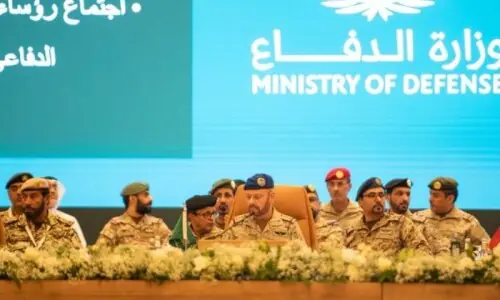
With Prime Minister Nawaz Sharif and army chief Gen Qamar Bajwa in Saudi Arabia, the urgent, high-level diplomacy by Pakistan should have a dual focus ie help defuse tensions among the various state protagonists, each of which Pakistan has friendly relations with, and withdraw from the Saudi-led Islamic Military Alliance.
The bizarre and patently false assertion by a section of the Turkish state-run media that the Pakistani parliament is considering sending thousands of troops to Qatar underlines the risks involved in a conflict in which the media has become a weapon.
The possibility of false stories and propaganda setting off a diplomatic crisis for Pakistan is very real and the Foreign Office has done the right thing by quickly and emphatically denying the possibility of Pakistani troops being sent to Qatar.
While Pakistan’s leverage may be limited and its diplomatic heft in the Middle East far from obvious, it occupies a unique and potentially useful position as it has friendly ties with all the Middle Eastern and Gulf countries embroiled in the current crisis.
From Saudi Arabia to Qatar and from Egypt to Iran, Pakistan has genuinely friendly and stable ties with all sides — precisely the kind of committed and relatively neutral stakeholder that can act as an interlocutor to help rescue a region from a greater crisis.
But if a crisis-fighting role is not something Pakistan can realistically take on, there must be an emphatic signal sent to all sides: Pakistan values its relations with all countries and the Pakistani national interest requires it to stay neutral in the current crisis.
That should not be impossible, but it would require Pakistan to suspend its military participation in the IMA and withdraw retired Gen Raheel Sharif from his command of future IMA forces.
Simply, recent events in the Middle East have shattered the assumptions on which Pakistan’s original inclusion in the IMA was premised.
The IMA was supposed to be a counterterrorism force and there was no threat greater than the militant Islamic State group that Muslim-majority countries could jointly fight.
But the Saudi leadership has made clear that it primarily wants to contain Iran and, now, cut Qatar down to size — effectively destroying any possibility that the IMA can ever become a platform for all Muslim-majority countries to come together to fight militancy and terrorism.
Saudi Arabia is and will remain an important ally of Pakistan.
It is the responsibility of friends to stand by one another in times of crisis.
But responsible friends must also be unafraid to speak the principled truth and protect themselves from colossal errors by the other.
Withdrawal from the IMA has become essential.
Published in Dawn, June 13th, 2017