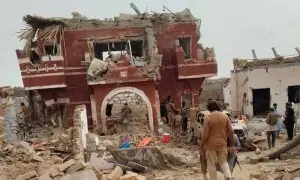
IT could be described as a textbook case of organ trafficking. Transplant operations in a rented house, desperately poor ‘donors’, well-heeled kidney recipients, and, at the very top of the pyramid, avaricious doctors raking in millions by preying on the despair of the most deprived in society. On Saturday, the FIA carried out a raid on a villa in an upscale Lahore neighbourhood and busted an organ trafficking ring that they said had been operating since 2009. The law-enforcement team discovered two Omani nationals at the location: one of them had already undergone a kidney transplant a short while ago while the other was under the knife at the time. The individuals whose kidneys had been just removed for transplantation included a rickshaw driver and a 20-year-old woman, both of whom, according to the FIA, had sold their kidneys to pay off debts. The two doctors caught red-handed at the scene were arrested and cases registered against an absconding doctor and a couple of paramedics.
The raid, the first by the FIA since it was given the mandate to take action against the crime, can be a crucial step towards casting off Pakistan’s shameful reputation as a market for vended organs. However, only a successful prosecution — which could lead to 10 years’ imprisonment and loss of licence for the doctors — will serve as a deterrent. For this is an organised crime, involving powerful, well-connected individuals and vast networks — often transnational ones as in the present instance — that include ‘agents’ who trawl for ‘donors’, and police who take a cut for looking the other way. And it is deeply entrenched in this country, despite the fact that a law against organ trade has been on the statute books since 2007. But as we all know, having a law is one thing; implementing it quite another, especially in a country where the state does not expend itself to protect the poor. A number of investigations carried out by Dawn have exposed how institutional apathy and/or collusion have allowed lawbreaking doctors to mint fortunes through their illegal transplant enterprises, sometimes in full view of the public. Aside from perpetuating social inequities, this has worked to undermine the campaign by advocacy groups to create a viable deceased organ donor programme in the country which is critical for expanding ethical transplantation practices. It is time that organ trade racketeers realised that it is no longer business as usual.
Published in Dawn, May 2nd, 2017