A medieval brutality, a very cancer of the soul, has permeated this society. Not only has it pervaded the hinterland, it has also spread to places where minds are supposed to be enlightened by knowledge and learning.
Each ghastly detail of Mashal Khan’s murder on Thursday illustrates this chilling fact. The 23-year-old student at the Abdul Wali Khan University in Mardan was lynched on campus by a mob of fellow students over allegations of blasphemy.
Video footage of the savagery unleashed upon the young man shows an enraged crowd beating his naked body with sticks, kicking and stoning him while raising religious slogans. Another student was also attacked for the same reason and badly injured; his whereabouts are unknown.
But why should we be surprised at this display of bestiality masquerading as virtue? After all, the road to Mashal Khan’s murder is punctuated with many a landmark pointing to where we are headed: eight people, including a child, burned alive in Gojra in 2009 on allegations of blasphemy; governor Punjab Salmaan Taseer, gunned down by his security guard in 2011 for coming to the defence of a blasphemy accused; lawyer Rashid Rehman, shot dead in May 2014 for defending a blasphemy suspect; brick kiln workers Shama and Shahzad, burned alive by a mob in November 2014 on allegations of blasphemy. And this is but a partial list, even in terms of the lives lost.
For the ruin of many a life has played out in the crucible of blasphemy: people driven out of their homes, deprived of their livelihoods, sometimes even languishing in jail for years because few lawyers now have the courage to defend them.
The culpability of the state — particularly some elements of it — in bringing matters to such a pass is undeniable. For even while spewing platitudes in the name of anti-extremism, it has fed the fires of intolerance and unreason, deliberately creating an environment where mere allegations of blasphemy trigger vigilante ‘justice’ and where appeals to moderation are conflated with defending blasphemy itself.
This is a Damocles’ sword that can conveniently be used to silence anyone professing views that question or contradict the state-approved narrative. And if innocents must die in the process, then so be it.
However, while the law should take its course in punishing those guilty of Mashal Khan’s murder, voices of sanity must speak up in the face of such cynical manipulation of religious sentiment.
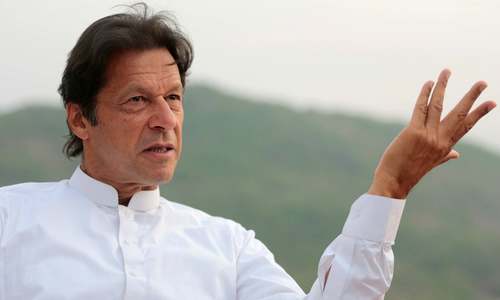
Imran Khan, whose party heads the KP government, has rightly condemned Mashal Khan’s lynching, vowing to resist “the law of the jungle”. He is, shamefully enough, so far among the few politicians to have taken such an unequivocal stance.
Even most of the electronic media, otherwise so loquacious, has only covered Mashal Khan’s murder in a superficial manner, carefully avoiding the real issues that underpin the tragedy. Until these are debated, and the contradictions in society acknowledged, our descent into a dystopian nightmare will continue.
Published in Dawn, April 15th, 2017