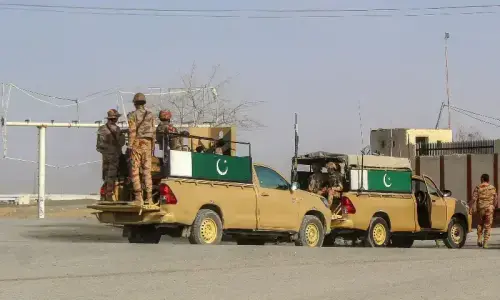
WITH Pakistan’s already dismal record in the education sector, the country scarcely needed any more challenges on this front, but that is exactly what years of militancy have represented. However, violent extremists are not the only ones culpable in the matter, a fact that a new report by Human Rights Watch recognises. Dreams Turned into Nightmares: Attacks on Students, Teachers and Schools in Pakistan examines the issue in a more holistic way — even though researchers could not gain access to Balochistan, ironically for security reasons. According to Global Terrorism Database figures that the HRW cites in its report, during the period between 2007 and 2015, there were 867 attacks on educational institutions, resulting in 392 fatalities and 724 injuries. Based on interviews with students, teachers and parents, the report highlights serious failures on the part of the provincial authorities over the course of the decade between January 2007 and October 2016. Their policy of outsourcing security responsibilities to school authorities has led to financial hardship for the administrations of academic institutions and contributed to the disturbing trend of arming teachers, while criminal cases have been filed against principals for inadequate security measures. The report also includes within its scope the occupation of educational institutions by security forces (in KP and Sindh), political groups and criminal elements. In Karachi, there was a time when some schools in parts of Lyari were turned into MQM sector offices while many others in the area were destroyed or occupied by gangsters.
The report points to the lack of reliable national data on school attacks; this is a critical gap in knowledge which leaves the government ill-equipped to respond to them adequately or institute protective measures. Given it was a horrific attack on a school, APS Peshawar — in which more than 140 were slaughtered, including students, teachers and staff — that proved to be the catalyst for the National Action Plan, it is surprising that none of its 20 points pertains to the protection of education. That oversight should be addressed with the attention it deserves, especially to girls’ education, which has suffered disproportionate harm. Priority should be given to setting up rapid response units — that can be deployed in the event of an attack on a school — and to rebuilding destroyed or damaged infrastructure, reclaiming occupied school buildings, and providing psychosocial support to students who have suffered violence. That is one way to secure this country’s future.
Published in Dawn, April 2nd, 2017