KARACHI: Cotton prices moved higher on Friday on the back of rise in yarn exports and local demand.
Importers from Bangladesh have diverted to Pakistan to buy yarn after prices rose in India, brokers said. Indian spinners have also booked around 1.5 million bales for import and plan to import equal quantity in the coming days.
Besides, local ginners have stepped up selling with the start of hot and dry weather as they fear it would deteriorate the quality of cotton and lessen its weight.
Meanwhile, cotton growers in lower Sindh continue to face water shortage which is feared to delay the crop, brokers said.
Separately, ginners met in Multan on Thursday and threatened to close their units if the Federal Board of Revenue continued to harass them.
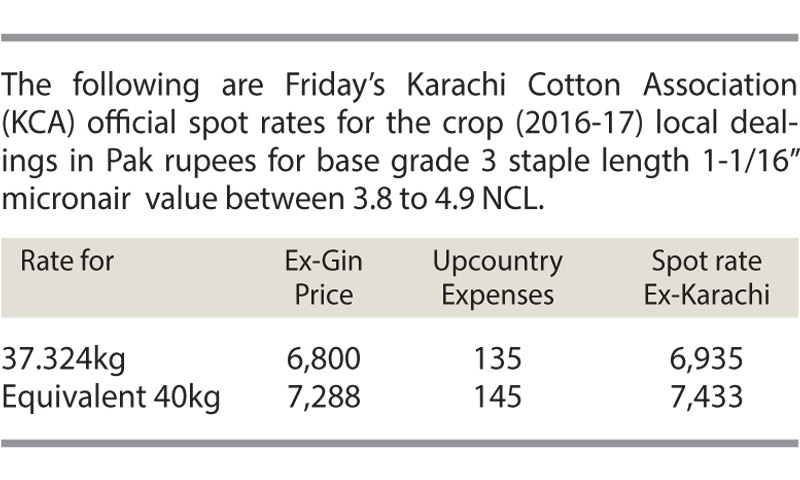
The Karachi Cotton Association left its spot rates unchanged. Major deals on the ready counter were: 3,000 bales from Shahdadpur at Rs5,935 to Rs5,975, 1,400 bales from Dharki at Rs6,975 to Rs7,075 and 6,00 bales from Rahimyar Khan at Rs7,000 to Rs7,050.
Published in Dawn, March 25th, 2017