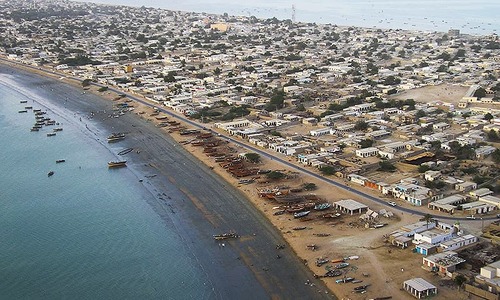
GWADAR: Despite a serious water shortage crisis in Gwadar and adjacent areas, the government has not made four desalination plants functional which have been lying abandoned for seven years.
A desalination plant installed in the private sector is working successfully and is selling 100,000 gallons of drinking water to the public health engineering department daily for the supply of water to the people of Gwadar.
Sources said that in view of a serious water shortage crisis in Gwadar, Pasni and Jewani in 2008, the provincial government had decided to install four desalination plants in Gwadar district for making sea water drinkable. The installation of plants was planned for solving the water shortage problem of the district on a permanent basis.
The task for the installation of the four desalination plants was assigned to the Balochistan Development Authority (BDA) which had begun work on the project shortly. The construction cost of one plant being installed in Gwadar’s industrial area was Rs1 billion. It had a capacity of two million gallons of water per day. The other three plants having capacity of 200,000 gallons of water were installed in Pasni, Jewani and Singhar Housing Scheme with a cost of Rs200 million for each.
The sources said the BDA awarded contracts for the plants and work had begun on all of them. Machinery for the plants had been purchased and shifted to the proposed places for installation. However, work on none of the plants could be completed on time.
The National Accountability Bureau (NAB) had launched an inquiry into the delay in the installation of machinery in the plants, but to no avail.
Despite written assurances by the contractors to complete work on time, no plant has so far been made functional.
After Gwadar and adjacent areas were hit by a severe water shortage crisis in 2014, authorities had tried to complete the desalination plant installed in the Gwadar’s industrial area on an emergency basis. Generators were provided and transmission lines were laid. But, the plant could not achieve its full capacity. It is now producing 300,000 to 400,000 gallons of water per day.
An official of the Gwadar administration told Dawn that the plant could not be made fully functional due to non-availability of engineers.
The three other plants in Pasni, Jewani and Singhar Housing Scheme are still not functional.
Officials of the Public Health Engineering Department told Dawn that water crisis was worsening in the Gwadar district. Gwadar town, Pasni, Jewani, Pishkan and many other villages need 8.3 million gallons of water daily while they are being supplied 2.5 million gallons of water from the Mirani dam, which is located in Kech district.
Published in Dawn, January 23rd, 2017