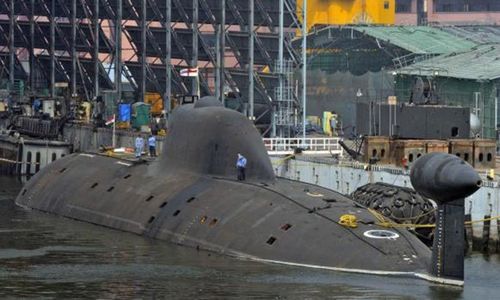
NEW DELHI: India and the United States are working together to track Chinese submarines in the Arabian Sea zone, India’s Business Standard newspaper said on Thursday.
India does not approve of the China Pakistan Economic Corridor (CPEC) that will service the Gwadar port, which sits strategically between the Arabian Sea and the Persian Gulf.
The Standard said Admiral Harris admitted for the first time that the two navies are jointly tracking Chinese naval movements in the Indian Ocean.
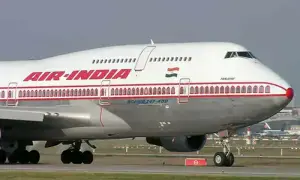
To build up India’s capability to track submarines, Washington had cleared the sale of Boeing P-8I Poseidon multi-mission maritime aircraft — “the world’s most fearsome submarine hunters”.
“We work closely with India to improve India’s capability to do that kind of Surveillance … I don’t want to say too much, but there is sharing of information regarding Chinese maritime movements in the Indian Ocean”, admitted the admiral, who refers to Chinese submarines in these waters as “clearly an issue”.
Anti-submarine operations are extensively practiced in the Malabar trilateral exercise on the Arabian Sea, which the US, Indian and Japanese navies conduct every year, the paper said.
“That helps us hone our ability to do physical tracking of submarines and ships, and the likes”, Admiral Harris told a group of journalists on the sidelines of an international conference in Delhi he attended.
The United States Pacific Command (USPACOM) chief said: “There is probably nothing that could prevent China from sailing an aircraft carrier into the Indian Ocean today.”
China’s growing strength and aggression are clearly driving the US and Indian navies together, the Standard said in a news analysis.
The US officer admitted for the first time, according to the paper, that the two navies are jointly tracking Chinese naval movements in the Indian Ocean. “To build up Indian capability to track submarines, Washington had cleared the sale of Boeing P-8I Poseidon multi-mission maritime aircraft — the world’s most fearsome submarine hunters.”
The four-star admiral who, from his headquarters in Hawaii, heads the military component of America’s “rebalance to Asia”, dismissed China’s lone aircraft carrier, the Liaoning, as far less capable than an American carrier, according to the Standard. He said even the Indian Navy, which operates INS Vikramaditya, is more capable and experienced than the Chinese at carrier deck aviation.
Published in Dawn, January 20th, 2017