Role of parents highlighted in preserving Hindko culture


 0
0
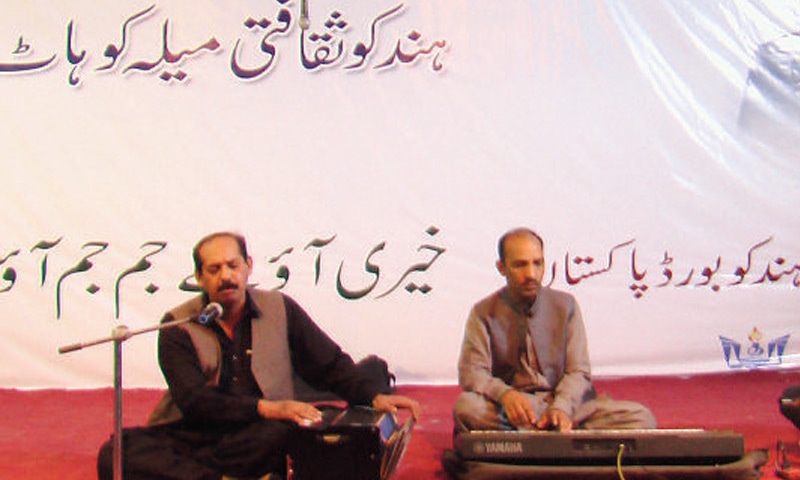

KOHAT: Speakers at a Hindko cultural festival here on Friday emphasised the role of parents in keeping Hindko language and culture alive in its original form, which they said was eroding from the society.
The theme of the programme was ‘Hindko culture – a sign of peace’ and it was participated by Hindko speakers from Kohat, Peshawar and Hazara.
The Ghandhara Hindko Board, Kohat, was represented by Ahmed Nadeem Awan, Arshad Siddiqui, Ziaul Islam, Sajjad Awan and Prof Shujaat Ali Rahi. The guests from Hazara Hindko Board included Nazeer Hussain Kailwi, Prof Nasir Daud, Ajmal Nazeer, Raja Noor Mohammad and Dr Shahida Asghar.
MNA Shehryar says mothers should train children to love their language
A speaker from Abbottabad said that generally Hindko was regarded as the language of villages whereas it was commonly spoken in the cantonments of Hazara and Kohat. He advised the people to make efforts to preserve and transfer it to the next generation in its original form.
Prof Rahi stated that though his mother tongue was Persian, he grew up amid Hindko speaking teachers, neighbours and childhood friends due to which he loved the language very much and could speak it fluently.
Members of Hazara Hindko Board in their dialogue with local social media said that parents should shun the practice of speaking Urdu in their homes with the children and converse in Hindko for preventing it from dying. They said that it was the foremost responsibility of the poets and writers to promote Hindko language.
The audience was enthralled by songs and poems of Qadir Pehlwan, Mohammad Imran Talib and Atiq.
The Radio Pakistan, Kohat, presented a skit ‘Babu Sahib’ played by Mastan Gul which was applauded by the audience. Hindko proverb quiz competition was also conducted and prizes were given to the people who explained them correctly.
The schoolchildren also presented dance to the Hindko music tune.
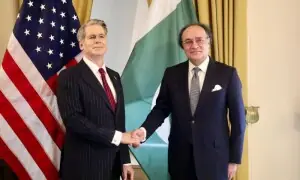
The chief guest, MNA Shehryar Afridi in his address said that he was thankful to the large-hearted Hindko speaking people of Kohat for voting him. On the demand of the people, he delivered half of his speech in Hindko. He stressed that mothers were the custodian of culture so they should train children to love their language.
The songs by Urdu singer Azam Chacha mesmerised the audience with his natural style and selection of pure Hindko poetry like ‘Akhyan ne Athro Sailab Ban Gae’.
Raza Kazmi along with children of his school performed the vanishing culture of marriages by presenting use of ‘Dhol’ beaten by girls along Hindko songs. The village artists also displayed the skills through weaving of household items and cages with leaves of ‘Mazri’, which was also used in netting of charpoys. The participants regretted that the charpoys woven with ‘Mazari’ were now only kept in hujras (guesthouses) and not used for sleeping in houses.
Published in Dawn, December 5th, 2016