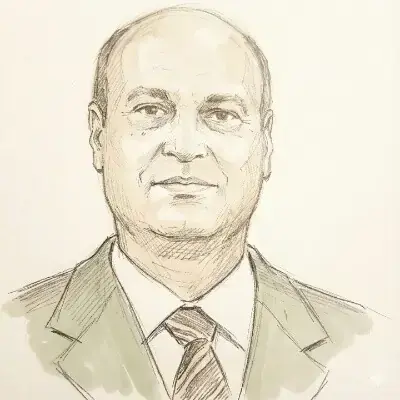
ISLAMABAD: Former Corps Commander Mangla Lieutenant General Tariq Hayat Khan on Thursday said during the operation against Taliban in Swat, a number of deradicalisation centres were established there for the youth.
However, he was of the view that without bringing a change in society, such an exercise could not bear fruit.
“I used to say that what will be the benefit of the deradicalisation of youngsters because they would be sent back to the society which was already radicalised. It was this radicalisation that people were more close to Osama bin Laden compared to the army,” he said.
Mr Khan was speaking at ‘The Oxbridge Lecture’ on “Pakistan’s fight against terrorism and the way forward” at a local hotel on Thursday.
The former general remained the inspector general of the Frontier Corps from September 2008 to October 2010 besides commanding the 14th infantry division in South Waziristan till 2008.
Mr Khan said there was no proper definition of terrorism and a number of controversies were related to it.
“Even a judge of the International Court of Justice once remarked that terrorism has no legal implication,” he added.
He said under different definitions, war is not considered terrorism and the same is the case with self-defence and collateral damages.
“However, we can agree upon simple definitions. For example, violence for political objectives can be declared terrorism.” Mr Khan said terrorism cannot be eradicated in Pakistan even if more national counterterrorism authorities were established. Some steps such as judicial reforms, depoliticisation of police and containing clerics have to be taken, he said, adding corruption was also breeding terrorism.
About the foreign influence and radicalisation, Mr Khan said in the 1970s people started going to Saudi Arabia and came back with the Wahabi thoughts. They purchased palaces where ever they wanted as they had the money, and problems started increasing.
He also criticised the West and said the Mujahideen were once declared akin to the founding fathers of the United States, but after 1990 they were abandoned by the West.
As a result, Pakistan suffered a lot and had to host three million refugees from Afghanistan. He said though there were many issues in different parts of the country such as sectarianism, ethnicity, linguistic issues the problem of crime was the biggest. He said some of the extremists became leaders overnight just because of the money generated through crimes.
Talking about the war against terrorism, he said it was very difficult because terrorism was faceless and had no respect for human lives.
He said the lack of governance was also one of the major reasons for terrorism because parallel courts and institutions were established to fill the vacuum created by the lack of governance.
When asked why Operation Zarb-i-Azb was not launched much earlier, Mr Khan said there was a view that the operation was not the solution to the issue and that the government also started dialogues with Taliban.
Asked why Pakistan did not hot pursue extremists into Afghanistan, he said Pakistan was capable of doing that but wouldn’t violate international border.
Published in Dawn, October 21st, 2016