PESHAWAR: The real estate business is on the decline in Peshawar as amidst increase in returning of Afghan refugees to Afghanistan during last few weeks rumours are also in circulation about departure of most of the refugees after Eidul Azha next month.
Uncertainty has gripped property market in the provincial capital. Prices and rental rates have started falling down in posh localities like Hayatabad where Afghans have large concentration. The dealers forecast heavy slump in the real estate sector if Afghans go back to their country.
Information gathered from the market show that rent of five-merla house has jumped down from Rs30,000 to Rs25,000 in Hayatabad where roughly 40 per cent of the population is Afghans. The dealers are looking for new clients since Afghans have vacated residential quarters.
Prices of properties falling down with increase in return of Afghans
“Local clients offer Rs22,000 for five-merla house in Phase-I of Hayatabad,” said Yawar Khattak, who is running real estate business. He said that despite fall in rents, customers were not available to get occupation of houses in the township.
“Rents and price of properties might slowdown further in coming weeks because large numbers of Afghan clients are planning to move back to Afghanistan after the coming Eid,” said Mr Khattak.
The repatriation of Afghans and tight border management at Torkham border crossing point has already shaken private health facilities in Peshawar. Decline in Afghan patients has forced employers to relieve their surplus staff. Afghan patients have been coming to Peshawar for treatment.
Mohammad Sajjad, another property dealer, said that property prices had witnessed slight shortfall and rate of five-merla house in the township had witnessed 10 to 15 per cent decrease. He predicted that like rental rates, prices of properties would also go down if Afghans went back.
Real estate business had witnessed unprecedented boom in Peshawar after people from tribal areas and parts of Khyber Pakhtunkhwa shifted their families and business to the provincial capital owing to militancy and subsequent military operations. This large scale migration also resulted in unplanned construction of housing schemes all around the provincial capital.
Property prices had also witnessed sharp decline in Peshawar when US-led Nato forces had overthrown Taliban regime in the neighbouring country. Over three million Afghan refugees wound up their businesses and went back to Afghanistan. The property market became stable after the arrival of internally displaced persons.
Peshawar has been housing major concentration of registered and unregistered Afghan nationals. The UNHCR’s statistics show that around one million registered refugees are residing in Khyber Pakhtunkhwa of whom 52 per cent have settled in Peshawar alone. They have established businesses in different sectors including real estate.
According to the data collected by the provincial government, more than 12,000 Afghan nationals have purchased immovable properties in Peshawar on fake documents. Majority of the Afghans have purchased properties and established businesses in the name of local people.
Inayat Rehman, a native of Kabul, has purchased three shops in Board Bazaar, a major hub of Afghan refugees in the city, in the name of a local person. He has made up his mind to wind up business and shift his investment to Kabul after Eid.
“Afghans are my customers. What will I do here if they go back to Afghanistan,” questioned Mr Rehman, who migrated from Kabul to Peshawar in 1981. He said that Afghans vacated shops in Board Bazaar and returned to their country few weeks ago after selling their properties.
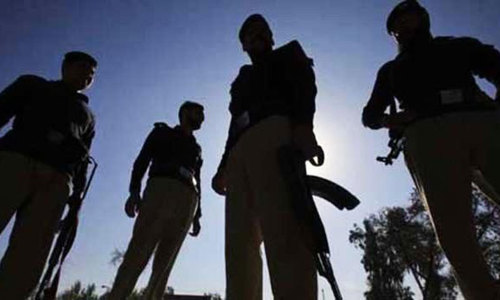
The Afghans, particularly those who do not have refugee status, are selling their properties and household items in Peshawar and other parts of Khyber Pakhtunkhwa as federal government has fixed November 15 as last date for return of undocumented and December 31 for registered Afghans. Police are raiding their houses in urban, semi-urban and rural areas of the province and they are allegedly harassed.
Average 500 families are registering themselves at the voluntary repatriation centre in Chamkani everyday for getting cash assistance of $400 per head. Reports suggest that Afghans are selling their moveable and immoveable properties at throwaway prices.
One Afghan investor sold his superstore at Rs10 million in the city. A doctor, who belongs to Kabul, said that he sold household items and would shift to his country before Eid.
Published in Dawn, August 11th, 2016