India’s ‘Iron Lady’ decision to end 16-year hunger strike is battle half-won


 0
0
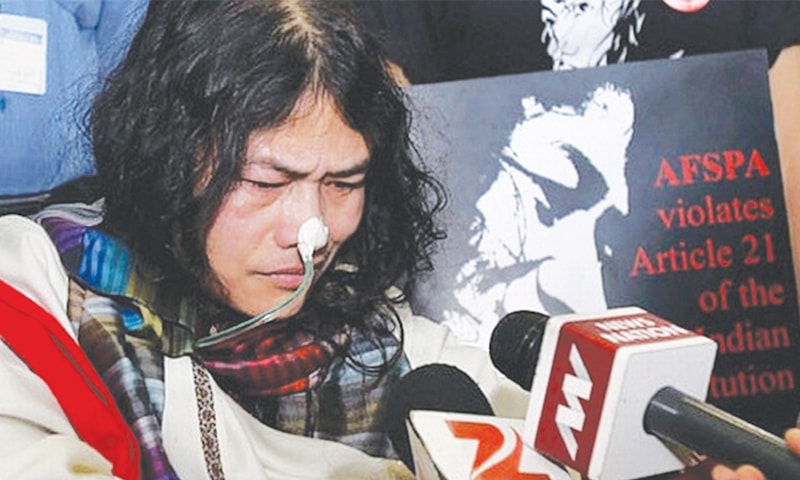

IT would be simplistic, perhaps churlish, to interpret Irom Chanu Sharmila’s decision to call off her 16-year-long hunger strike as an indication of failure to have the much-hated Armed Forces Special Powers Act (1958) revoked.
True that the “Iron Lady” of Manipur has spoken on those lines when announcing a Aug 9 end to her agitation, but in the wake of the apex court ruling that negated the concept of immunity when employing excessive force, the battle had been more than half-won.
It is significant that while for several years the military had pressed for the continuance of the draconian law, and painted a grim picture of what might follow its dilution, the defence minister has now taken a different tack.
Manohar Parrikar has recently stated that the “call” was the home ministry’s, the Army was merely the implanting agency.
The uniformed community should note that observation, and quickly stifle any attempt at gloating.
For it has been Sharmila’s sustained campaign that has triggered fresh, more humane, thinking: so even if her fast was receiving dwindling backing in Manipur her protest had “registered”, both at home and abroad.
It would not be an exaggeration to “see” her protest having influenced the home ministry’s decision to review the use of pellet guns to quell riots in India-held Kashmir.
The revised approach to human rights is clearly a fall out of Sharmila’s crusade.
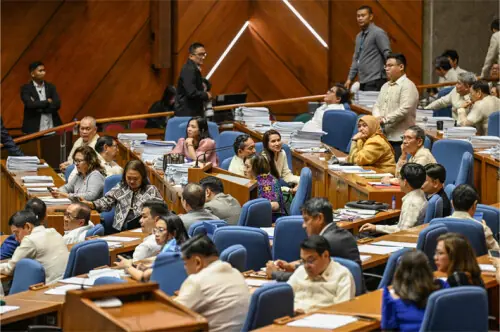
As a matter of principle there is much to appreciate in her decision to conduct the next phase of her struggle from the floor of the legislature, for that is where the “heart” of a democratic system lies.
Should she prove successful it might persuade extremist elements, in the north-east at least, to seek redress of their grievances via the Assembly.
Sharmila has spoken of contesting the next elections as an independent, hopefully she will not be “hijacked” then “dumped” by the established parties that would like to ride on her bandwagon.
Thus far, the major parties have publicly expressed appreciation of her decision to end her fast, now they should put their money where there mouth is, and not oppose her maiden electoral essay, maybe even back her legislative forays.
Personal factors are also said to have prompted her decision to end her strike, no crime in that though the grapevine has it she had continued her agitation under dubious pressure.
Sharmila is fully entitled to a personal life and must be wished all happiness and contentment.
And there would be no “welcome back” gift more fitting and rewarding — for both her personally and the north-east at large — than the Modi government displaying magnanimity and grace and ordering the deletion of AFSPA from the statute book.
—The Statesman / India
Published in Dawn, August 3rd, 2016