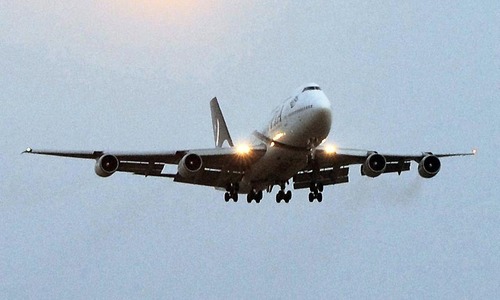
Once upon a time, PIA was our pride and joy. It was a symbol of national identity, and the country's most valuable asset.
This triumphant era began with the exemplary leadership of Air Commodore Nur Khan in the 1960s.
The catchy slogan "great people to fly with" and the famous Pierre Cardin uniforms for male and female stewards undeniably became the hallmark of PIA’s impressive progress.
The airline's high safety standards, young fleet and punctuality took it to promising heights. Everything seemed perfect.

Today, the very same airline is in the midst of an unprecedented crisis; it is paralysed with gigantic losses, chronic inefficiency and unsustainable debt.
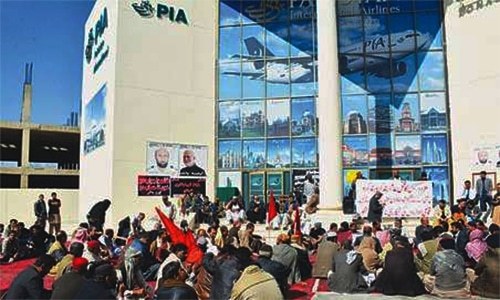
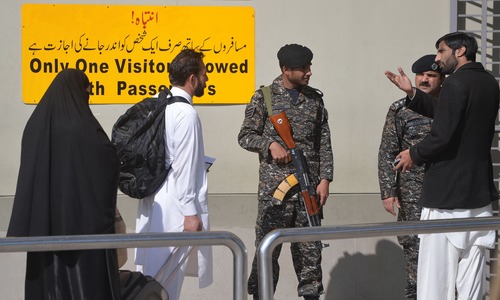
In the wake of recent privatisation pressures, flight operations were halted by the airline’s employees, resulting in immense misery and inconvenience for thousands of passengers.
Such a strike is unheard of in Pakistan’s history.
Given the exemplary past record, the crisis naturally raises the obvious question, what happened, and what will the solution be?
Explore: What ails PIA?
Given the appalling condition of the airline today, it is hard for me to believe that it was the very same PIA which helped set up the leading Middle Eastern carrier "Emirates", awarded the world’s best airline by Skytrax 2015.
While Emirates enjoys unparalleled success today, PIA continues to deteriorate beyond recognition.
How could an airline, once a leader in regional aviation industry, degenerate into such a mess? What explains such a remarkable decline?
The curious case of PIA might baffle outsiders but if one is well-versed in local political and cultural dynamics, the cause becomes immediately clear. Critics have commonly cited falling revenues, exorbitant fuel prices and foreign competition as reasons for PIA’s unrelenting financial losses.
My diagnosis, however, singles out politics as the root cause of the crisis.
Before I explain reasons for my diagnosis, let’s look at why the above-mentioned reasons do not work. First, oil prices have plunged to record levels globally in the past year, presenting unique opportunities for profits.
Why has PIA failed to benefit from such a historic opportunity?
As far as international competition is concerned, people have increasingly chosen foreign airliners for their infinitely superior service. Had PIA maintained its quality service, other carriers would have failed to capture a significant market share.
Blaming foreign carriers is just like blaming foreign intervention for everything that has gone wrong in Pakistan. This leaves us with the fundamental question of politics and special interests.
In my opinion, PIA is the perfect microcosm of politics in Pakistan, mired in corruption and cronyism.
State-owned enterprises in Pakistan have traditionally been plagued by endemic corruption and inefficiency. And PIA is a classic example of this.
The rapid descent started as nepotism and political patronage became the defining aspects of the airline’s recruitment policy. The reign of the first PPP government is infamously associated with this lethal trend as they advocated recruitment from the rural areas.
The legacy of political appointments has continued even in regimes led by other parties. Every time there is change of regime, be it the PML-N or the PPP, the top management of PIA changes too. With a Punjab-based party in power, PIA sees an influx of Punjabis all around and it is no different with Sindhis when PPP runs the show. The politics and bureaucracy engulfing the airline have slid down to the point of no return.
It has been largely responsible for making PIA one of the world’s most overstaffed airline — a key driver of entrenched inefficiency.
The short-sighted practice of promoting cronies, driven by selfish interests, deprived the airline of effective management and professional leadership; PIA turned into an airline where incompetence reigned.
The revival of the airline has been a controversial challenge for policymakers in recent years. Various governments have pledged to reform the national carrier but to little avail.

The restoration of PIA has been high on the PML-N’s agenda ever since it assumed office. And it has advocated privatisation as the only solution.
The push for privatisation comes as part of the IMF’s notorious austerity policy prescriptions which our politicians have enthusiastically embraced, often with blind faith.
But is privatisation the right answer?
Maybe, maybe not. Trained in taking a holistic approach as an anthropologist, I believe it is crucial to identify and remedy the root cause in order to deal with a problem.
Unfortunately, no government in the past has demonstrated political will and ambition to adopt that approach.
PIA, like most others institutions in Pakistan, requires structural change. It needs a brutal management shake-up.
Take a look: PIA standoff: Classic PML-N — Doing the right thing the wrong way
It needs to get rid of political appointees and cronies who form a disproportionate chunk of the airline’s workforce. De-politicisation and supremacy of merit are vital for revival.
Policymakers need to engage honestly and seriously with these basic problems instead of focusing energies on the rather deadly privatisation debate.
It is time for a bold and decisive action.
We must put PIA above our personal motives and external pressures for the moment because we all want to see PIA dominate the skies once again.
Getting the basics right and identifying why we got them wrong in the first place, is the logical way forward.