We are background noise, it seems, until we have sufficiently demonstrated our humanity to the world by speaking fluent English.
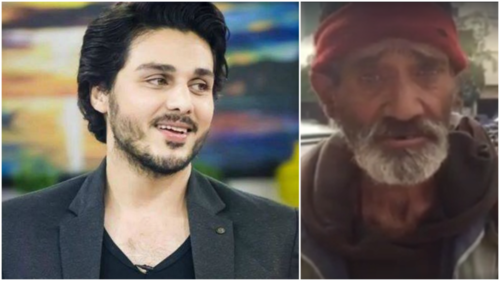
A video on social media features a homeless man making an appeal for an office job, while speaking fluent English. His story of betrayal, misfortune, and loss is heart-wrenching. The video went viral thanks to actor Ahsan Khan, and soon enough, he landed a job.
His story is just one of many. And he’s fortunate to have been able to convey it in the only language that the upper class – the ones with the power to make a real difference – have learned to take seriously.
How many more stories lay waiting to be rescued from the indecipherable noise of Punjabi, Sindhi, Pashto, Urdu, and indeed, Balochi?
Far too many.
And there isn’t nearly enough compassion among us to dole out equally among the legions of people trapped below the poverty line. So we prioritise, and focus our goodwill on those who we find most familiar; hence, most similar to a 'normal person'.
In a Eurocentric world, there is a voracious appetite for ethnic men, women, and children who put their native identities in a box, and act in ways that are more relatable to the average Western consumer.
A traditional ‘meerasi’ playing the most complex folk musical composition, or an impoverished labourer singing a melodious Punjabi tune, is less likely to attain international fame than two Pakistani sisters singing a Justin Bieber song on camera. I’m referring to Saania and Muqadas, who in early 2015, received global media coverage for their rendition of ‘Baby’.
Consider Ayham Ahmed, “Syria’s Piano Man”, who gained worldwide recognition by playing his piano for the war-torn Syrian and Palestinian families. Could he have won the same recognition by playing a traditional Syrian instrument like the qanun, whose melody may not have appealed to the heads of Western celebrity-makers?
I wouldn’t dare imply that the Pakistani sisters or the Syrian pianist are unworthy of the accolades, as they are obviously talented individuals.
Nor would I assert that the homeless English-speaking man deserves less care. They are, however, more relatable to those with the power to elevate them.
They have greater appeal to the international community, as well as to the locals who are eager to emulate Western customs – in all forms – as evidence of modernity, class, and good education.
For the homeless man, even then, the mission was only half accomplished, as almost no media outlet is reporting his name. He’s only being referred to by the name of his ‘discoverer’, model/actor Ahsan Khan.
The same story told in refined Punjabi would’ve left him stuck in oblivion, among the countless faqirs of our nation, who are presumably less worthy of our sympathy.
How many homeless persons does an average Pakistani shun, on his way home to a laptop to watch an old, homeless man state his woes in smooth English?
This nameless icon hails from the same community of marginalised humans, that the elites and the bourgeoisie commonly stereotypes as lazy addicts, or “the beggar mafia”.
What changed?
I’m not complaining, but where did this hurricane of empathy come from?
It came from the mind-jolting realisation that a man wielding the status symbol of the Pakistani gentry – the English language – does not belong ‘down there’ among the unwashed.
Though, we may reluctantly agree that nobody deserves the indignity of homelessness, some are clearly entitled to a lot more.
That’s us, and people who talk like us.