ISLAMABAD: Confirmation of Afghan President Ashraf Ghani and Indian Foreign Minister Sushma Swaraj’s participation in the fifth Heart of Asia ministerial conference here has given a new momentum to the meeting which will focus on promoting regional cooperation for improving connectivity and tackling security threats.
Senior officials of the countries attending the event will meet on Tuesday to prepare for Wednesday’s ministerial session that will be jointly inaugurated by Prime Minister Nawaz Sharif and President Ghani.
The theme of the meeting, jointly hosted by Pakistan and Afghanistan, is ‘Heart of Asia—Istanbul Process: Enhanced cooperation for countering security threats and promoting connectivity in the Heart of Asia region’.
Take a look: PM chairs meeting on Heart of Asia conference
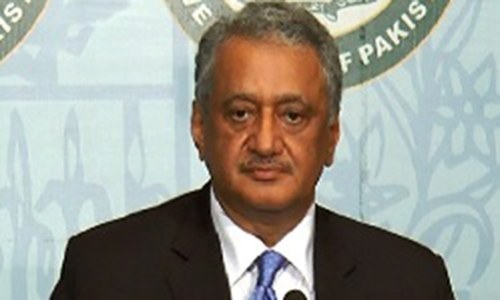
“The fifth ministerial conference is expected to adopt a forward looking Islamabad Declaration. … The declaration would underline commitments from the Heart of Asia countries and partners for sustained efforts towards promoting peace and security, economic development and connectivity in the region,” Foreign Office spokesman Qazi Khalilullah said.
Afghan president, Indian foreign minister to attend 14-state Islamabad conference
Pakistan, Afghanistan, Azerbaijan, China, India, Iran, Kazakhstan, Kyrgyzstan, Russia, Saudi Arabia, Tajikistan, Turkey, Turkmenistan and the United Arab Emirates are part of the initiative launched in 2011 for encouraging economic and security cooperation between Afghanistan and its neighbours for dealing with the common problems of terrorism, extremism and poverty.
Six key areas in which the 14 countries have been pursuing confidence-building measures since the 2013 Almaty meeting are disaster management, counter-terrorism, counter-narcotics, trade and investment, regional infrastructure, and education.
Foreign ministers from 10 of the countries, including China and Iran, have confirmed their participation, while others will be represented by senior officials. The process is supported by 17 other, predominantly Western, countries, and 12 international organisations which are also sending senior representatives.
GHANI & SWARAJ: After days of speculation, President Ghani and Ms Swaraj confirmed on Monday that they would be coming to Islamabad for the meeting. Their participation has assumed greater significance because of their countries’ frosty ties with Pakistan, particularly during the past few months.
Prime Minister Sharif’s ice-breaking meetings with President Ghani and his Indian counterpart Narendra Modi on the margins of the Climate Change Summit in Paris last week paved the way for their participation.
Besides attending the conference, the Afghan president and the Indian minister will also meet the prime minister.
Diplomatic observers fear that Pakistan-India bilateral issues and the Pakistan-Afghanistan discussions on the future of the stalled Afghan reconciliation process could overshadow the event.
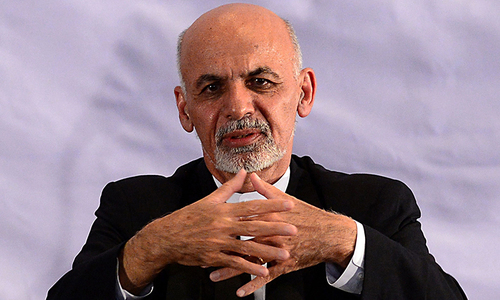
President Ghani said in Kabul that he would travel to Islamabad on Wednesday for the inauguration of the conference.
“I am going to Pakistan because the conference is about Afghanistan. Being an Afghan-focused event, it is important that I attend,” he said.
He will hold crucial talks on a possible resumption of the reconciliation process that has been suspended since the confirmation of Taliban leader Mullah Omar’s death.
Meanwhile, in Delhi, Indian Union Minister Rajiv Pratap Rudy said Ms Swaraj would leave for Islamabad on Tuesday.
The confirmation came a day after the national security advisers of Pakistan and India met in Bangkok for previously unannounced talks on security issues and Kashmir, where they essentially agreed to continue the engagement. The meeting was a follow-up to the Paris talks between Mr Sharif and Mr Modi.
Foreign Affairs Adviser Sartaj Aziz said a deadlock in the dialogue between both countries had been removed to some extent.
He rejected as premature speculations about resumption of the ‘Composite Dialogue’ where both countries have in the past discussed outstanding issues in their relationship.
He also shed light on how the NSAs’ meeting had been arranged.
Mr Aziz said that when Prime Minister Sharif met Mr Modi in Paris, he enquired if the Indian foreign minister would attend the Heart of Asia meeting. Mr Modi, according to Mr Aziz, agreed, but said that her visit should be preceded by the NSAs’ meeting.
The two leaders had in their previous meeting in Ufa, Russia, on the occasion of a summit of the Shanghai Cooperation Organisation, also agreed on the advisers’ meeting for talks on terrorist threats. But the meeting could not be held later because of differences over agenda and Pakistan’s insistence on seeing Kashmiri leaders.
Mr Sharif and Mr Modi found a way in Paris to overcome the stalemate by including the foreign secretaries in the meeting, so that a broader range of issues, including Kashmir, could be discussed, Mr Aziz said.
Published in Dawn, December 8th, 2015