MITHI: An inspection team sent by Sindh government to inspect Reverse Osmosis (RO) plants in various areas of Tharparkar district reportedly found sizeable number of the plants out of order, out of the total 450 installed an year ago.
A three-member team led by Farooque Ahmed Bhambhro, visited various areas of Thar including Mithi, Islamkot, Nagarparkar, Dahli, Chahhchhro, Diplo and Kaloi during their week-long stay in Thar and reportedly found more than 50 per cent plants out of order due to the alleged negligence of the local functionaries.
Sources privy to the team, which concluded the inspection on Wednesday, said that the team found at least 88 out of 102 plants out of order.
Billed as ‘Asia’s largest (capacity-wise) RO water filter plant’, a 2mgd (million gallon per day) plant was installed in the Misri Shah area of Mithi and was to inaugurated in January by PPP co-chairman and former president Asif Ali Zardari.
Residents of Mithi, while talking to Dawn.com, lamented that the plant aimed at providing at least 2 million gallons of water to the areas where water is scarce, but it is providing only 0.5 million gallons daily.
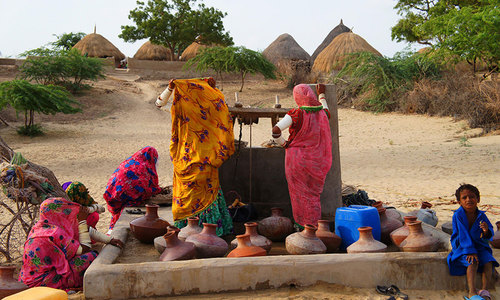
"Our womenfolk are still using the age old method of bringing water in pots from wells," said an angry citizen.
Chief Operating Officer of Pak Oasis, the company that has been working in Thar’s water sector since 2004, said that at least Rs5.4 billion were allocated by the provincial government for the project.
Chairman of Sindh's ruling party, Pakistan Peoples Party (PPP) Bilawal Bhutto Zardari, had reportedly taken notice of the frequent complaints by Tharis and had sent the team.
Also Read: Living and dying for water in Thar
Another 150 RO plants were installed in five talukas of Tharparkar district.
Tharparkar lies in the south-east of Sindh province. With a population of about 1.2 million, it is one of the poorest of country's 120 districts, with the lowest human development index.
Groundwater in Tharparkar is largely brackish, unfit for human consumption, yet people in absence of drinking water sometimes consume it. Analysis of water samples collected from parts of Tharparkar suggest presence of fluoride content that is harmful for human health and eventually lead to illness or bone deformation.