6
6


ISLAMABAD: The gap between male and female voters has widened from 10.97 million in May 2013 to 11.65m in Sept 2015, with the Islamabad Capital Territory being the only part of the country having around 46 per cent women voters.
In 2013, there were 86.25m registered voters, which included 48.61 per cent men and 37.63 per cent women. According to voter registration data released by the Election Commission of Pakistan (ECP) in Sept 2015, just before the start of local government polls, there are now 93.07m voters on the electoral rolls, which include 52.36m male voters and 40.7m female voters — a difference of 11.65m.
In Punjab, the difference increased from 6.16m in 2013 to 6.5m in 2015. In Sindh, it climbed from 1.98m to 2.1m. In KP, the male-female voter registration gap grew from 1.74m to 1.88m. In Balochistan, it rose from 0.491m to 0.494m. In Islamabad Capital Territory, the difference between male and female voter increased from 46,113 to 55,308.
Interestingly, the gap has narrowed down in the Federally Administered Tribal Areas, from 549,549 to 536,239 voters.
The overall percentage of female voters stands at 43.74 per cent against 56.26 per cent male voters. In Punjab, the ratio of female voters is 43.93pc against 56.07pc male voters. In Sindh, the female voters constitute 44.68pc of the total registered voters.
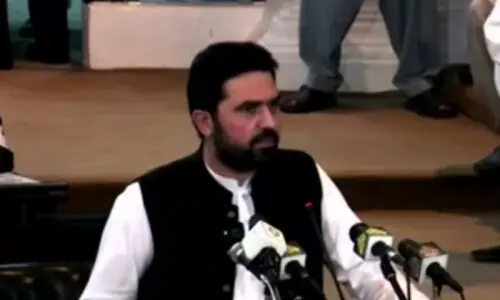
In Khyber Pakhtunkhwa, 42.97pc women and 57.03pc men are on the electoral rolls. The ratio of female voters in Balochistan is 42.58pc against 57.42pc male voters. In Federal Capital Territory, the female and male registered voters’ proportion is 45.94pc and 54.06pc, respectively. Mr Rabbani, who is on a visit to Britain, urged the world to apply uniform standards on all terrorist incidents without any discrimination on the basis of religion, ethnicity or race.
He delivered a public talk at the prestigious London School of Economics and held meetings with British parliamentarians.
In Fata, women voters’ enrolment shows a slight improvement, but the area still has the lowest proportion of female voters which has now jumped from 33pc in 2013 to 34.43pc now. Male voters still constitute 65.56pc of total voters — reflecting a huge gap.
The Free and Fair Election Network (Fafen), a coalition of dozens of NGOs working together to improve the electoral process in the country, has called for urgent efforts by political parties and the ECP to increase women voter registration before general elections in 2018.
“With more than 11 and a half million female eligible voters not registered, Fafen has urged the ECP to declare a ‘women voter registration emergency’ in the country and redouble efforts, in cooperation with the National Database and Registration Authority (Nadra), political parties and civil society organisations nationwide to help women register as voters,” the network said in a statement released on Wednesday.
It observed that leadership was needed from the ECP now, well ahead of the 2018 general election, to protect the right of franchise of all women.
Nadra’s partnership is needed because one major reason for the growing gap between male and female registration is the unwillingness or inability of many women to acquire a computerised national identity card (CNIC), which is a legal prerequisite for registration as a voter. Nadra is responsible for issuing CNICs, which have many other potential benefits for women in addition to enabling voter registration.
The increasing difference between male and female voter registration is disturbing, as registration as a voter is the primary step towards political and electoral empowerment of citizens.
Published in Dawn, November 26th, 2015