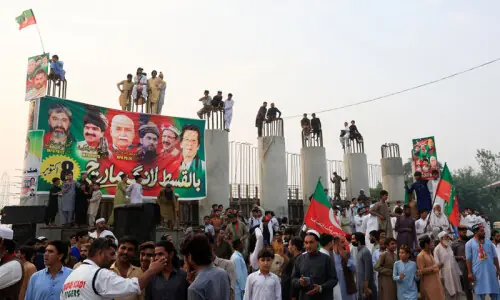
QUETTA, Oct 17: Baloch, Pukhtun and Sindhi nationalist leaders on Friday condemned the federal government’s policies regarding the construction of the Gwadar port and vowed to resist the development projects launched unilaterally to usurp the resources of the smaller nationalities.
Speaking at a public meeting at Gwadar, they said ignoring the sentiments of the people of Balochistan, the NWFP and Sindh to please Punjab would harm the solidarity and integrity of the country.
Pakistan Oppressed Nations Movement Chairman Sardar Ataullah Mengal spoke through satellite telephone from London and a recorded speech of Jamhoori Watan Party leader Nawab Akbar Bugti was played.
They accused the rulers in Islamabad of framing policies to colonize the Baloch and separate the 700km coastline from Balochistan.
They said the usurpers must learn a lesson from the fall of Dhaka.
Both the former chief ministers said the Baloch people would not permit the oppressors and usurpers to subdue their movement and maintained that neither the establishment of cantonments nor use of force could pressure them to bow down before the autocratic rulers.
They called upon the Baloch youth to defend their motherland and counter the efforts to capture their land and resources.
Sardar Akhtar Mengal, Sardar Sanaullah Zehri, Dr Hayee Baloch, Mir Hasil Bizenjo, Mir Shahid Bugti, Akram Shah, Zain Shah, Tala Mahmood and others also spoke.
They said Pakistan was a multinational state comprising the Baloch, Sindhis, Pukhtuns and Punjabis and maintained that in the federation no big province had the right to manipulate the political power to usurp the resources of or deny constitutional rights to the smaller units.
They blamed the army generals for protecting the interest of Punjab at the cost of the Bengali people. They said that after the division of the country, the smaller nationalities were victimized and suppressed for looting of the wealth of the smaller provinces.
They said all the federating units had equal rights in a federation but the smaller provinces had been denied the constitutional rights and their leadership had no representation in the decision-making forums.
They said the assemblies of Balochistan, the NWFP and Sindh had adopted resolutions against the construction of the Kalabagh dam. The Sindh Assembly had rejected the construction of the greater Thar canal and the Balochistan Assembly had opposed the establishment of cantonments in the province, they said.
They said the rulers were reluctant to respect the resolutions adopted by the assemblies of the smaller provinces and were suppressing the voice of the opponents of the construction of the Gwadar port and exploration of the oil and gas resources without the consent of the owners of the land.
They warned that the construction of the port and other large projects would turn the Baloch into a minority in their area and cited the example of Karachi, where the Sindhi people had been outnumbered due to the flow of population from other provinces. They said a repetition of the experience in Gwadar would not be allowed.