Afridi hints PTI’s march will move beyond Swabi
• KP chief minister invites supporters from across country to gather at Swabi Interchange tomorrow
• Says repeated operations failed to eliminate terrorism in province
• Rejects claims PTI opposes state institutions
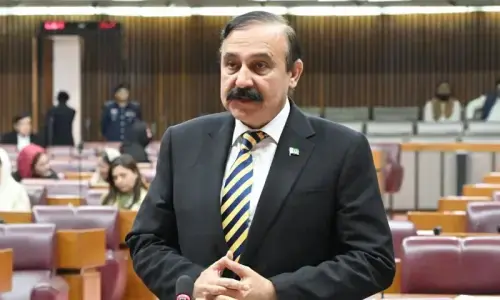
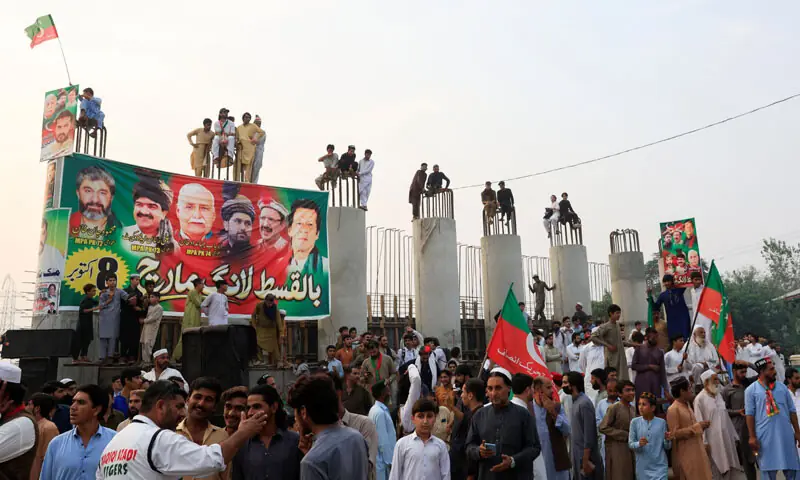
PESHAWAR: Khyber Pakhtunkhwa Chief Minister Sohail Afridi has invited people from across the country to gather at Swabi Interchange on Oct 11, where the PTI plans to announce the next phase of its long march for the release of incarcerated party founder Imran Khan.
The march, which began on Oct 4 after talks between the PTI and federal government failed to resolve their differences, has so far remained within KP, despite initially being billed as a march towards Islamabad. Its eventual destination remains unclear.
Addressing supporters on the way to Charsadda, CM Afridi hinted that the protest would move beyond Swabi, telling participants not to worry because “we have to go elsewhere as well after Swabi”. He also dismissed federal warnings against taking the march outside KP as “empty threats”.
The chief minister said convoys from Peshawar, Malakand and Kohat divisions would converge on Swabi, while participants from Bannu and Dera Ismail Khan divisions would join the march through the China-Pakistan Economic Corridor route.
He urged people to participate in PTI’s struggle for “Haqiqi Azadi and sovereignty”, reiterating that the party’s next course of action would be announced at Swabi.
Counterterrorism policy
A major part of CM Afridi’s address was devoted to the security situation in KP and criticism of the federal government’s counterterrorism approach.
He claimed that around 14,000 intelligence-based operations and 22 major military operations had been carried out in the province between 2004 and 2026, but terrorism had still not been eliminated.
“Yet, terrorism has not been eliminated,” he said, adding that civilians, police personnel and members of the armed forces continued to lose their lives.
CM Afridi alleged that proposals from the provincial government for a new strategy against terrorism were not being given due consideration and called for a comprehensive policy that should incorporate the approach advocated by Imran Khan.
He maintained that KP had borne the brunt of terrorism for years and argued that repeated security operations had failed to produce lasting peace.
The chief minister also rejected suggestions that the PTI was opposed to state institutions or rebelling against Pakistan.
“We are not rebelling against Pakistan; we are resisting an oppressive system and its flawed policies,” he said, stressing that the party’s struggle was for constitutional supremacy and equal application of the law.
He argued that political activity and demands for constitutional rights should not be treated as crimes and criticised “selective application of the law” against PTI leaders and workers.
CM Afridi said the Constitution was a social contract binding the country together and warned that unequal application of the law would further erode public confidence in state institutions.
Financial grievances
The chief minister also accused the federal government of withholding KP’s financial rights.
He claimed that the Centre owed the province more than Rs5 trillion and had failed to update KP’s share under the National Finance Commission award.
CM Afridi also criticised compensation arrangements for families displaced by military operations, saying households whose homes had been destroyed had been promised Rs400,000 each, while many affected families were still waiting for adequate assistance.
Referring to the impact of military operations, displacement and drone strikes, he said policymakers needed to understand the hardships faced by families who had lost homes and relatives.
He defended the performance of the PTI-led provincial government, claiming that it had pursued reforms in policing, legislation, digital governance and public transport despite financial constraints.
He maintained that Pakistan’s progress depended on justice, political stability, rule of law and an independent foreign policy.
Published in Dawn, October 10th, 2026