0
0

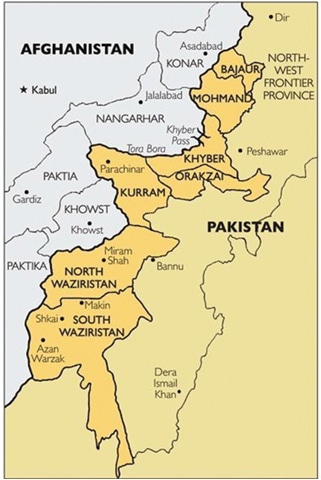 |
When it comes to the so-called ‘tribal areas’, successive Pakistani governments have merely adopted and reinforced British colonial laws aimed at controlling the local population.
In 1867, the Murderous Outrages Regulation was enacted in British India to give the government additional powers to prosecute serious crimes such as murder. It was re-enacted in 1873 with minor modifications, and again in 1877 as the “Ghazi Act” for its use in the Pakhtun-inhabited frontier districts.
The regulation was found to be inadequate to contain Pakhtun opposition to British and government rule, and so, new acts were added to it from time to time. The regulation took their present form primarily through the Frontier Crimes Regulation (FCR) of 1901. In 1947, the government of Pakistan added the clause that residents can be arrested without specifying the crime.
The FCR permits collective punishment of family or tribe members for crimes of individuals. It permits punishment to be meted out by unelected tribal jirgas and denies the accused the right to trial by judiciary. Tribal chiefs can also be held responsible for handing over suspects charged by the federal government without specifying an offence. Failure to comply can make the tribal chiefs liable for punishment. Human rights activists and the superior judiciary argue that the regulation violates basic human rights.
In FATA, the FCR supersedes the Pakistani constitution
The regulation denies those convicted of an offence by a tribal jirga the right to appeal their conviction in any court. It gives the federal government the right to seize private property in Fata and to convict an individual without due process. It lets the government restrict the entry of a Fata tribe member into a settled district in the rest of Pakistan.
The discriminatory provisions of the regulation, both substantive as well as procedural, are in violation of the Constitution of Pakistan. Take for example the selection of jirga members (section 2), trial procedure in civil/criminal matters (sections 8 & 11), demolition of and restriction of construction of hamlet, village or tower in the North-West Frontier Province (section 31), method of arrest/ detention (section 38 & 39) security for good behaviour (sections 40, 42), or even the imposition/collection of fine (sections 22-27).
The FCR denies tribal residents the right to be dealt with in accordance with the law; the security of person; safeguards to arrest and detention; protection against double jeopardy or self- incrimination; the inviolability of the dignity of man; prohibition of torture for the purpose of extracting evidence; protection of property rights; and the equality of citizens.
Other articles of the Constitution of Pakistan, such as Article 247, ensure that FATA residents cannot overturn the FCR.
In August 2011, President Asif Ali Zardari enacted a presidential order to amend the FCR. Widely viewed as the most substantive changes in the 110-year history of the regulation, the reforms included new time limits on the amount of time local administration officials can wait before informing that they have taken someone prisoner. In addition, the 2011 amendments placed new restrictions on the collective responsibility clause in the regulation.
The FCR permits collective punishment of family or tribe members for crimes of individuals. It permits punishment to be meted out by unelected tribal jirgas and denies the accused the right to trial by judiciary.
According to the FCR despite the presence of elected tribal representatives, the Parliament of Pakistan can play no role in the affairs of FATA.
Article 247 of the Pakistani Constitution provides that no Act of Parliament applies to FATA, unless the President of Pakistan provides consent. Only the President is authorised to amend laws and promulgate ordinances for the tribal areas. The elected representatives thus have no say in administration of FATA. It also repeals the jurisdiction of Pakistan’s courts over FATA. By inference, this also limits the application of fundamental rights to FATA.
Article 247 and the Federal Crimes Regulation have been condemned by several jurists. Late Chief Justice of the Supreme Court, Justice Alvin Robert Cornelius, said that the FCR is “obnoxious to all recognised modern principles governing the dispensation of justice” in the case of Sumunder vs State (PLD 1954 FC 228).)
After taking a unanimous vote of confidence on March 29, 2008, then Prime Minister of Pakistan, Yousaf Raza Gilani, expressed his government’s desire to repeal the FCR. However, no progress has been made on overturning the regulation.
Published in Dawn, Sunday Magazine, August 9th, 2015
On a mobile phone? Get the Dawn Mobile App: Apple Store | Google Play