3
3
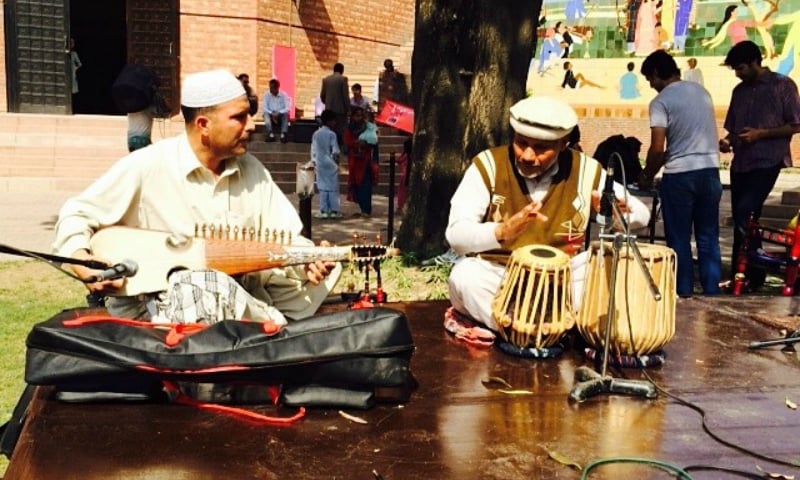

It was a bright sunny Saturday when I ventured into the Alhamra Art Centre to attend the Lahore Music Meet.
I expected people to turn up in droves, driven by their immense love for music. However, even way past noon I was met with a nearly deserted venue.
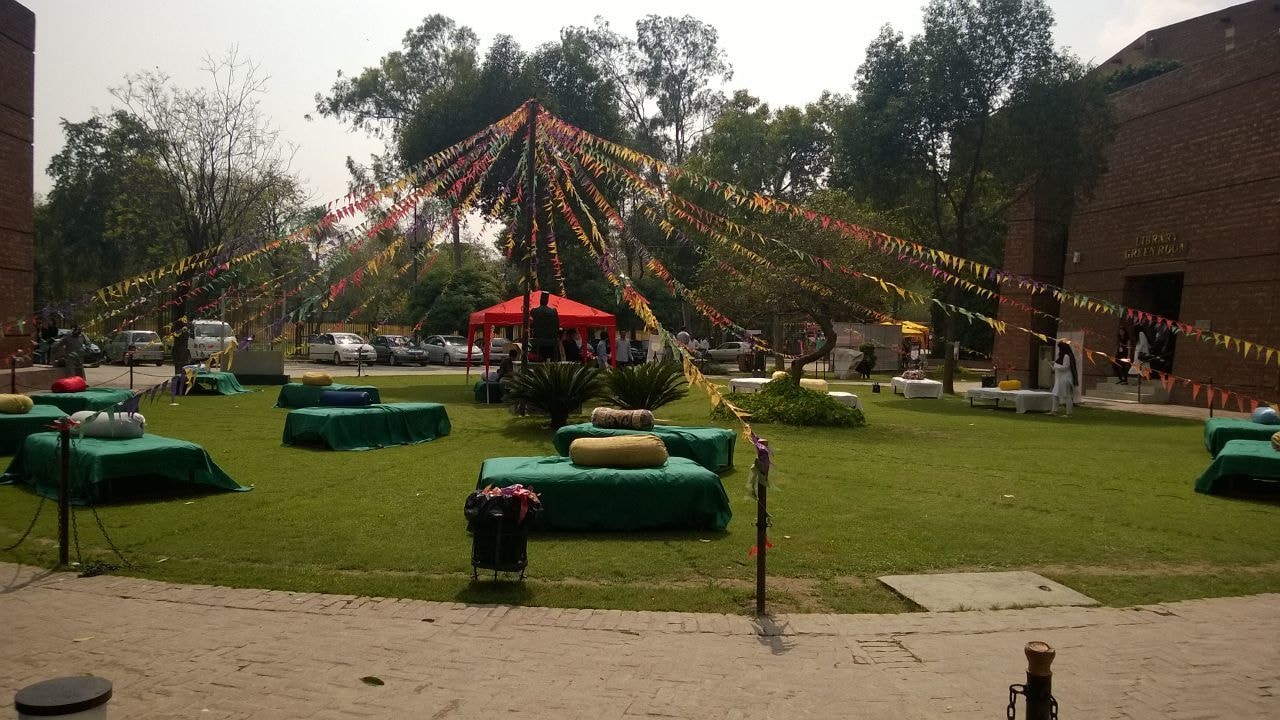 |
There were just a bunch people walking around, while an underground band tuned its instruments in one of the lawns. This was supposed to be the ‘lunch break’ between panel discussions, but the sessions had run overtime.
It turned out the event started at least half an hour after its scheduled time. But once they began, the sessions went on smoothly and wrapped up in the one hour they were allotted. Despite this hitch, founders Noor Habib and Natasha Noorani were optimistic and said the event had exceeded their expectations.
Read also: Trending: Snapshots from the Lahore Music Meet
What was LMM all about?
The Lahore Music Meet was a one-of-its-kind event meant to initiate dialogue and discourse among stakeholders on the problems the music industry (if it can be called that) faced and how they could be solved.
Following some limited social media promotion, those looking forward to it were curious to find out what it had in store for them.
Questions on my mind were: what topics will be discussed? Who all will perform? Will it also turn out to be an ‘elitist’ gathering like the litfests?
First and foremost, the young team of founders behind LMM should be commended for coming up with this idea and then executing it at this scale with barely any funding.
That it fell short of the expectations of a lot of visitors is another story, but at this age (all four founders are in their early 20s) doing something long overdue and this big is definitely laudable.
“I did not expect it to unfold like this. People are here and its so vibrant; the response generally has been incredible.The spirit of the event was to get people together and share their stories and that’s happened,” co-founder Noor said.
Natasha added, “It makes us really happy when people who’ve never met are coming together, sharing ideas, and some are actually contemplating collaborating on projects.”
The hitch: money, money, money
Low attendance could be attributed to a relative lack of advertising.
The event was just promoted on social media, with no prior media coverage. This, according to the organisers, was due to a lack of funds.
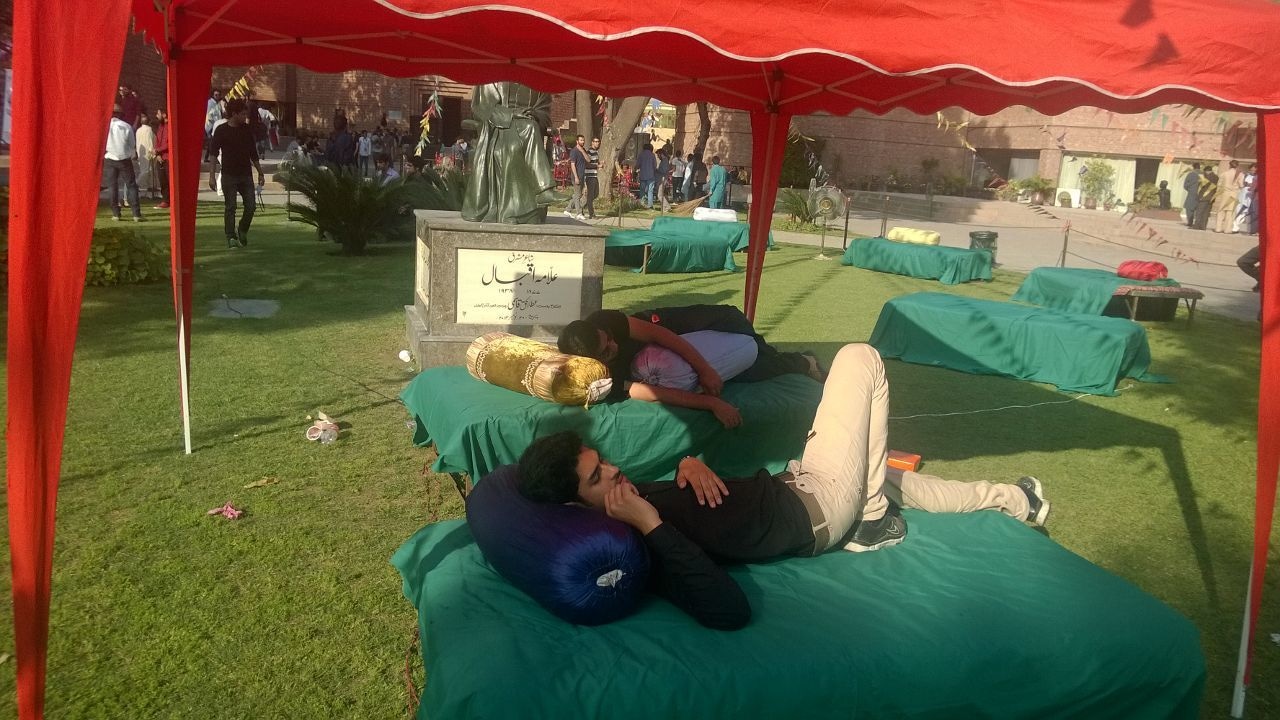 |
| Attendees could lounge on takhts between sessions. |
“That’s fine because the people who are attending are relevant and are as motivated as we are. The idea was to have everyone onboard who wants to make a difference and create a fraternity. I think we’ve taken a step towards that,” Natasha said.
She added that they did not have a big budget and since it was their first time organising the meet no one trusted them with the money as they were young, right out of or in college.
“We reached out to a lot of people, but the main thing was funding. You have to pay the artists who’re performing or giving workshops. We spent on that and on making sure the sound was impeccable. Advertising costs money, which we did not have a lot of,” she said.
The big question: was the music meet inclusive enough?
The organisers had tried to make the programme as inclusive and interesting as possible, incorporating discussions on many kinds of music, problems facing the local industry, musicians sharing their experience with aspiring individuals, workshops and more.
This was a job pretty well done; a session on classical music was scheduled to run side by side with a session on 'music of resistance'.
| |
Noor said they had managed to being together people from different backgrounds in music. “There are people who operate independently and do certain types of music, but I think never before has it happened that all sorts of people are here and are benefiting from each other,” Noor said, to which Natasha added, “You have a talk on metal music and then you have one on classical music. So that’s diverse. I think we have done a decent job.”
Natasha added, “One thing that was difficult for us to get due to resources was representation from Khyber Pakhtunkhwa and Balochistan; that’s something we’re adamant on for next year. We also need to locate a lot more folk artists for performances. We had a dhamaal performance, but there should be more of that.”
The low-down on panel discussions:
Generally, most sessions started off well but soon got lost in tangential musings and appeared unstructured.
Panellists, instead of suggesting solutions, got off track while some even appeared confused throughout.
|
Despite that, noteworthy discussions included 'Marketing Yourself as a Musician' with Selina Rashid, Raavail Sattar, Jimmy Khan and Waqas Almas; a session on corporate patronage of music with Ahmer Naqvi, Umer Sheikh, Bassam Qureshi and Omran Shafique; a session on shrines as spaces for music with Asrar, Arieb Azhar, Ali Usman Qasmi, Saif Samejo, Iqbal Qasmi and Ahsan Bari; the art and business of film scoring with Adnan Malik, Sahir Ali Bagga, Jami and Imran Raza; and an exciting session on classical music in modern age, music videos and metal music in the local market.
The 'storytelling' sessions were pretty interesting too, where well-known musicians shared their experiences, including Ali Gul Pir, Suraiya Multanikar and Goonga Saeen. The ‘musical conversation’ with Gumby, Rakae Jamil and Ahsan Bari was probably one of the most well-attended sessions where the three extremely talented musicians enthralled the audience with their skills on their respective instruments: the guitar, sitar and drums.
| |
“I had come to listen to Rohail Hayat, but when that got cancelled I went to listen to Gumby and, man, he was awesome,” said Fazil, a young visitor at the music meet. He echoed what a lot of other visitors suggested that the event should have been advertised better so more people could come.
Both days ended with musical performances: the mesmerising Sachal Orchestra and Ustad Naseeruddin Saami on the first day and Asrar and Jimmy Khan on the second.
It's true that there was something for everyone: sessions in the Alhamra auditoriums, underground bands and individual singers entertaining crowds outside in the lawn, and lots of people-watching. Of course, there’s always room for improvement.
What can we expect from LMM in the future?
“Something that we’ll make sure we do next year is advertising, which we will start a couple of weeks earlier. We might also change the timings because a lot of people didn’t turn up in the morning. But even this year we didn't expect this many people to show up,” Natasha said.
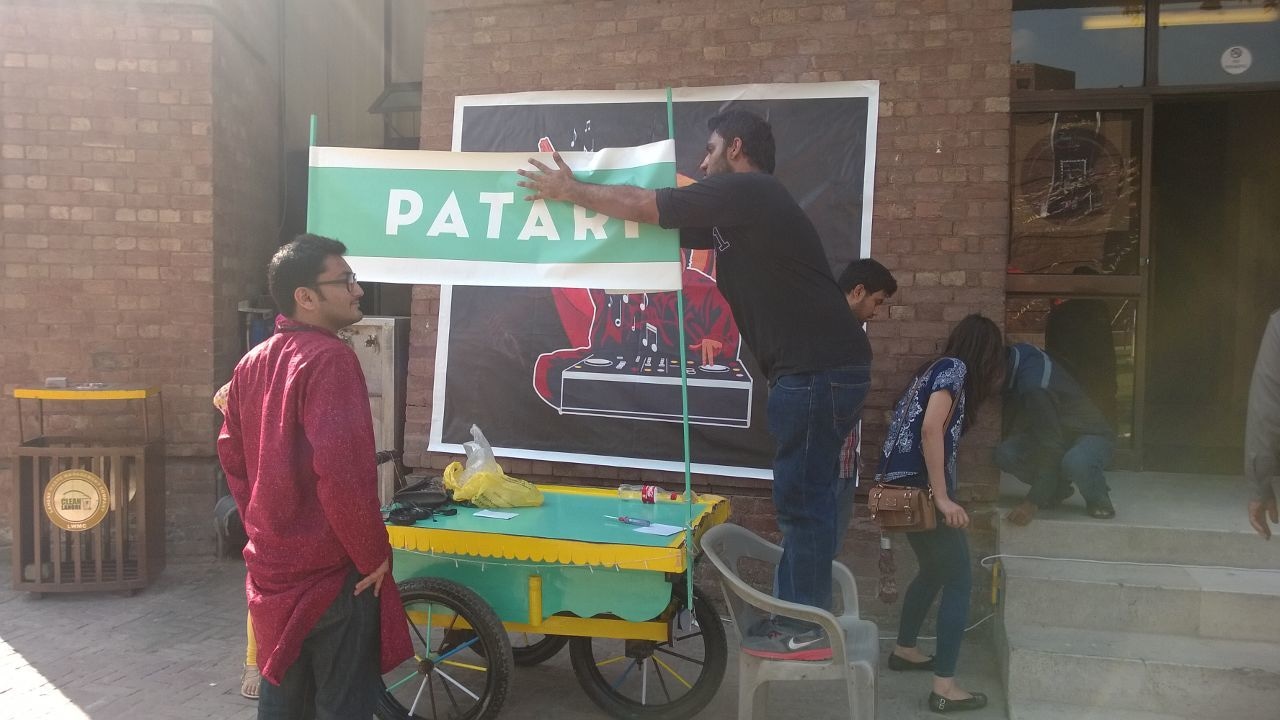 |
| Music sharing site Patari sets up a stall. |
But Uzair Sultan, attending LMM with his family and whose children had their own music band, was a little critical.
“This event should have helped develop music sense in people, but since it was only advertised on social media, only a certain type of person is here. They should have got musicians from the Walled City where Taxali Gate has its own music. This isn’t mainstream; there are no locals here. They should have engaged the general public; Lahore has so many music lovers. Where were Abida Perveen, Tina Sani?” he said.
Some of the participating musicians lauded the idea behind LMM and congratulated the founders for coming up with an initiative to encourage dialogue on music.
“It’s a great initiative. The invited panelists were all experts in their fields and this music fest will grow like the literature fests,” said Arieb Azhar.
Underground musician Umar Aziz appreciated how dialogue on music has been initiated and problems they faced surrounding royalties, copyright, management and piracy had all come to the fore. “Musicians have delivered talks and taught people. I just feel more musicians should have been invited,” he added.
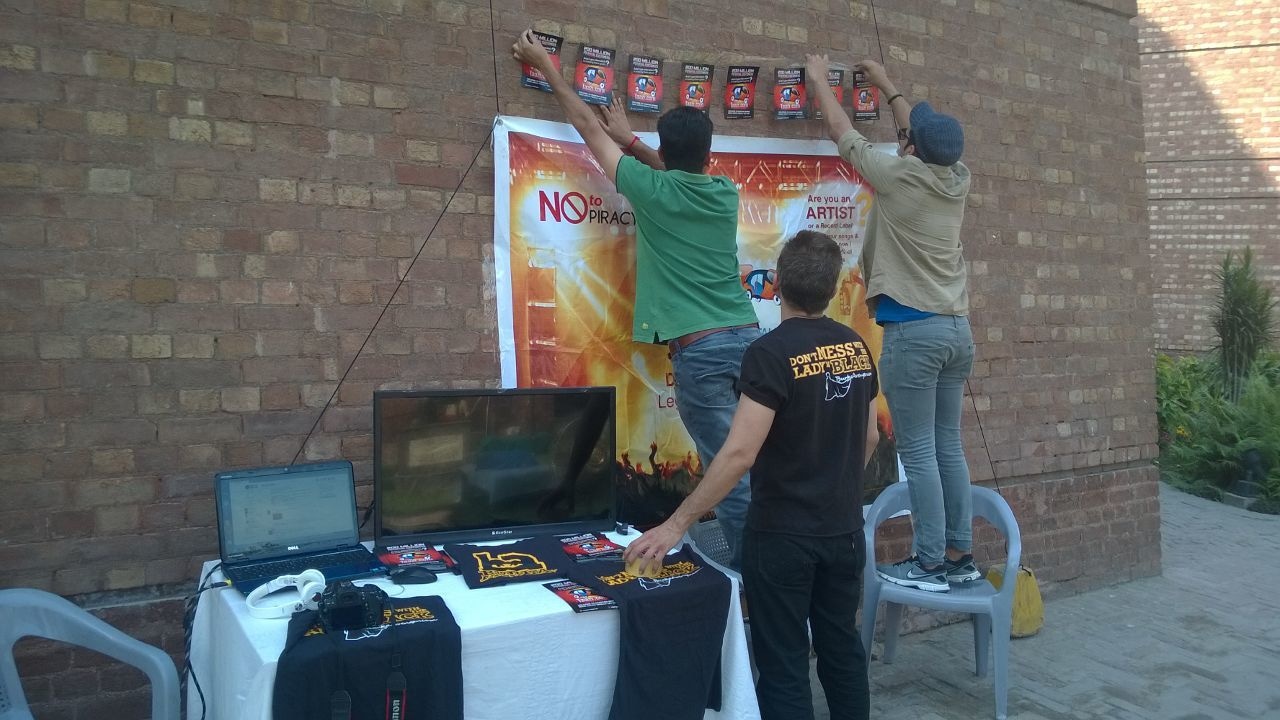 |
| Piracy was one of the issues discussed at LMM. |
Master sitar player Rakae Jamil said the event was a positive step in creating a better environment for music in Pakistan and that more of such events were needed to cultivate in the audience music sense.
“It’s a good effort for a first try. A bit more organisation could have helped, yet it’s amazing. The good thing is it covered all kinds of music from rock, pop, classical to metal and gets together people from the music industry and all genres of music,” he said — and that sums up the meet pretty well as a whole.