13
13


We all love the delicious chanay, a true delight with poori, in Pakistan, and a side of batura across the border in India.
I do not remember the first time I had chanay poori, I’ve been eating it all my life and loving it. The proverbial poori chanay ka nashta is what we immigrants crave for and that is my first meal on all my visits to the motherland.
Chanay is a legume, and when legumes are hulled and split it is observed that they make for easy cooking and digestion. The subcontinent is known for innovatively cooking chanay in a variety of ways.
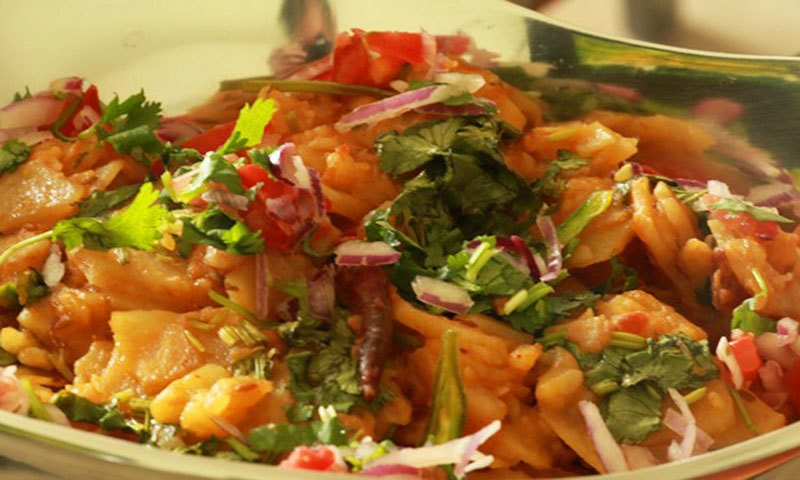
We serve spicy packaged chanay snacks and chana choor garam sold by the wandering neighbourhood vendour, chana chaat, chanay key daal ka halwa and the ever favourite Multani cholay, Amritsari cholay and chikaar cholay, a Punjabi delight.
 |
The interesting thing about chickpeas is that it may be eaten as a whole or as a split pulse; it’s the grains that are used as cholay chana. Chickpea has been known to Asia and Europe for over eight to 10 thousand years and was cultivated in both continents.
Archeologists claim that its earliest cultivation may have been in the regions encompassing the Mediterranean, Persia, Afghanistan and the lands surrounding it. History suggests that the subcontinent may also have been its place of birth, hence the wide use of chickpea in Pakistan and India, ranging from pakora, poori chana, halwa and the list goes on.
A Lahori Punjabi twist to the Multani chanay is the chikar cholay, made with chicken and chanay. Across the border the delicious Multani chanay are referred to as Amritsari chanay. Whatever may be the name, the taste is richly rustic and a favourite from pauper to prince.
As a child, I savoured the taste of the chanay from the poorioon ke dukaan; for the ones made at home never tasted the same. And then I discovered the secret ingredient: soda!
It is soda that brings out the melt-in-your-mouth texture of the chanay.
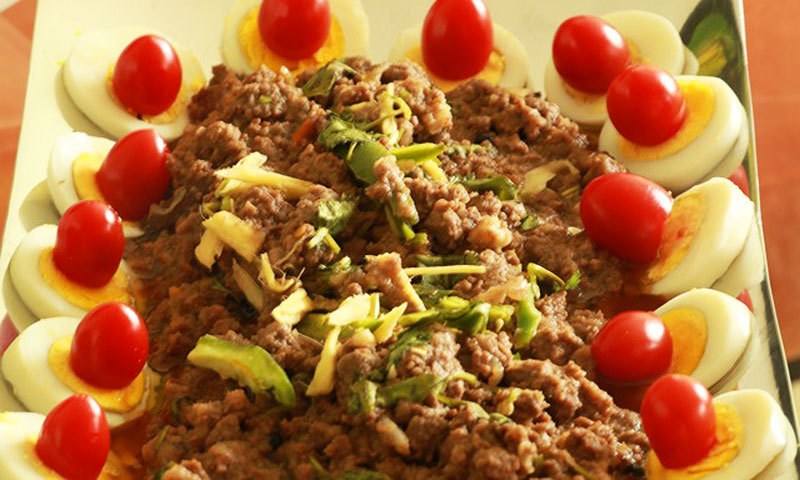 |
No lavish winter breakfast is complete without dum ka keema and my research lead me down an interesting road. The modern day dum ka keema is a derivation of the malghubah recipe found in the Ain-e-Akbari. My mother always referred to a dish called malghubah, whenever she saw a dish mixed to the point of becoming unrecognisable. I thought it was a made-up name until this week when I came across an actual dish by that name, and its main ingredients and style of cooking was similar to that of the Hyderabadi dum ka keema.
The historical malghubah recipe is made with minced goat meat, yogurt, ghee (clarified butter), onions, fresh ginger root, and cloves.
The tried and tested recipes I share with you today are from the kitchen of Shazli Auntie. Here they are, from my kitchen to yours:
Dum ka keema
Ingredients
1 to 1 ½ lbs mince meat
2 sliced onions
1 tbsp ginger garlic
1-2 tsp chillie powder
Pinch of turmeric
3 tbsp yogurt
1 tbsp raw papaya
2 green chillie
2 tbsp lemon juice
Small piece of coal
Salt to taste
¼ cup of oil
4 to 5 cloves
Method
Marinate the mincemeat in all the ingredients, except onion, green chillie and oil. Cover and set aside in the refrigerator for a few hours. In a separate pan, heat the oil and the brown the onions, adding mincemeat mixture and cooking on high heat for a few minutes.
Wrap coal in a foil with one tsp. of oil and add to the pan, seal lid and initiate the dum method of cooking for 20-30 minutes on medium heat.
Remove the coal and add green chillies, seal the lid and let it simmer on low heat until done.
Garnish with mint, coriander, lemon and chopped onions and serve with naan or paratha.
Chanay or Cholay
Ingredients
1 lbs chickpeas
½ tbsp. red chilli
Salt to taste
1 onion
1 tsp fresh ginger and garlic
1 to 1 ½ tbsp. coriander powder
½ tsp cumin seeds
1 tsp garam masala
¼ oil
½ tsp baking soda
Method
Soak the chickpeas overnight and drain, adding fresh water and salt and then boil until tender, approximately 2-3 hours.
Once boiled, add all the masalas and cook until tender.
Fry onions and garnish. Cover and cook for a few minutes, serve with a side of your choice.
—Photos by Fawad Ahmed