ISLAMABAD: Marriage and separation-related complications have increased for non–Muslims after the 18th Amendment, under which religious matters and marriage issues were devolved to the provinces.
As none of the provinces has drafted its own laws on the matters, the members of the minority communities feared the worst if they came up with any legislation.
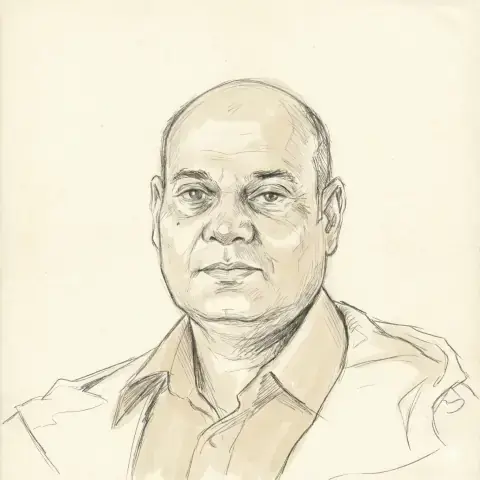
“The major concern is that if the four provinces make separate laws, our community will suffer enormously,” said Dr Ramesh Kumar, a PML-N MNA and patron-in-chief of the Pakistan Hindu Council.
Currently, there is no legal document for the minorities to prove their marriage. Without any legal recognition of a marriage, the Hindu women face problems in getting their names changed in their computerised national identity cards (CNIC) and passports.
These issues were highlighted in a report titled “Religious minorities and marriage laws in Pakistan.”
Leaders of minority communities demand provinces legislate to address their concerns regarding registration
The report compiled by Tahir Mehdi has been published by the Community World Service. It highlights the issues related to marriage and divorce for Christians, Hindus, Sikhs, Bahai, Ahmadis, Parsis and even the matters related to cross–religion marriages and conversions.
“The main impediment in the formulation of the law for the minority communities is that there is a difference of opinion between the community members and the religious leaders of the communities,” Tahir Mehdi told Dawn.
“But this is where the state needed to interfere. If two individuals do not want to live together, there has to be a legal way out.”
He referred to the lack of any provision of divorce in the Christian and Hindu faith, which is why the religious circles of these communities were not supporting any regulation that would legalise divorce.
However, Dr Kumar has submitted a draft bill on Hindu marriage and separation law to the federal cabinet. “We cannot have divorce but the law calls it separation,” Dr Kumar told Dawn.
Meanwhile, the report highlighted the issues faced by different communities due to the absence of a centralised legal framework.
Currently, certificates issued by nominated organisations, churches or licensed persons are admitted to courts as the marriage evidence and to Nadra for obtaining CNICs.
The report also highlighted lacunas in various laws such as the Sindh Child Marriage Restraint Act 2013 that criminalised child marriage but did not invalidate such marriages.
It was suggested that the marriage registration system should be introduced at the local level for the non-Muslims too as it is for the Muslims.
Published in Dawn, December 8th, 2014