1
1
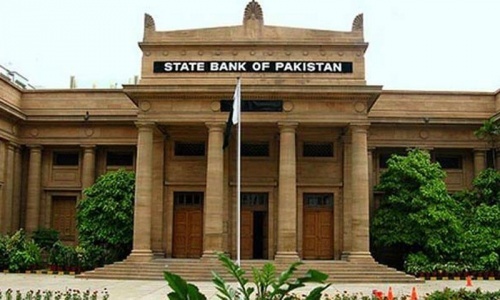

KARACHI: Despite a better credit off-take by the private sector, banks did not change their strategy to maximise their investment in government papers in the fiscal year 2014, a report of the State Bank reveals.
“Banks’ holding of government securities now stands at 83 per cent of their total liquid assets maintained,” said the State Bank’s quarterly Compendium July-2014.
For more than five years, banks’ over 80pc liquidity has been lying with government papers which damaged the role of private sector in economic growth.
Banks have over Rs4 trillion in government papers which keeps them profitable despite poor economic growth and slump in the global financial market.
Analysts say that 50pc of this huge investment in government paper could produce revolutionary impact for economy if this liquidity is directed towards private sector.
Due to risk-free high yielding opportunity for banks to invest in government papers, banks left effort to participate in the economy.
Out of the total banks’ investment, 93pc was invested in government papers till end of FY14. The banks investment reached Rs4.360tr till June 2014 from Rs3.836tr in July 2013.
Since local banks were not ready to encourage domestic investors to go for new projects or new plan, it also badly hit foreign investment which shrunk to slightly over $1bn in FY14 from $5bn in 2008. Foreign investments are used to follow domestic investment.
According to another report of the State Bank, banks’ holdings of treasury bills on June 2014 were Rs1.603tr and Pakistan Investment Bonds Rs2.170tr. Banks also hold Islamic bonds (sukuk) worth Rs293bn.
This heap of idle liquidity which earns good profits for banks but does not help the economy, could change shape of economy if government avoids borrowing from the banking system. It will happen only when fiscal gap would reduce and revenue generation will increase.
The government succeeded to reduce the fiscal gap in FY14 below 6pc from over 8pc in FY13 which provided a space for private sector to borrow about Rs380bn.
Further reduction in fiscal gap could generate more credits for the private sector that may result in better economic growth.
Published in Dawn, August 17th, 2014