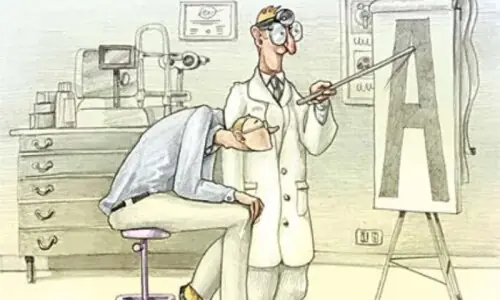
A decade ago, treasurers were the hidden gnomes of the corporate world. They toiled in back offices, managing company financial flows and cash. But they rarely appeared in the spotlight.
“Traditionally, a successful treasury department was one that remained invisible,” the Association for Financial Professionals noted this week. “If it performed its tasks successfully . . . senior management paid little to no attention.”How times change. This week the AFP also released a twice yearly survey of its members, which suggests those treasury gnomes are receiving more love from their bosses. Some 84pc say their role has changed significantly in the past couple of years because they have been pulled into wider strategic debates; instead of just managing cash they are opining on issues such as tax policy, mergers and acquisitions and supply chain management too. Three-quarters of treasurers say they have ‘strong’ or ‘excellent’ access to senior executives, and 83pc expect their role to become even more important in the next five years.
The change is so marked that trade bodies are scrambling to respond. Though the AFP used to focus on traditional treasury skills, such as portfolio investment, it is now emphasising ‘leadership’ and ‘communication’ training. “Treasurers tell us that in the last three to five years, their role has really changed,” observes Craig Martin, head of the AFP.
It might seem tempting to dismiss this as just a minor wrinkle of corporate anthropology; treasurers are not the only business species to have seen a shifting mandate. As John Tus, the corporate treasurer of Honeywell, observes, the role of the company ‘controller’ also altered a decade ago in America, when the Sarbanes-Oxley accounting rules were ushered in. But the current trend reflects a wider tale.
American corporate cash piles are now growing at a slower pace than last year. …. If America had a less nonsensical corporate tax code, there would be less incentive for arbitrage games. And if executives felt more confident about the economic outlook they would be using more of their cash to invest in factories and staff
One factor driving this is that the 2008 credit crisis forced executives to pay more attention to low-probability, high-impact risks. Another is the peculiar state of the financial world — as demonstrated by yesterday’s unprecedented action from the European Central Bank. Since 2009 corporate cash flows have surged, but investment has been low and companies have not handed much to shareholders. US corporate cash pools hit a record high of almost $2tr at the end of last year, a 50pc increase from their level in 2007, according to data from the Federal Reserve and Treasury Strategies.
This means that treasurers face growing pressure to deploy cash. But with interest rates at rock bottom it is tough to find returns. Hence treasurers are being asked to “critically evaluate and optimise the various strategic uses of cash”, and explore “operational alternatives such as capital expenditures, acquisitions or product development”, says Alex Wittenberg, a partner at Oliver Wyman, a consultancy. They are also turning to “unconventional business opportunities such as supplier finance, peer-to-peer lending or customer loyalty and payment strategies”, he says. Those gnomes are being asked to become wizards. The unorthodox tactics being used by companies such as Pfizer and Apple to deal with trapped cash or manage their balance sheets are being widely copied.
Is this spotlight on treasurers a good thing? Yes, if you believe that companies should take a more integrated approach in managing their affairs — or if you are an ambitious treasurer, or a management consultant. But no one should forget this trend is also a corollary of a deeply distorted financial world. If America had a less nonsensical corporate tax code, there would be less incentive for arbitrage games. And if executives felt more confident about the economic outlook they would be using more of their cash to invest in factories and staff.
Perhaps this is just a passing phase (intriguingly, AFP data suggest that American corporate cash piles are now growing at a slower pace than last year). But as long as central banks keep engaging in unconventional monetary experiments one side effect will be that corporate treasurers will face pressure to become more ‘creative’.
Better just hope that the gnomes do not end up throwing all caution to the wind in the process; if so, they could end up visible in the future, for all the wrong reasons.
Published in Dawn, Economic & Business, June 9th, 2014