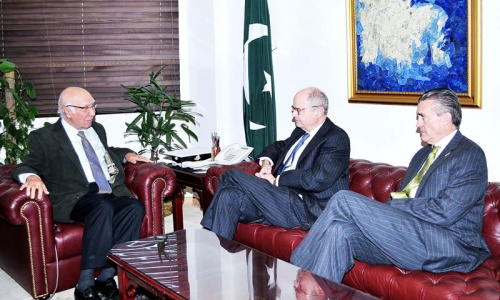
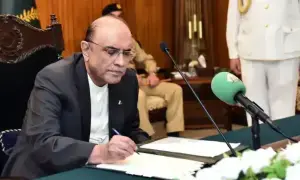
ISLAMABAD: Adviser on National Security and Foreign Affairs Sartaj Aziz has observed that drone strikes inside Pakistan must end because the “high-value targets” have largely been taken care of.
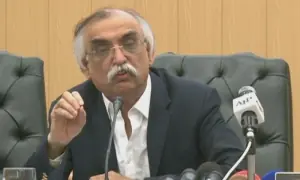
Talking to reporters after the launching ceremony of Akbar S. Ahmed’s book, “Thistle and drone: America’s war on terror or war on tribal Islam”, on Wednesday, he said the drone attacks had proved to be counter-productive.He said two previous governments had allowed the US to carry out these strikes inside the country’s territory, but the PML-N government was taking up the issue with the United States to bring them to a halt.
Mr Aziz recalled that the United Nations General Assembly had recently passed a resolution declaring the drone attacks a violation of human rights.
The adviser expressed the hope that the US would soon be convinced that killing people without trial was inappropriate and the policy required a review.
In reply to a question, he said the US had built up the capacity of ‘Mujahideen’ after the Soviet invasion of Afghanistan, but “now they are pushing people armed and trained by them to our tribal areas, creating problems for us”.
He said these people, including criminal elements, had destroyed the tribal structure. “The situation is far more complex and there is no easy or simple solution.”
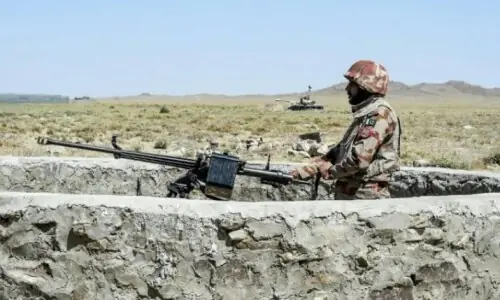
Mr Aziz said Gen Musharraf’s decision to launch a military operation in tribal areas was wrong. A military operation is needed when the writ of the state is challenged, but the objective of the former military dictator was different. Peaceful locals were affected by the operation, complicating the situation, he added.
He underlined the need for an efficient border management between Pakistan and Afghanistan. Pakistan did not want to meddle in internal affairs of Afghanistan, but it was ready to play a role for peace there because a strong and stable neighbour was in its interest, he said.
In reply to a question about the status of talks with the Taliban, he said some contact had been established. But he refused to predict the outcome of talks.
The adviser, however, indicated that the government still wanted to work on the option of talks for peace.
He said the writ of the government had been established in six of seven tribal agencies and expressed the hope that it would extend to the seventh in months, if not weeks.