0
0

Crisis in Balochistan
This is with reference to Zubeida Mustafa's article "Addressing Baloch grievances" (Feb 2). The writer gives an impression that West Pakistan exploited Bengalis which resulted in the country's dismemberment and that now Punjab exploits Balochistan.
If West Pakistan was responsible for the backwardness of East Pakistan, why is Bangladesh still underdeveloped even when the entire population of the country is homogeneous? Bangladesh remains one of the poorest countries of the world.
As far as the backwardness, poverty and illiteracy in Balochistan are concerned, the leaders of the province are mainly responsible. They don't like development in general. They want to keep the people illiterate so they can maintain their dominant position in society.
The situation in Balochistan is critical. There are attacks on national assets like gas plants in Sui, the Gwadar deep seaport and Wapda installations. This is the first time after the crisis in Balochistan during the government of Z. A. Bhutto that large-scale and planned terrorist activities have been witnessed. The nationalists who claim to be representatives of the Baloch have done nothing for the common man except putting the blame on Punjab for their own weaknesses. History shows they have made no effort for the development of their areas. They have made people their slaves who have everything except a voice.
They maintain private jails and parallel judicial systems. There is no respect for human rights. People have been jailed for their defiance to accept the dictatorship of their feudal lords.
The government of Pervez Musharraf is taking all possible efforts to take development to Balochistan. I would like to advise the nationalists to think in the national interest and enter into a purposeful dialogue with the government for the development and welfare of the province. There can be no denying the fact that Pakistan is our identity and living together peacefully is the only solution to the crisis.
MANSOOR ALI SHAHANI
Karachi
(II)
Mr Irfan Hussain's article "The softening of the state" (Jan 29) reflects the mindset of the Pakistan establishment. To suggest that the economic grievances of the Baloch can be sorted out at the NFC forum is to deny that the NFC is a farce. In fact, Mr Karim Lodhi, the private member from Sindh on the NFC, has had the integrity to resign from the commission on the grounds that the NFC was deviating from the parameters outlined in the Constitution.
Mr Hussain's suggestion that some federal ministers could argue the Baloch case in Islamabad shows how far he is devoid of reality. We in Sindh have been trying to draw Islamabad's attention to the destruction of lower Sindh by sea water. Instead of solving this problem a bigger environmental disaster called the LBDO has been gifted to Sindh. We are being promised even more disasters in the name of the new political mantra, "mega projects".
The core issue however at the PPL Sui gas fields is that the rapist is still free and the state appears to be involved in a cover-up. Our American friends could easily have assisted in conducting an impartial DNA test and the matter would be resolved in a day.
The softening of the state is due to the fact that every criminal in Pakistan with connections is above the law. The strength of the state does not depend on Cobra gunships but through deriving a legitimacy which will be attained only when justice is accorded to all citizens, including Dr Shazia.
MIRZA YUSUF AGHA
Karachi
Remembering Surraiya
Mr Sanaullah Noor's (Jan 31) tribute to the legendary singing star of the subcontinent, Surraiya, made heartwarming reading. The diva's name and fame certainly merit no introduction and her singing repertoire (in spite of the overpowering six-decade-old Lata/Asha stronghold) shaped by maestros such as Naushad Ali, Anil Biswas, Khursheed Anwar, Ghulam Hyder, Husnlal-Bhagatram, C. Ramchandra, Roshan, S. D. Burman and O.P. Nayyar, to name just a few, endures as a repository of artistic excellence.
Who can forget the restrained emotive power of Socha tha kya ("Anmol Ghari")? Which music lover can claim to have been oblivious to the magic and resonance of Paapi oapeeha re ("Parwana"), Nain Deewane and Man mor hua matwala ("Afsar"), Rahi matwale - both in solo and duet form with Talat ("Waris"), or the sadly under-rated score of Shama parwana for that matter?
The composing genius however for whom Surraiya did some of the best singing of her career (however minimal it might have been in terms of quantity) was none other than the elusive Sajjad Hussain. It was for this very composer that Noor Jehan's virtuosity scaled unparalleled pinnacles in Dost. It was for Sajjad that Lata Mangeshkar's technical genius touched the peak with Aae dilruba ("Rustom aur Sohrab"), not to forget her earlier nuggets in musicals such as Khel, Hulchul and Saiiyan. For Sajjad did Lata and Talat come up with Dil mein sama gaye sajan duet from Sangdil, as did Asha and Kishore later with Yeh chaar din bahar ke ("Rukhsana"). Geeta Dutt's Sangdil devotional Darshan pyasi, Asha's Rukhsana classic Tere jahan se chal diye, Rafi/Manna Dey's qawwali Phir tumhari yaad aayi aae sanam ("Rustom aur Sohrab"), Asha/Geeta's lyrical Dharti se door..." ("Sangdil") and above all the Talat Mahmood tour de forces Kahan ho kahan... and Yeh hawa yeh raat yeh chandni ("Sangdil") are masterworks all synonymous with the ultimate in popular music.
Finding an unequalled place in the above oeuvre are Sajjad's wonderful collaborations with Surraiya such as Gham-i-Aashiana... and Umeedon ka tara... ("1857") and Yeh kaisi ajab dastan ho gayi hai ("Rustom aur Sohrab"). Her brilliant vocalizations of these intricately carved curios rank as songdom's proudest landmarks and prove to be humbling experiences to this very day, even for those of us brought up on a staple diet of Asha and Lata.
DARIUS KAKALIA
Karachi
Sugarcane sowing
Sugarcane farmers are not getting a reasonable price for their crop and cannot even meet their expenditure. It is known to everybody that the cost of seed, fertilizer, electricity and other inputs has increased manifold. Many small farmers have a mind to turn to other crops which could give them some income.
This trend would create a sugar shortage in the country. The government will then have to incur heavy expenditure on imports. This will have an adverse effect on sugar prices and the people will raise a hue and cry again.
The agriculture department does not seem to have realized the gravity of the situation. They have never bothered to educate farmers in the use of modern technology to make the best use of new high yielding varieties of sugarcane. All their sources of publicity as also personal advice are usually meant for wheat and cotton crops. No advertisement for sowing of sugarcane has ever been seen on TV or has appeared in the press. Good varieties of sugarcane, if produced by scientists, are not given due publicity with the result that these die at the doorstep of the breeder. The farmers' community is aware of the old redundant varieties which are not at all supposed to give a good yield. Sugarcane is the second highest earning crop. The agriculture department should, therefore, not remain uninterested in its development.
Agricultural scientists should pay due attention to producing new disease-free and high-yielding varieties so that farmers can be attracted to grow maximum sugarcane.
The cultivation of sugarcane as compared to other major crops is quite negligible. Hardly four to five per cent of the total cultivable land of Punjab is under sugarcane although it is a net cash earning crop. It must be given its due share of land like other crops.
The extension wing of the agriculture department should put in all efforts to teach the farmers' community modern techniques of sowing sugarcane, and wide publicity may be given to high yielding varieties so that farmers earn good income in lieu of their hard work and investment. This will also save the government from importing sugar by incurring extra expenditure.
ZIA-UD-DIN KHAN
Lahore
Combating plant diseases
A serious concern has been expressed by Mr M. Jiskani over the loss in food production due to plant diseases (Dawn Economics and Business Review, Jan 31). He has suggested the popularization of the study of plant diseases to such an extent that farmers are able to recognize diseases by means of early symptoms and take remedial measures in time.
In the same issue in the agriculture and technology section, Dr Sardar Riaz Khan has given an account of wheat production in Pakistan, saying that wheat (staple food) has been imported for 48 years out of Pakistan's 57 years of existence.
The Higher Education Commission (HEC) has stressed research in agronomy for increasing food production and supporting the agro-based industry in Pakistan. In this regard we would like to bring it to the notice of the HEC that realizing the importance of agriculture and other scientific disciplines, a research programme for active retired PhD teachers/scientists was initiated through a notification No. 7-1/Acad. (IC) HEC/2003 dated 3-6-2003. We submitted our research proposals for biological control plant diseases through the University of Karachi. It is good that many expatriate scientists have been hired by the HEC under the foreign faculty hiring programme. We have not as yet heard about our research proposals submitted in 2003. We look forward to hearing from the HEC while we are in good health.
DR ABDUL GHAFFAR & DR M. JALALUDDIN
Karachi
Looming oil train disaster
This is apropos of the recent North Korean oil train disaster.
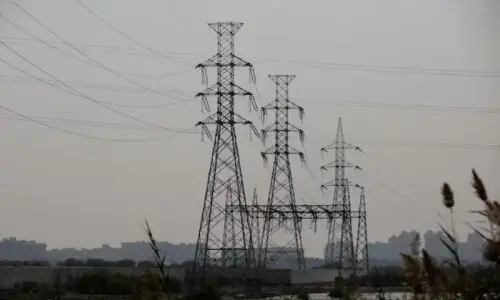
Rawalpindi Cantonment is frequently used by oil trains from Attock Oil Company, Morgah. One 11,000-volt Wapda pole is installed within 10 feet of the track. Electric wires including one with loose joints for a private house pass over the rail track at a dangerously low level without the specified precaution/protection against the falling of live wires on the train.
Garbage dumped and scattered near the track between Fort Road and Jhelum Road is not removed by the Chaklala Cantonment Board but burnt at site against environmental laws. Fires as close as five feet to the track have been seen at times. Some illegal encroachments are within 20 feet of the track in violation of the legal safety zone of 100 feet on either side of the track. Loaded tractor trolleys and other vehicles pass over the track, not designed for vehicular traffic, as a short-cut between Fort Road and Jhelum Road which can damage the track and derail an oil train.
I hope the authorities concerned will remove all these serious fire hazards to oil trains and nearby residents.
RAJA GHULAM SARWAR KHAN
Rawalpindi
American bias
This is apropos of Mr Khurram Hanif's letter (Feb 1) asserting, inter alia, that the invasion of Afghanistan by Russia (formerly the USSR) was an onslaught on a Muslim country from the East. Is this a true interpretation?
After the end of the Second World War, Europe was bifurcated into two areas of influence. Western Europe aligned itself with America through the Nato alliance while Eastern Europe fell under the influence of the former USSR through the Warsaw Pact. This East-West division merely represented the areas of influence while the geographical position put both East and West Europe in the hemisphere of the western powers. The ex-USSR did include quite a few Asian countries like Azerbaijan, Kyrghystan and Turkmenistan, forcibly occupied by Russia at different times, but the de facto authority vested exclusively in Russia which cannot be deemed as an eastern power by any stretch of imagination.
The invasion of Afghanistan in 1979 was, therefore, an onslaught from a western power and not an eastern one.
The responsibility for the present mess in Afghanistan devolves on America as it left the region at the mercy of the warlords and various warring factions without putting in place a representative government and ensuring restoration of peace there. What, then, was the purpose behind the 1979-89 Afghan war fought by America through the proxy (mainly) of Pakistan and some other Muslim countries? To avenge its defeat in Vietnam and ensure the dismemberment of the former USSR?
The US authorities now accept their own folly of leaving Afghanistan in a bad shape in 1989.
It will also not be true that the US has treated Muslim and non-Muslim countries alike. It invaded Iraq after falsely accusing the latter of possessing WMDs and having links with the Al Qaeda and it wants to do something similar with Iran on one pretext or the other but is carrying on negotiations with North Korea. America has also established military bases in hydrocarbon-rich countries which were part of the ex-USSR before 1989 and which are also Muslim countries. Has America done the same in oil-producing Mexico and Venezuela?
GHULAM MUHAMMAD
Karachi
Permitting dissent
A culture of intolerance of dissent has developed in all spheres. It is nowhere more apparent than in the public sector universities. Whenever a note of dissent is recorded by a member of a governing body of a university in the selection of a candidate or any other matter, his membership is cancelled at the first instance. The removal of conscientious dissenters results in a concentration of 'yes' men of vice-chancellors in various boards and governing bodies which become subservient to the wishes of a single person, who, observing the principle of unity of command, tends to operate like an army unit. This system might work in a fighting institution but does not serve well in an institution of higher learning like a university. The spirit of free enquiry is a sine qua non for academic pursuits.
Prevention of chaos created by the virtual elimination of dissent in our universities can be achieved by selection of members of governing bodies and selection boards by the administrative departments of the universities rather than by the vice-chancellors.
DR M. YAQOOB BHATTI
Lahore
Action against cellphone firm
This is with reference to your newspaper's report which said that the government regulator, Pakistan Telecommunication Authority (PTA), was contemplating action against Mobilink.
What about the harassed subscribers of other companies? As a user of Ufone, I can say that its service is extremely shoddy and if action is being taken against Mobilink, then it should also be taken against Ufone. But there is a catch. Ufone is a wholly-owned subsidiary of PTCL which is government-owned. In the past private cell phone operators and even Internet service providers have accused the PTA of favouring PTCL and its subsidiaries by not taking any action against them despite obvious violations of service guidelines or other problems. One hopes that the PTA will prove its impartiality in this matter and act impartially.
LALARUKH EJAZ
Karachi
Illegal barricades
This is to bring to your notice the growing menace of barricades which have sprung up everywhere blocking public roads of Karachi and virtually creating 'no go' areas. These barricades have been erected in lanes with armed guards checking each and every passerby. Concrete kiosks have been built at the check posts. Some of the lanes have barricades with no guards and are permanently closed at all hours, while others are open only for a restricted time.
Who are these people controlling the public roads of Karachi? How can anybody be given the right to deny access to public lanes? Why should anyone be answerable to private guards on public roads? With whose permission have these barricades been erected? Would someone intervene and rid the lanes of Karachi of these illegal barricades?
ALI MURTAZA
Karachi
Faulty phone
My telephone (No. 6344565) has been out of order for three months. I have made several complaints to the relevant authorities but in vain.
MUHAMMAD YAQOOB
Karachi
HEC's PhD programme
This is in response to Pervez Hoodbhoy's articles on university reforms (Jan 3-4).
The public universities have had no substantial PhD programme in the past many years. In the 70s and 80s we had two programmes, i.e., Central Overseas Training Scheme and the Scholarships Schemes, under which many teachers and students did their PhDs. In the late 80s and the 90s no significant PhD programme was undertaken by the University Grants Commission. The dearth of PhDs in Pakistan was due to lack of government interest in higher education. This led to a shortage of PhDs in the country.
Now the Higher Education Commission has launched many programmes to improve the standard of higher education, research and universities in Pakistan, such as its indigenous PhD programme. This programme is for university teachers and especially those who cannot afford to go abroad for higher education can benefit from it.
DR ABBAS HAIDER KHAN
University of Balochistan, Quetta
Murder in Karachi
Dawn has very rightly pointed out (editorial, Feb 2) that the killing of religious leaders is meant to instigate sectarian conflict. Shias and Sunnis are living together in complete harmony. It is the duty of our intelligence agencies to find out whose agenda it is to create hatred and trouble and destroy the fabric of our society.
M. NAQI RAFI
Karachi
Neelum waters
A news item has appeared in Dawn (Jan 26) that India has completed a tunnel to divert the waters of the Neelum river to the Wullar Lake. This report has shocked everyone because the dispute over the Baghliar Dam is still unresolved. Another issue has now arisen to cloud the core issue of Kashmir. Where are our decision-makers who failed to raise these issues before the projects were started? Why did they not object at that time?
An emotional relationship earlier started with India. Is it justified in the presence of these issues? We need water and we need to settle the Kashmir dispute.
ZAFAR AMAR
Lahore
Dilip Kumar
I read your review about the 82nd birthday of the film legend Dilip Kumar in Dawn (Dec 26). No words are enough to describe Dilip Kumar's versatility as an actor. When I recall him in the film Sumandar, I am amazed at his histrionic talent. May he live long.
SULTAN AHMED CHAUDHRY
Lahore