No room for over-optimism
The latest India-Pakistan move towards rapprochement has been welcomed by the world community as a positive development which if pursued by the two countries with sincerity of purpose and realistic approach could change the course of history in South Asia. In Pakistan too, there seems to be generally a positive reaction with reservations in some quarters on what is seen as "conceding too much in return for nothing".
In their joint statement issued in Islamabad on January 6, the two sides announced their agreement on resumption of their stalled dialogue, while making two significant points: (i) an end to "violence, hostility and terrorism" is indispensable for a sustained dialogue, and (ii) "the resumption of the composite dialogue will lead to peaceful settlement of all bilateral issues, including Jammu and Kashmir, to the satisfaction of both sides."
In effect, the prospect of long-awaited peace in South Asia would be predicated on the fulfilment of these two basic assumptions. Given the past experience and volatile history of relations between the two countries, one must be careful in drawing conclusions or building expectations. Whether "history has been made or remade" it would be best not to be over-enthusiastic about this development or over-optimistic about its prospects.
This is not the first time that India and Pakistan are agreeing to settle their differences through dialogue and by peaceful means. A brief retrospective look on the major India-Pakistan agreements would perhaps help rationalize our understanding of the new agreement which the leaders of the two countries have described as "a victory, not for one side or the other but a victory for all".
In Tashkent Declaration of January 10, 1966, the two countries, in the aftermath of the 1965 war, resolved to restore "normal and peaceful relations" and to promote understanding and friendly relations between their peoples. While reaffirming their obligations under the charter of the United Nations, they agreed to "exert all efforts to create good neighbourly relations in accordance with the UN charter. They also agreed not to have recourse to force and to settle their disputes through peaceful means.
They considered that the interests of peace in their region and particularly in the Indo-Pakistan subcontinent and, indeed, the interests of the peoples of India and Pakistan were not served by the continuance of tension between the two countries. It was against this background that Jammu and Kashmir was discussed, and each side set forth its respective position.
The Simla Agreement, signed under most difficult and painful circumstances, had also expressed the resolve of the two countries to put "an end to the conflict and confrontation" that had marred their relations " and to work for the promotion of a friendly and harmonious relationship and establishment of durable peace in the subcontinent".
In order to achieve this objective, the two governments had agreed, inter alia, "to settle their differences by peaceful means through bilateral negotiations or by any other peaceful means mutually agreed upon between them". Pending final settlement of any of the problems between the two countries, "neither side shall unilaterally alter the situation and both shall prevent the organization, assistance or encouragement of any acts detrimental to the maintenance of peace and harmonious relations".
The Lahore Declaration, a major peacetime mutual undertaking, was a genuine breakthrough in the history of the two countries, covering the full spectrum of their relations and issues. It recognized that "an environment of peace and security is in the supreme national interest of both sides and that the resolution of all outstanding issues, including Jammu and Kashmir, is essential for this purpose".
It also recognized that "durable peace and development of harmonious relations and friendly cooperation will serve the vital interests of the peoples of the two countries, enabling them to devote their energies for a better future".
The two countries solemnly agreed to "intensify their efforts to resolve all issues, including the issue of Jammu and Kashmir" and also to "intensify their composite and integrated dialogue process for an early and positive outcome of the agreed bilateral agenda". (as per Islamabad agreement of June 23, 1997).
A common feature in all these documents was a joint reaffirmation by India and Pakistan of their commitment to the principles and purposes of the charter of the United Nations. This is a conspicuous omission in the January 6 joint statement but one hopes that this statement does not amount to giving up our position on the UNSC resolutions and was nothing more than an announcement by the two countries for resumption of their "interrupted" dialogue.
The joint statement certainly does not follow the tradition or format of earlier India-Pakistan joint declarations or statements which invariably reflected a common and agreed position both in their preambles and operative parts.
It presents two different positions, one by Prime Minister Vajpayee and the other by President Musharraf, which now in essence constitute their respective declared positions. For India's Vajpayee, it is the prevention of "violence, hostility and terrorism" that will sustain the "composite dialogue"; for Pakistan's Musharraf, it is the "positive results" that must emerge from "a sustained and productive dialogue".
In his January 6 press conference, President Musharraf deemed it necessary to further elaborate his position by stressing what he called three main points of the agreement: (i) need for a final settlement of the Kashmir issue; (ii) need for a "composite dialogue" to settle all issues, and (iii) the "linkage and simultaneity" in all the three areas of interest to both sides, namely, mutual consolidation of the CBMs, initiation and progress of the "composite" dialogue, and Pakistan's assurance not to allow any territory under its control to be used to support terrorism in any manner.
While the joint statement speaks only of "peaceful settlement of all bilateral issues, including Jammu and Kashmir, to the satisfaction of both sides", the president, in his press conference, clarified that the people of Kashmir would be taken along in reaching a settlement about their future. Subsequent reports quote him even suggesting that Kashmiri representatives would be involved in the dialogue process itself.
He also sought to dispel the impression in some quarters about the India-Pakistan rapprochement process being "a command performance" by emphasizing that the two countries had agreed to resume their "broken dialogue" because of their realization of the necessity of peace rather than any pressure from outside. Many in both countries, however, see a fine American print in the "matter of fact" wording and format of the joint statement. But even if there has been pressure from outside, one hopes it was on both sides.
In any case, we should not be wary of "outside pressures" as long as we are not compromising on principles and our vital interests. We have always, as a matter of policy, been seeking "third party" involvement in our issues with India and urging the world community in general and the UN and major powers in particular, to engage themselves in our regional situation.
It is not important who and what was instrumental in bringing about the latest agreement. What is important is that India and Pakistan have once again agreed to return to the conference table and the whole world now looks towards them to abandon their confrontational mode and to give peace a chance. It is in their mutual interest and also in the interest of the region's stability and global security.
Since their bilateral track is replete with pitfalls and roadblocks, India and Pakistan would need constant international support and "nudging" to move ahead. Let us hope the whole world remains actively engaged in the renewed India-Pakistan peace process.From what has appeared in the press of both sides, the Islamabad joint statement was the result of months long "back-channel" diplomacy. There is nothing wrong with it.
Privacy and discretion have always been observed when dealing with sensitive matters of importance. We have used this channel successfully in the past and should not be shy of using it again and again when necessary. It is difficult to believe some reports dramatizing the situation and suggesting that the foreign offices on both sides were not involved in this process. No "back-channel emissary" on a diplomatic mission of this nature or magnitude can function effectively without the support of the foreign office in terms of relevant briefs and documentation.
Over the years, lot of brain-storming has been done on our India policy and very clear direction established on its execution. From time to time, adjustments, dictated by our supreme national interests or paramount regional dynamics, were made in our approach. One constant, however, never changed.
It was our principled position on Kashmir. For fifty-six years of our independent statehood, we have upheld our commitment to the cardinal principle of self-determination enshrined in the UN charter. No compromise on Kashmir, has been the fundamental policy of every successive elected or non-elected government in Pakistan.
At one time, we even made normalization with India conditional to a prior settlement of the Kashmir issue. But in recent years, we have agreed to move towards normalization with India while also seeking a negotiated settlement of the "core issue of Kashmir". The June 23, 1997 Islamabad Agreement was the product of this approach.
This agreement reached between the foreign secretaries of India and Pakistan envisaged a comprehensive mechanism consisting of dedicated working groups at appropriate levels to discuss eight specific subjects, including " Jammu and Kashmir", in what the Indian side later started describing "composite dialogue".
This was the first time in their history that the two countries had elaborated the whole range of their issues in black and white while also agreeing to address them in an "integrated" manner. Two issues, namely, peace and security including CBMs and Jammu and Kashmir, were to be dealt with at the level of foreign secretaries, who were also to coordinate and monitor the progress of work
Modalities of the next round of India-Pakistan talks are reportedly being worked out. India would perhaps prefer to start with a clean slate. For Pakistan, it would be a serious setback and loss of important and enormous "covered ground". We must keep the earlier agreements and documents intact.
Irrespective of their authorship and timing of conclusion, their contents are joint "property" of the two countries which must respect and follow them unless any changes or modifications are warranted with the passage of time or as part of their new policy frameworks.
This would not only save time in going through the same procedural rigmarole all over again and playing an "abracadabra" game to redefine the agenda or modalities to deal with it. The eight-point Islamabad mechanism encompasses almost every aspect of India-Pakistan dialogue and should, therefore, be used to avoid unnecessary delay in addressing the substance.
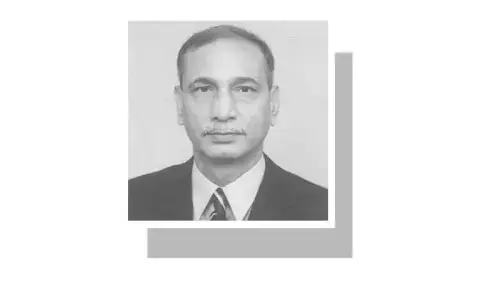
Both sides would benefit by making full use of the existing operational tools rather than wasting time in developing new ones. In matters of substance too, they have a detailed framework available in the Lahore documents, namely the Lahore Declaration, the joint statement and the memorandum of understanding which remain relevant in several specific areas, particularly in the area of peace and security and confidence-building measures. The writer is a former foreign secretary who represented Pakistan in the last round of India-Pakistan talks (1997-1999).
Diary of a princess
Reading The Rebel Princess, a welcome sequel to The Begums of Bhopal, which etched the memoirs of Abida Sultaan, was like flicking through a box of postcards from another world. This is a book about a most unusual person who was referred to by rich and poor alike as Bia.
Not only did she have the unique distinction of being the only heir of a major Indian state to have migrated from India to Pakistan at the time of Partition, she also enjoyed the reputation of being a great administrator, flier, hunter and sportswoman, who took to politics like a duck takes to water.
The eldest daughter of the last ruler of the princely state of Bhopal, Nawab Hamidullah Khan, she lived most of her life in the slipstream of political experience. She was born in 1913, a year before the Great War, which most people now see as a futile massacre, fought over trivial issues by incompetent generals who merrily sacrificed working class soldiers in their millions for a few yards of blood-soaked, worthless ground.
Freezing a touching range of characters, moments and events, the book spans the era of princely states, the independence movement and the emergence of Pakistan. Many of the names of people and places, in what was arguably the most tolerant native state in India, where Muslims and Hindus lived in perfect harmony, is thoroughly familiar to me. After all, I spent my youth in this city of palaces and lakes, when I was not attending boarding school in Dehra Dun or Panchgani.
The Rebel Princess is an interesting and well written memoir. But I can't help getting the feeling that too much of this book is set in the middle distance. As I ploughed through the bewildering variety of names and places, in a vast panoply of successive generations of nobility, and their hangers-on, I longed for some personal insight or private revelation of the kind of people who would never make it to a Who's Who of Bhopal. People like the Brits and the Anglo-Indians, who brought a little northern sunshine into the glowering storm clouds of native traditionalism.
Winter holidays were spent in Bhopal where my father was employed in the Prince of Wales Hospital. We lived in a modest two-storey house which was submerged in a tide of green which lapped up to the window boxes. At the northern end was a massive garden where the mali planted roses and hibiscus and gardenias, and at the back in a fenced compound, we had our own private zoo where a cheetah co-existed with a deer and a chimpanzee.
We didn't have television or VCRs in those days. Entertainment was provided by the gramophone or an old Tesla, which passed as a radio. There was a cinema called the Bhopal Talkies which showed English films on Saturday nights to packed houses. And we waited the whole week to a get a glimpse of Tyrone Power steering the Black Swan away from the pirates, so he could rescue Maureen O'Hara from the clutches of that arch villain George Saunders.
The balcony of the cinema was divided into three compartments. The hoi polloi sat in the centre box. The enclosure on the right was reserved for purdah ladies. And on the left was the royal box where Shehryar M. Khan, grandson of the Nawab of Bhopal, entertained his friends. Saturdays, unfortunately, came around only once a week. So we spent our winter afternoons and evenings with our parents, yachting on the lake or going for long drives through the sleepy town.
We would invariably pass the boat house whose petromax lamp lit up the place with a wan, disdainful efficiency, the haunted mansion near Minto Hall whose ghosts had grown genial, the red-brick walls of hulking old houses whose wall tops were plastered with bits of broken glass to discourage nocturnal thieves, the emaciated cur who barked whenever he heard the ring of the tonga horn or saw the bullock cart outside the post office with its shingle-tortured mansard.
Once when we got home and cruised down the long drive, the car moved very sluggishly, and my father suspected we had a puncture. It turned out that a baby python had managed to entangle itself in the right front wheel. Bhopal was infested with snakes. There were so many reptiles in our garden - cobras, vipers, krites and snakes the colour of wet grass.
Our servants had orders to kill anything that looked like a rope and moved. 1946 registered a record: 64 killed and one injured. A python which had taken a beating escaped over the garden wall into our neighbour's compound. Our two Irish settlers weren't much help. They attacked the only animal that is the snake's greatest enemy - the wily mongoose. In 1946 four of these animals lay dead under the sprawling mango tree that had produced many a delightful harvest.
How well I remember those picnics at One-Tree Hill which overlooked Burra Talab. We used to sit on brightly woven mats munching cucumber sandwiches and chocolate cake and watch the lake slice a big red sun under a cloudless sky, while above us the soft green applause of leaves acknowledged our laughter. Somebody invariably brought along a gramophone and a clutch of Irish tenors would serenade the gentle lake which spread her white lace on the shore.
Tigers also paid us nocturnal visits. One attacked our buffalo and disappeared with her calf. How this carnivore could grab such a large animal in its jaws, leap over an eight foot boundary wall and escape undetected, never ceased to amaze us.
Conversation at the dining table was restricted to harmless small talk which touched on a cycling tour to Bhadbadda - a waterfall which was normally active during the monsoon season, or a visit to Bhesakheri - a village sixteen miles from Bhopal, close to the RAF camp at Bairagarh, where Italian prisoners of war languished in relative comfort. When guests were invited to dinner, the children ate separately. I often eavesdropped and noticed that conversations were surprisingly serious and frequently centred on whether or not Subhash Chandra Bose's Indian National Army was having any success.
On one occasion, my father played host to Dr Muhammad Iqbal, the poet-philosopher of the East, and the British I.C.S. officer, Sir Colin Garbett, author of 'Friend of Friend' I still have an autographed copy of his memoirs, in which he described his illustrious career as an Indian civil servant in the land of the five rivers.
There was supposed to be a war on in Europe and in the Far East. But the people of Bhopal appeared to be relatively untouched. I don't think they really cared who won or lost. The Bhopal state army had more colonels and majors than captains and lieutenants, and the officers appeared to be more interested in the female Italian prisoners of war. That is, when they were not hunting tigers or deer or taking part in those enormous feasts where guests wolfed down buckets of partridge and quail.
I have been told another book which captures some of the sights and sounds of this state, is in the pipeline. There is still a number of Bhopalis in Karachi and Lahore who cherish pleasant memories of this state, which is lost forever in the romantic wilderness of Central India.
e-mail: a-mooraj@cyber.net.pk
The global crime wave
Crime is an extraordinarily serious problem. Even in most developing countries it is now emerging as the first major problem in large cities. In the United States and several European countries, it is already the number one problem of the major urban centres.
There can be no two opinions about the fact that crime is now increasing worldwide. There is also every reason to believe that the present trend will continue through the 21st century. Crime rates have always been high in modern societies such as the western countries, but a new phenomenon has recently emerged on the world scene--rapidly escalating incidence of crime in the developing countries that previously reported few such happenings.
In fact, the street crime such as murder, rape, robbery, dacoity and car lifting is clearly on the rise, particularly in Asian, African and Latin American countries, some ex-Soviet bloc countries such as Hungary and in western Europe such as Scandinavian countries and the United Kingdom.
Although statistics on white-collar crime are harder to find, there is every indication that this, too, is now rapidly increasing world-wide and can be expected to spiral upward in the present century.
The question arises: what is causing this crime explosion? And what steps can be taken to combat it? It is now universally acknowledged that crime is a lot like cancer. It is serious, potentially deadly, comes in many varieties, is difficult to diagnose, hard to treat, and almost impossible to eradicate. In fact, no one in the world can claim to be an expert on crime prevention, as no one really knows how to prevent it.
We all have some ideas on the subject and these ideas vary between suggestions that we should all be kind to criminals and other suggestions that capital or corporal punishment will be effective. The man in the street is more likely to support either of these extreme suggestions for crime prevention than those of us who have a more realistic approach to the complexity of the crime problem.
Still there are certain conditions associated with rising wave of crime such as increasing heterogeneity of populations, greater cultural pluralism, higher immigration, realignment of national borders, democratization of governments, greater economic growth, improving communications and computerization, and the lack of accepted social norms. All these conditions are increasingly observable around the world today. International immigration has also hit an all time high and will not peak for several more years.
At present, much of the world is in a state of what French Sociologist Emile Durkheim called anomie, or normlessness. In most societies of the world today, the traditional social order has broken down, and there is a lack of clear cut, well established laws and limitations on behaviour. It is now established that a society must institutionalize the means (such as work, investment, or inheritance) for achieving material well-being or other goals if that society is to avoid the state of anomie and the resultant crime and disorder.
On the other hand, some nations face pervasive anomie because of their lack of restraints on human desires. In such societies, people feel that anyone can become a millionaire. Indeed many people are now experiencing boundless expectations amid increasingly fluid societal standards and regulations. Moreover, cultural diversity and the absence of effective guidelines on how to succeed in the emerging information era intensify this anomie.
To a large extent anomie also results from a breakdown in the "bonding" process, long recognized by criminologists as important to the health and safety of society. The individual who is closely in congruence, with social expectations over a long period of time is unlikely to commit a serious crime, because he or she has developed a "bond" or stake in society.
Believing that society offers the good life and that it can be obtained by reasonable actions, the individual is unlikely to stray far from established rules of conduct. Some cultures socialize citizens to its expectations and rewards through family, religion, school and community. Other societies have unclear or competing goals and lifestyles, and each citizen comes into contradictory rewards and expectations.
Ample freedom of choice combined with little or no directions as to how to make one's choices responsibly is also yet another formula for higher crime rates. Socializing citizens to adopt and obey a common set of laws is quite different from allowing citizens wide freedom of choice with no socialization other than penalties for violating laws against the choices many individuals wish to make.
Some cultures choose proactive ways to control crime while others adopt reactive approaches. In proactive cultures, care is taken to see that all citizens take part or are well represented in building a consensus of support for laws, and all citizens are taught and socialized and re-socialized from birth to obey these laws.
In reactive societies laws are often the product of groups conflict, and since there is often disagreement about the law, little socialization - or contradictory socialization - takes place. Thus, the individual is left confused about what is expected or is even socialized to disobey. Society's only contribution is to punish the violator if captured and convicted, and even this is generally done ineffectively.
The outlook for global crime is disturbing, if not alarming. However, much can be done to improve the prospects for eventually reducing crime rates. Let's begin by asking, what is the formula for changing a high-crime culture-heterogeneous, poorly disciplined, and culturally pluralistic with helter-skelter parenting and child-care, large disparities in wealth, choice without direction, punishment without socialization - into a low-crime culture?
First of all, we need to move from a "war" model to a "peace" model in our approach to crime. In the great majority of countries in the world today, police treat a community as it were enemy territory. All times they drive around it in patrol cars, looking for troublemakers to arrest, friendly contact with the inhabitants is often negligible and citizens respond by regarding the police as an occupying army.
The peace model, exemplified by community policing, fits well with the emerging information era, where success will depend more on cooperation than competition, reconciliation more than retribution. Under the peace model, we will search in this shrinking multicultural world for a consensus of values on certain big issues, such as murder and theft, and on fair and effective ways of resolving the inevitable conflicts of values in less critical areas without imposing one group's preferences on another group. Legal sanctions need to be reserved for acts that truly endanger the citizenry rather than supply fit one group's lifestyle preferences.
Second, the world's most valuable resource - its children - need to be treated with the respect they deserve. Children need and deserve tender loving care and attention. When they feel wanted and gain attention and approval for socially desirable activities, they are unlikely to become serious law breakers as adolescents or adults.
However, many societies are failing to make sure children get what they need. A useful first step is universal training for parents. A number of low-income cultures have already taken this step to much advantage. Third, proactive rather than reactive methods must be used in reducing crime. A preventive approach would require a change in the traditional structure, role and methods of criminal justice system.
In the traditional system violators are apprehended, taken before a court, and, if convicted, sent to institutions or placed under supervision. Such a system does relatively little to prevent crime since most convicted criminals are eventually turned loose without having been cured of their criminal tendencies.