2
2

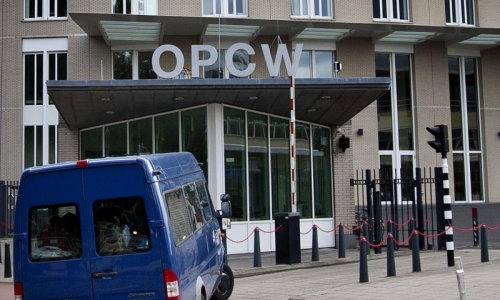
THE HAGUE, Netherlands: The Organisation for the Prohibition of Chemical Weapons was awarded the Nobel Peace Prize on Friday for its work to rid the world of such weapons. Here's a look at the OPCW and the work it has been doing over the past 15 years.
Where did the OPCW come from?
The Organisation for the Prohibition of Chemical Weapons was thrust into the spotlight in recent weeks when it was required to oversee the destruction of chemical weapons in Syria, but it has been working since the 1990s as the body that implements the Chemical Weapons Convention, the first international treaty to outlaw an entire class of weapons.
What does the treaty do and who is a member?
The convention prohibits the development, production, acquisition, stockpiling, retention, transfer or use of chemical weapons. It came into force in 1997 and has been ratified by 189 states. Of those, seven — Albania, India, Iraq, Libya, Russia and the United States, along with a country identified by the OPCW only as ''a State Party'' but widely believed to be South Korea — have declared stockpiles of chemical weapons. These include mustard gas and nerve agents like sarin and VX.
Syria is due to become a member state of the organisation on Monday and has acknowledged having chemical weapons. Non-signatories to the treaty include North Korea, Angola, Egypt and South Sudan. Israel and Myanmar have signed but not ratified the convention.
What does the OPCW do?
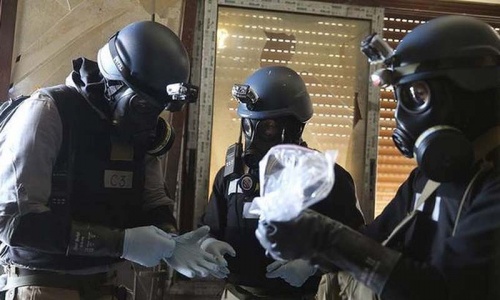
The OPCW has conducted more than 5,000 inspections in 86 countries. It says 100 per cent of the declared chemical weapons stockpiles have been inventoried and verified.
According to its statistics, 57,740 metric tonnes, or 81.1 per cent, of the world's declared stockpile of chemical agents have been verifiably destroyed.
Albania, India and ''a third country'' — believed to be South Korea — have completed destruction of their declared stockpiles.
An OPCW report released earlier this year said the United States had destroyed about 90 per cent of its stockpile, Russia had destroyed 70 per cent and Libya 51 per cent.
Thirteen OPCW members have also declared a total of 70 chemical weapons production facilities.
The organisation says all 70 have been taken out of commission including 43 destroyed altogether and 21 converted to peaceful purposes.
Who runs the OPCW?
The OPCW is funded by its member states and had a budget of some 74 million euros ($100 million) in 2011. It employs some 500 people in The Hague. The director-general is Turkish diplomat Ahmet Uzumcu.