1
1
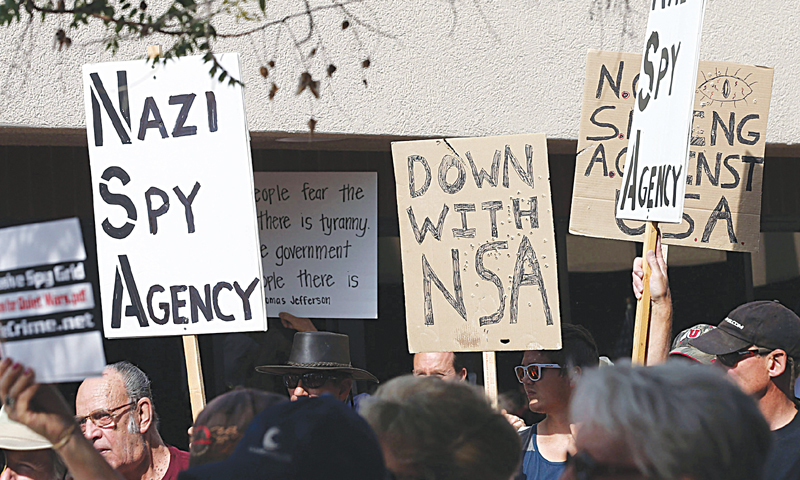

THE head of the British electronic spy agency GCHQ, Robert Hannigan, created a minor flap last week in an article he wrote for the Financial Times. In effect, Hannigan argued that more robust encryption procedures by private internet companies were unwittingly aiding terrorists such as the Islamic State (IS) group or Al Qaeda, by making it harder for organisations like the NSA and GCHQ to monitor online traffic. The implication was clear: the more that our personal privacy is respected and protected, the greater the danger we will face from evil-doers.
It’s a serious issue, and democracies that want to respect individual privacy while simultaneously keeping citizens safe are going to have to do a much better job of reassuring us that vast and (mostly) secret surveillance capabilities overseen by unelected officials such as Hannigan won’t be abused. I tend to favour the privacy side of the argument, both because personal freedoms are hard to get back once lost, but also because there’s not much evidence that these surveillance activities are making us significantly safer. They seem to be able to help us track some terrorist leaders, but there’s a lively debate among scholars over whether tracking and killing these guys is an effective strategy.
The fear of being tracked also forces terrorist organisations to adopt less efficient communications procedures, but it doesn’t seem to prevent them from doing a fair bit of harm regardless.
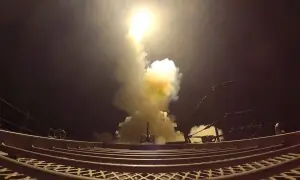
So here’s a wild counterfactual for you to ponder: what would the US, Great Britain, and other wealthy and powerful nations do if they didn’t have these vast surveillance powers? What would they do if they didn’t have armed drones, cruise missiles, or other implements of destruction that can make it remarkably easy to target anyone they suspect might be a terrorist? Assuming that there were still violent extremists plotting various heinous acts, what would these powerful states do if the internet was there but no one knew how to spy on it?
For starters, they’d have to rely more heavily on tried-and-true counterterrorism measures: infiltrating extremist organisations and flipping existing members, etc, to find out what they were planning, head attacks off before they occurred, and eventually roll up organisation themselves. States waged plenty of counterterrorism campaigns before the internet was invented, and while it can be difficult to infiltrate such movements and find their vulnerable points, it’s not exactly an unknown art.
Second, if we didn’t have all these expensive high-tech capabilities, we might spend a lot more time thinking about how to discredit and de-legitimise the terrorists’ message, instead of repeatedly doing things that help them make their case and recruit new followers. In short, we’d have to stop treating places like Afghanistan, Pakistan, Iraq, and Syria as if they were nails that just needed another pounding, and we might work harder at marginalising the enemies within their own societies.
Third, and somewhat paradoxically, if we didn’t have drones and the NSA, we’d have to think more seriously about boots on the ground, at least in some places. But having to think harder about such decisions might be a good thing, because it would force the US to decide which threats were really serious and which countries really mattered.It might even lead to the conclusion that any sort of military intervention is counterproductive.
As we’ve seen over the past decade, what the NSA, CIA, and Special Ops Command do is in some ways too easy: it just doesn’t cost that much to add a few more names to the kill list, to vacuum up a few more terabytes of data, or to launch a few more drones in some new country, and all the more so when it’s done under the veil of secrecy.
I’m not saying that the current policy is costless or that special operations aren’t risky; my point is that such activities are still a lot easier to contemplate and authorise than a true “boots on the ground” operation.
Lastly, if US leaders had to think harder about where to deploy more expensive resources, they might finally start thinking about the broader set of US and Western policies that have inspired some of these movements in the first place.
What I’m suggesting, in short, is that the “surveil and strike” mentality that has dominated the counterterrorism effort is popular with government officials because it’s relatively easy, plays to our technological strengths, and doesn’t force us to make any significant foreign policy changes or engage in any sort of self-criticism at all.
If we can solve the terrorist problem by throwing money at it, and enriching some defence contractors and former government officials in the process, what’s not to like?
To be clear: I’m not suggesting we dismantle the NSA, fire all cryptographers, and revert to Cordell Hull’s quaint belief that “gentlemen [or ladies] do not read each other’s mail”. But until we see more convincing evidence that the surveillance of the sort Hannigan was defending has really and truly kept a significant number of people safer from foreign dangers, I’m going to wonder if we aren’t overemphasising these activities because they are relatively easy for us, and because they have a powerful but hard-to-monitor constituency in Washington and London. In short, we’re just doing what comes naturally, instead of doing what might be more effective.
The writer is a professor of international relations at Harvard University.
By arrangement with Foreign Policy-The Washington Post
Published in Dawn, November 13th , 2014