120
120
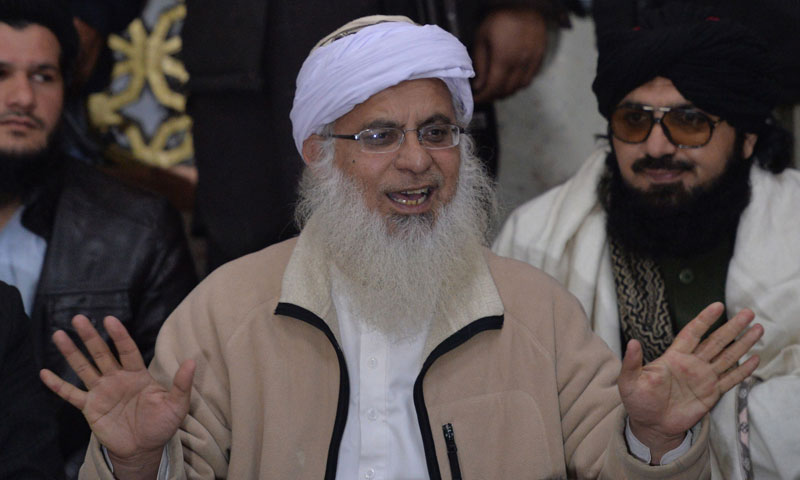


ISLAMABAD: A member of the team of negotiators representing the Tehreek-i-Taliban Pakistan in peace talks with the Pakistani government has expressed his reservations over the dialogue, saying he won’t be part of further negotiations.
Talks to end the militants’ bloody seven-year insurgency formally kicked off Thursday between a four-member government committee and a three-man Taliban team, amid much scepticism over whether dialogue can yield a lasting peace deal.
The first round of talks ended with both sides charting a roadmap for future negotiations, with the government team proposing that the peace talk be pursued within the framework of the constitution of Pakistan.
However, Maulana Abdul Aziz urged the government on Friday to remove the condition of holding talks under the constitution.
“There would be no problems if our constitution were the Quran and Sunnah. But the Taliban say they do not recognise the prevailing constitution,” Aziz told a press conference in Islamabad. “The people should not be misled into believing that our constitution is Islamic.”
Aziz, who rose to prominence during the 2007 military operation in Islamabad’s Lal Masjid where he is the chief cleric, said Pakistan's constitution should be replaced by the teachings of the Quran and the Holy Prophet (PBUH).
“That should be the law in Pakistan and until the committee brings this point on the agenda I won't be part of negotiations,” he told reporters.
He said he would remain part of the TTP's three-man delegation led by fellow cleric Maulana Sami-ul-Haq, unless told otherwise, but would not come to the negotiating table.
“I won't participate in talks until they include a clause about the imposition of Islamic law,” he said.
Aziz's move threatens to further undermine the talks – the government side has already voiced doubts about the composition and authority of the TTP’s representatives.
The government delegation skipped an initial meeting on Tuesday citing confusion over the militants' team after two members pulled out.