0
0
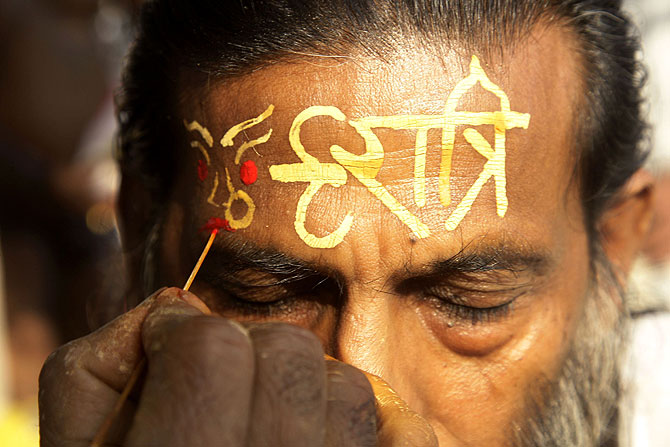
KARACHI: Members of the Hindu community began their Navratri celebrations on Saturday evening after breaking their first of the nine 24-hour fasts.
There were soothing bhajans playing in the Swami Narayan Mandir neighbourhood as people were busy in pooja inside their homes. The ground behind the temple was decorated but wore a vacant look. A man selling rose and jasmine garlands was happy to report that he was going to sell all his garlands that evening.
“I am Muslim. My name is Sarwar Hussain but I come to this neighbourhood to sell my garlands to various homes here. Some people buy 10, some 15 as they need them for pooja and decoration. Today I brought a basketful of them and I know I will make a Rs1,500 profit at least,” he said.
At the beautifully decorated Shri Ratneshwar Mahadev Mandir at Clifton, it was a pity that the taking of photographs by the media was not allowed. Meanwhile, more and more slippers, sandals and shoes kept piling up outside as the evening progressed. “We are just here for pooja. We won’t be staying for the festivities and dandia as that would be too late for us,” a family going into the temple told Dawn.
“We are expecting a lot of people today, but yes, after they break their fast,” said Raju, a young sevak at the temple.
At the Swami Lakshmi Narayan Mandir, pictures were allowed but people were too few. “They will come eventually but a little late,” said Govind, the sevak of that temple.
“The first day of Navratri marks the pooja of Shailputri Mata. The next day, we will hold pooja for another goddess as ‘Nava’ means nine and the ‘ra’ in ratri means nights. This festival of nine nights has us honouring nine goddesses,” he said.
Meanwhile, two little brother and sister at the temple had brought in nine little earthen pots, or matkiyan, decorated with glasswork and bells. The boy, Deepak Sunjay, was wearing a chunri print kurta and his sister, Vidya, was dressed in a pretty white ghagra choli. “It took me many days to decorate these and now each will be used to burn candles in them each day,” said Deepak.
The children said they weren’t fasting but their parents helping in decorating the temple were.
Govind said that the festival had to do with shakti, or power. “We pray to our goddesses to give us power as life has no meaning without power and power becomes the reason for living. We fast for 24 hours where drinking water is allowed. But this fasting is not just limited to refraining from food, it also means refraining from bad thoughts, seeing, listening or speaking evil,” he said.