Pre-poll Afghan scenario
If not postponed, Afghanistan's presidential election in October is likely to be tough and closely fought. President Hamid Karzai's success can no longer be taken for granted, for the country's ethnic mix seems to be working against him.
He belongs to the Pakhtoon community, which is Afghanistan's largest. But other communities - Tajiks, Uzbeks, Turkmans, and Hazaras - taken together constitute a majority. More important, Mr Karzai comes from southern Afghanistan, where the Taliban still enjoy considerable influence.
For that reason, the Pakhtoons are not likely to vote en bloc for him. He also is looked upon as an American loyalist. This weakens his moral position. Worse still, there is nothing positive for Mr Karzai to show to his people.
The law and order situation continues to be precarious and the central government's writ does not run beyond Kabul and Kunduz. The Taliban still retain the capacity to carry out acts of terrorism, especially in the southern region, while banditry too is rampant.
Many aid agencies have suspended their operations because their workers are kidnapped and killed. This has also adversely affected the pace of rehabilitation and reconstruction.
Nearly three million Afghan refugees have returned home, but economic opportunities for them are extremely limited. It is a measure of the situation in Afghanistan that the only way in which the people have gained economically is through the opium trade.
When in power, the Taliban were ruthless when it came to poppy cultivation. But the post-Taliban period has seen a boom in poppy production, with Afghanistan having become the world's largest supplier of poppy and heroin.
An estimate puts the volume of poppy trade at 2.3 billion dollars annually. One reason for the poppy boom is the existence of powerful warlords, who are a law unto themselves.
The Karzai government has little control over them. They maintain powerful militias which not only defy the Kabul government but also keep fighting against each other.
Two of the warlords - Uzbek general Rashid Dostum and Hazara chief Mohammad Mohaqeq - are also among the 18 candidates for the October 9 election. This is against election rules, which forbid anyone having militias to take part in any election. The existence of powerful militia also means people could be intimidated into voting for the warlord of a given area.
The biggest challenge to Mr Karzai now comes from Mr Yunus Qanuni. He is a minister in Mr Karzai's cabinet but he maintains a well-armed militia of 5,000 in the capital city.
His position received a boost recently when Foreign Minister Abdullah Abdullah and Defence Minister Qasim Fahim, both Tajiks, announced their support for him. This means most voters in the north will vote for Mr Qanuni, while the Pakhtoon belt stands divided.
Another awkward fact is that even though Mr Karzai is America's man, Washington is grateful to the Northern Alliance for its cooperation with it in the war against Taliban.
This should have a bearing on the outcome of the polls. The chances are that no candidate will get more than 50 per cent of votes, in which case there maybe a run-off in which Mr Karzai may emerge victorious.
But, at the moment, the Tajik-dominated central government seems to have tipped the scales in Mr Qanuni's favour. Should Mr Qanuni be elected president, it is doubtful if the Pakhtoon community will accept him as president. The result could be continued instability and bloodshed in Afghanistan.
Revising gas prices
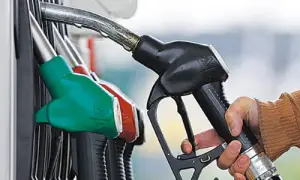
The World Bank's demand that Pakistan raise domestic gas prices and reduce those for industrial and commercial use as part of a tariff rationalization plan deserves consideration.
But the process will have to be carried out with care. In the case of domestic gas prices, while these can be raised marginally, care must be taken to ensure that gas is not priced out of the reach of the lower-income consumers since it remains the main fuel for this section of society.
With respect to households, over 90 per cent of gas is sold under a subsidized tariff which includes large domestic consumers. While small consumers should continue to enjoy some sort of subsidy, this need not be the case will large consumers as they do not need the benefit of subsidy.
In the case of industrial and commercial gas rates, a cut in tariffs would be a welcome step. Since gas is gradually taking over as the main fuel used for both industrial and commercial purposes, such a move will have a salutary effect on the prices of commodities and services, especially those meant for export.
However, for this to happen, the government needs to ensure that the benefit of a lower cost of production is partly passed on to the consumers. Such an assurance can be obtained from the relevant trade bodies before taking the step.
If this is not done, the producers and middle men would monopolize the benefit for profit as seen in the case of the fertilizer industry which enjoys a massive government subsidy but does not pass on the benefit to the consumers.
This in turn would mean that the rationale for this reduction, which is to make Pakistani products more competitive in the international markets, would not be fulfilled.
Deaths on two-wheelers
Many of the 18 deaths in Lahore on Independence Day could have been prevented if reckless driving were not the order of the day. Thirteen of the victims - all aged between 16 and 25 - died as a result of rash motorcycle driving, which has for some inexplicable reason become a common practice with the city's youth as they partake in August 14 festivities.
Four others were crushed to death by speeding buses and vans; another woman was killed when she fell off the rooftop while hoisting a flag. Lahore hospitals also admitted some 200 people for treatment, including women and children, some of them having serious injuries.
Luckily no similar reports of deaths or injuries have come in from any other place, but it would be wrong to assume that the phenomenon of reckless driving is confined to just one city. The traffic on Karachi roads, for instance, was no less disorderly.
It is understandable that popular festive occasions, such as the Independence Day, Basant or the New Year's Eve, should allow for some degree of unbridled merrymaking - a concept rooted deep in our cultural tradition of melas.
But as they say, too much of everything is bad. Excessive display of dare devilry by the youth, as was witnessed on Lahore's roads on Saturday, also points to the general lack of recreational facilities in our sprawling cities, not to speak of small towns and rural areas.
However, the solution does not lie in blanket law-enforcement measures such as the imposition of a ban on motorcycle riding on festive occasions - as some might feel tempted to advocate.
The very idea is preposterous in a country where people have very few public occasions for letting one's hair down and doing a little merrymaking without intending to disturb anyone's sleep or rest or to harm anyone.
The lesson to be learnt from Saturday's unfortunate incidents in Lahore is that one should always be careful while merrymaking, so as not to turn it into a deadly sport, or a festive occasion into one of tragedy and suffering.