Trump signals plan to claim Hormuz ‘soon’
• Urges Americans to accept higher gas prices to stop Iran going nuclear
• UAE accuses Tehran of attacking two vessels; shipping in the strait comes to near standstill
• Riyadh, Abu Dhabi, Doha condemn strikes, demand unconditional return to free navigation
• Houthis strike Saudi oil site, Yemen’s Mocha port; eight killed
• JD Vance confirms keeping US energy prices down is ‘goal number one’; Bessent vows sanctions ‘world has never seen’ against Tehran
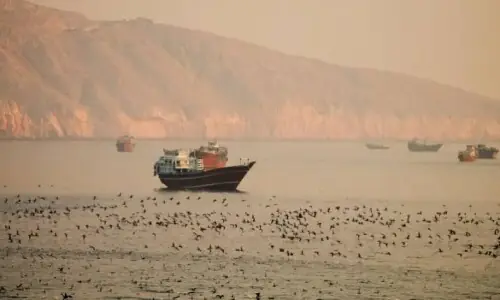
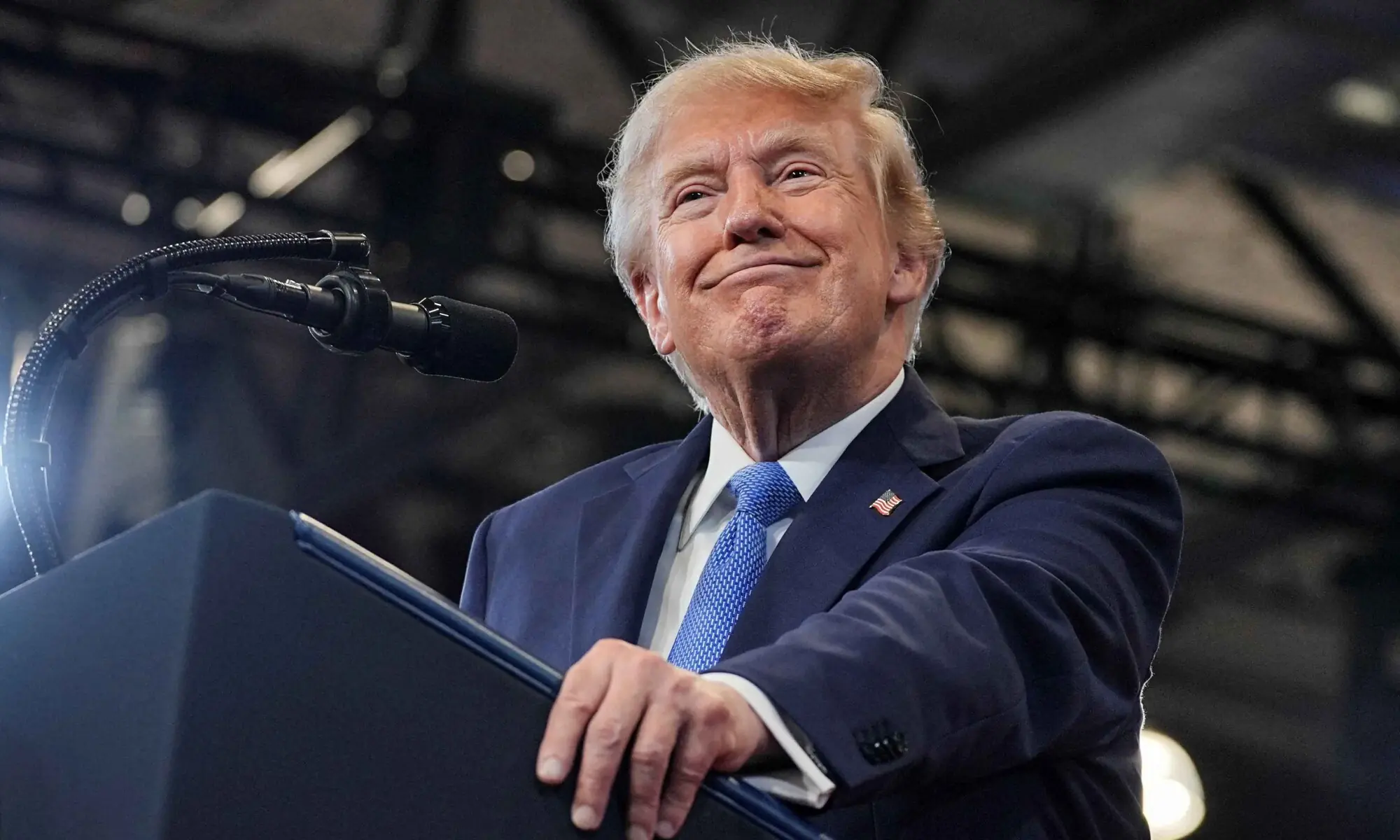
GARDEN CITY: US President Donald Trump said on Friday that he would “soon” declare the strategic Strait of Hormuz a US territory once Iran is defeated, even as fresh attacks on Emirati oil tankers brought maritime traffic in the vital waterway to a near standstill.
Trump’s remarks at a New York rally underscored the escalating international struggle over the narrow corridor, where a grinding stalemate of retaliatory blockades has shifted Washington’s immediate wartime focus from containing Iran’s nuclear programme to preventing an energy crisis that could hit Americans at the pump.
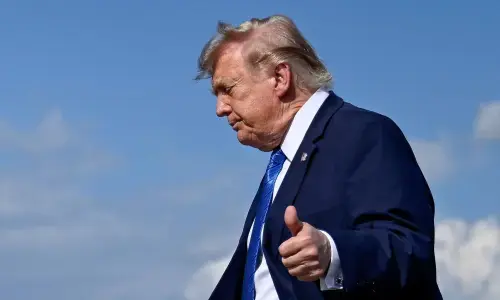
“After we finish defeating Iran, which is being very badly defeated — pretty soon I’ll be declaring the Hormuz Strait a territory of the United States,” Trump said with a chuckle during an appearance at a police academy in New York state. “It’s true.”
“We have the blockade. No ships get through unless we want them to,” Trump told a cheering crowd of supporters and police.
He urged Americans to accept slightly higher gasoline prices as the cost of preventing Iran from obtaining a nuclear weapon.
Trump said Americans who had to “pay a tiny little bit more for your gasoline” should remember that this was the cost of ensuring “a very evil country” could not have a nuclear weapon.
“What we’re doing is a great service for the world, not only for ourselves … and we’re really doing a great job,” said Trump, adding he would never apologise for attacking Iran.
Meanwhile, the United Arab Emirates accused Iran on Friday of attacking two state-owned commercial vessels transiting the strategic waterway.
The UAE foreign ministry condemned what it described as a “hostile Iranian attack” on two vessels affiliated with the Abu Dhabi National Oil Company (ADNOC), saying there were no injuries.
ADNOC confirmed the vessels had been attacked on Thursday evening but said the incidents had been brought under control, according to the state news agency WAM.
Britain’s United Kingdom Maritime Trade Operations later reported two nearly identical drone strikes on tankers in the Strait of Hormuz, causing minor damage. The incidents came just days after ADNOC said three of its tankers had also been attacked in the same waterway.
The latest attacks appeared to have an immediate impact on shipping. Vessel-tracking data from Kpler suggested traffic through the strait had slowed dramatically on Friday, with only two non-oil vessels passing through and no crude shipments visible.
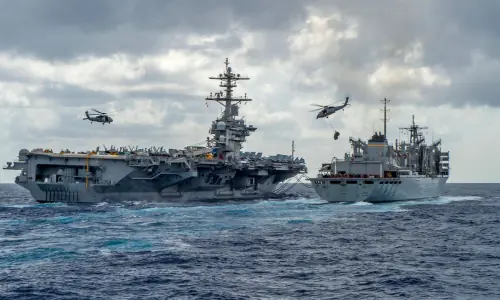
With commercial transit severely disrupted, the United States vowed to maintain an indefinite naval blockade of Iranian ports and unleash historic economic pressure on Tehran.
“Indefinitely the United States Navy can maintain a blockade like that because we’ll rotate ships in and out, as we have, and we’ll continue to,” US Defence Secretary Pete Hegseth told reporters during a trip to Panama.
Iran, meanwhile, has sought to use the strait as its strongest bargaining chip. By disrupting commercial shipping and threatening global oil supplies, Tehran has shifted the conflict from the battlefield to the world’s energy markets.
“Alongside the threat to energy infrastructure in the region, Iran’s ability to restrict shipping through the strait is its main source of leverage in negotiations,” said Torbjorn Solvedt, principal Middle East analyst with risk intelligence company Verisk Maplecroft.
That leverage was reflected in unusually candid remarks from Vice-President JD Vance, who acknowledged that keeping fuel prices low had overtaken Iran’s nuclear ambitions as Washington’s most immediate concern.
“I know that oil is down today and it’s way down from the highs in the early days of the conflict,” Vance said on Fox News. “That’s goal number one — keep oil and gas cheap for Americans all over our country. And then obviously goal number two is ensure that Iran never gets a nuclear weapon.”
Meanwhile, Treasury Secretary Scott Bessent said the United States planned to inflict more financial damage on Iran, threatening to subject Tehran to economic isolation “like the world has never seen before”.
“Watch this space for more announcements next week because we are going to apply measures like have never been seen in the history of economic isolation of a country,” he said in an interview.
The remarks underscored how dramatically the conflict has evolved. What began as a campaign centred on preventing Iran from obtaining a nuclear weapon — consistently touted by President Donald Trump as his main reason for the war — has become a struggle over control of the Strait of Hormuz, the narrow maritime corridor through which roughly a fifth of the world’s oil supply normally passes.
Iran has imposed an effective blockade of the strait, frequently attacking commercial ships, and wants to charge users for passage, which the US fiercely opposes.
The US military reportedly burnt through stockpiles of costly high-tech missiles and other weapons in the months since the war started at a cost of billions and is now reportedly running low, limiting Trump’s options for resuming attacks on Iran.
Meanwhile, Trump struggles to find a way out of the war and shies away from resuming large-scale attacks.
The 80-year-old president’s approval rating is plummeting, the war is unpopular among Americans, and midterm elections are approaching in November. Republicans fear Trump and the war, which has caused gasoline prices to soar, will cost them their control of Congress.
Only days ago Trump had said an agreement to reopen the strait was imminent. Now his administration seems to be digging in, with diplomacy on hold as he hopes economic suffering will cause Iran to yield.
Regional powers condemned the latest attacks. Saudi Arabia denounced the targeting of two oil tankers belonging to the United Arab Emirates’ Abu Dhabi National Oil Company in the Strait of Hormuz.
In a statement, Riyadh’s foreign ministry said the attacks constitute “an unacceptable recurrence of Iranian attacks targeting commercial vessels and tankers”.
“The kingdom holds Iran fully responsible for the consequences of persisting in these attacks, demanding an immediate halt to these violations and adherence to relevant international laws,” the statement added.
Qatar also strongly condemned an “Iranian attack” targeting two Emirati oil tankers belonging to ADNOC which were crossing the Strait of Hormuz, deeming it “a severe violation of international law, the freedom of maritime navigation, and a clear violation of UN Security Council resolution 2817”.
In a statement, the foreign ministry reiterated Doha’s “firm rejection of using the Strait of Hormuz as leverage”, demanding that it be opened unconditionally.
The regional conflict showed little sign of easing elsewhere. In Yemen, the country’s internationally recognised government said the Houthis fired six ballistic missiles at the Red Sea port of Mocha on Friday, killing eight people in an attack it said targeted civilian infrastructure and national assets.
The Houthis, for their part, said they had targeted what they described as Saudi-backed military build-ups, weapons depots and warships belonging to Saudi-backed forces and “mercenaries” in Mocha with a barrage of ballistic missiles, claiming to have destroyed boats and military equipment.
The group also said it had carried out a separate cross-border attack. The Houthi-run SABA news agency quoted a military source as saying the rebels had targeted an Aramco facility in the Saudi city of Najran with a drone.
The source said the strike was in response to what it described as Saudi military aircraft entering airspace over the northeastern part of Yemen’s Saada governorate. It did not identify the specific facility targeted or say whether it had been hit.
There was no immediate confirmation from Saudi authorities or Aramco.
Published in Dawn, August 15th, 2026