Game Review — Marvel’s Wolverine just doesn't make the cut
TL;DR
Pros:
-
Wolverine is a comic-accurate short king
-
Highly detailed facial capture and character models
-
Visceral, stylish and satisfying combat … at first
-
Voice acting is decent, even if the material isn’t
-
Stunning set-pieces
Cons:
-
Why is there a blue line permanently guiding me through a level with only one path?
-
Combat can feel barebones and repetitive at times
-
“Hidden” collectables are exposed by very invasive visual cues
-
Stealth and boss fights are awful
Score: 4/7 — Not worth buying at full price. Play it when it eventually lands on PlayStation Plus.
Reviewed on PlayStation 5; available on PlayStation 5
Price: Rs18,000 (physical copy), $69.99 (PlayStation Store)
All screenshots and GIFs captured by author.
If you’ve read my reviews, you’ll likely know I’m a big DC and Marvel fan, and games like Batman Arkham and the Spider-Man series hold a special place in my heart. I wrote a two-parter on Lego Batman for heaven’s sake.
So when Insomniac, the minds behind PlayStation’s Spider-Man series, announced that they were developing a Wolverine game, I was genuinely hyped. Spider-Man gave us engaging combat, vibrant worlds to explore and, especially in the case of the first title, amazing stories to tell. It was a first-party Sony exclusive. What could go wrong?
As it so happens, quite a fair bit.
Marvel’s Wolverine has a decent foundation, but there’s barely any meat on the adamantium skeleton. A solid, but shallow, combat system gets repetitive, and the game is extremely linear, but for some reason, it doesn’t believe you can proceed through missions without a blue line festooned upon the screen guiding you.
While that description may sound harsh, let’s be clear: Wolverine isn’t a bad game; there’s far worse stuff out there that you and I have played. But this is absolutely not worth the full price of admission.
Let’s jump in and see why, motorbike and all.
Skin deep?
Off the bat, I want to talk about what the game gets right before diving into what brings it down, starting with the presentation.
The game looks genuinely impressive, with Tokyo, the Canadian wilderness and Madripoor’s Lowtown neighbourhood truly standing out with unique aesthetics and a high level of environmental detail.
The same goes for (some) of the character models, with incredible facial capture which depicts microexpressions and the likenesses of the actors perfectly; at times, the characters are genuinely lifelike.
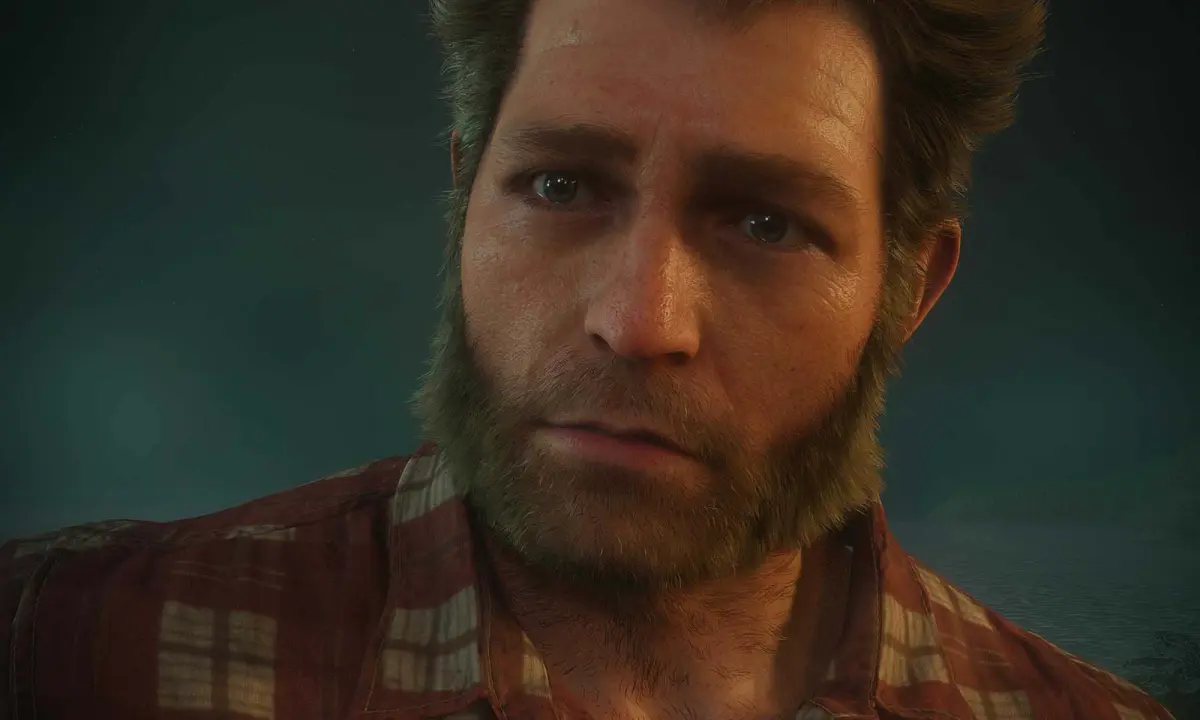
They’re also voiced well; Liam McIntyre does an especially good job as the eponymous hero and capturing his anger, and whenever he roars, I definitely hear Logan, aka Wolverine.
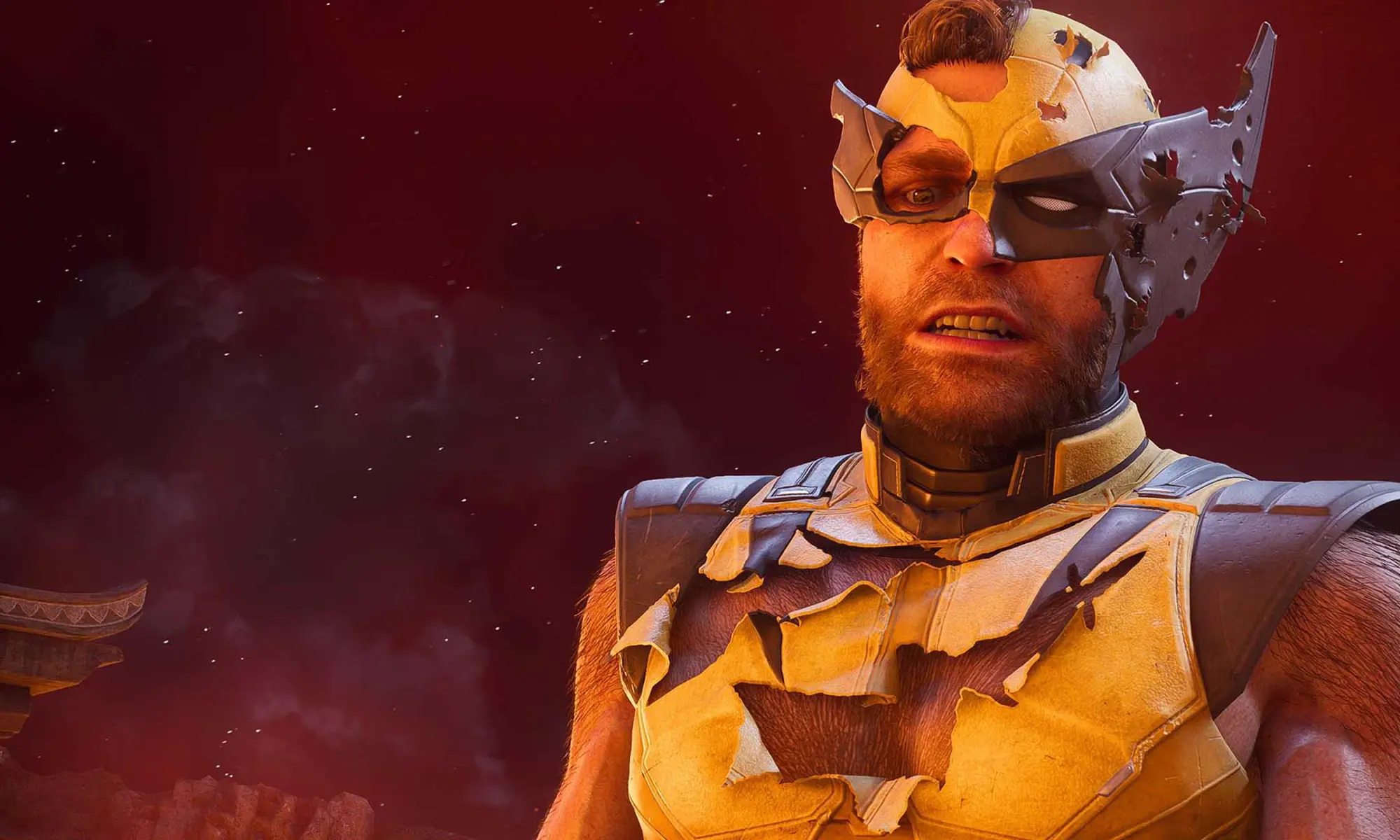
He also stands out in particular due to his appearance after being injured.
When taking damage, his skin will be removed, exposing the adamantium skeleton underneath, much like the Uncaged Edition of 2009’s X-Men Origins: Wolverine but with higher visual fidelity. Wounds also heal in real-time, not only looking cool but also showcasing the iconic mutant’s powers.
Scripted sequences in the story are bombastic and, as the game goes on, massive in scale. Sequences with a plane over Tokyo and a casino stood out to me in particular.
So it looks superb, as one would expect from a full-price AAA blockbuster, but that only goes skin deep. Once you dig through the first layer, it becomes clear that the presentation is as wide as an ocean but as deep as a puddle.
The sprawling Canadian wilderness is limited to only two or three very linear paths. Invisible walls prevent you from exploring Tokyo’s Shinjuku area. Locations like labs look absolutely soulless compared to the others. The first mission sees you claw your way through one, and I did not like the aesthetic, or lack thereof.
Granted, this was never meant to be an open-world game, but a bit more freedom to explore wouldn’t have hurt, and no-go areas could have been blocked off with objects rather than an invisible barrier. The strongest points of the level design are when you can explore and find hidden collectables, or items like documents and voice recordings to flesh out the game’s lore.
Rip and tear, until it is done
The game’s combat system is something that initially had me excited, and indeed, it’s a solid system with a strong foundation. But upon getting the claws out, one thing becomes very clear: the combat system is a restricted version of Spider-Man’s.
You just spam the square button to hit enemies, circle to dodge and L1 to parry attacks, just like Spider-Man. Obviously, it’s far more brutal due to the game’s darker tone, but provides an incredible spectacle, especially against the backdrop of some of the game’s environments.
This is aided by destructible props that will completely fall to pieces once Logan goes to town. Wooden boards, street carts and other objects will completely splinter apart. Everything put together is absolutely glorious.
It is genuinely fun at times to engage groups of enemies in this game, building up the rage meter and using special moves, with Logan’s roar and the clash of steel filling your ears. It’s in these moments where the game is at its strongest.
However, the combat quickly gets repetitive due to Wolverine’s limited moveset. Spider-Man had the benefit of variety, through launching enemies into the air and fighting them, or using a wide arsenal of gadgets. This variation is largely absent in Wolverine, where you rely on two move combinations and six special abilities.
Pressing the exact same button combination ad nauseam made combat a monotonous slog, especially in the late-game, when enemies soaked up a lot more damage.
There are only six special moves — you can equip four at a time — and they take a lot of time to recharge between uses, meaning you’ll press ‘square, square, square, triangle’ (that’s the main combo) and hope that enemies don’t interrupt the animation for the final hit.
This could have been fixed in several different ways, I reckon: more button combinations for variation, a faster recharge time for special moves, Wolverine moving on all fours like in Deadpool and Wolverine, or even using a different control scheme.
I recently finished The Blood of Dawnwalker (let us know if you want a review) and found that game’s directional parry and strike system a lot of fun to engage with. Maybe something like that would fit here?
The stealth isn’t much fun either; it feels tacked on like an afterthought rather than a key mechanic in the game. Enemies spot you very quickly, and takedown animations are so long that you end up getting spotted anyway. When presented with stealth encounters, I’d opt for open combat because it was less awful.
This is emblematic of why Wolverine is a disappointment: there’s a very solid foundation, but Insomniac, playing it safe, have elected against building anything unique or crazy on top of it. Even the boss fights are extremely basic and predictable, designed for the lowest common denominator.
I’m with stupid
By far, the biggest complaint I have is with the game’s excessive handholding and use of invasive visual cues to guide the player through levels.
Sometimes, Logan has to track a character by their scent, which is where this issue is at its most prevalent. As a visual demonstration of his enhanced senses, this is fine. But as I said earlier, these levels are very linear in design, with only one or two paths to go down. I don’t need a permanent blue or red line showing me where to go when there’s only one path.
I have to assume the game was designed with the most casual of casual gamers in mind, but even those players would be able to navigate the levels without the scent trail. Thankfully, these can be turned off, but that only came in with a post-launch patch.
It gets worse. There are hidden crates with materials to craft suits in most levels, which you need to find using an audio cue that gets louder when looking in the crate’s direction. Now this is fine, but a giant blue marker reveals the box’s position before the audio cues even kick in, rendering the entire system redundant. Why would I listen for the cue when it’ll be flashed on my screen anyway?
At best, this is counter-productive, and at worst, it insults the player’s intelligence. Overall, it’s very frustrating. I hope this sort of thing does not become a pattern in future titles.
What a nightmare
In terms of side content, Marvel’s Wolverine features Nightmare Doors “hidden” in each of the game’s levels. I use “hidden” in quotes because they’re about as hidden as a billboard on the nearest chaurangi. Giant purple roots sprout out of the ground — accompanied by audio-visual cues and controller vibrations — pointing you to a door that appears out of thin air.
Behind these doors lie challenges for the player to complete, which will unlock parts of Wolverine’s memory, and these take the form of combat challenges, traversal time trials and gauntlets.
Gauntlets are one of the highlights of the game. These are challenges with up to 25 waves of various enemies that you need to survive. I loved these because, unlike the restrictive story mode, they allow you to get creative with the game’s combat system.
The campaign didn’t offer enough scenarios to use Wolverine’s abilities against large groups of enemies, but here, there are no restrictions. You face plenty of foes of varying difficulty, allowing you to be more tactical rather than just spamming the square button. The presence of three or four heavy enemies may prompt you to focus on the 15 other smaller ones, for example.
Despite my complaints with the combat, I genuinely enjoyed these and looked forward to playing them. They also fit the character perfectly.
Just a bit dull, really
To sum up, Wolverine is a game that’s been largely declawed. What frustrates me most is that there is a structure for a good game here somewhere; but Insomniac played it safe and buried it under layers of handholding that leave it boring.
There are good moments in the story and the gauntlet challenges rule, but they aren’t enough to justify spending Rs18,000, especially not with other games out now that are (or might be) better.
It isn’t even that single-player linear action games have a place in the market — look at 007: First Light — the issue lies in the core of the game’s design: it’s restrictive, doesn’t want to grant player agency and relies on references, flashy visuals and the studio’s prior laurels to keep itself afloat.
Given how expensive games are getting, and considering what we’re due to get during the rest of this holiday season, I can’t recommend buying this at full price. If you’re really desperate, get it on sale, or wait for it to come onto the PlayStation Plus Game Catalogue within a year or so.
As I said, this is not a bad game. It’s just a very disappointing one.
Mikail Ahmed Shaikh is a senior sub-editor on Dawn’s online news desk with four years of experience in the field. His reporting focuses on defence, security, and terrorism, and he also reviews video games for the publication. He can be found on X at @MikailAhmedShaikh.