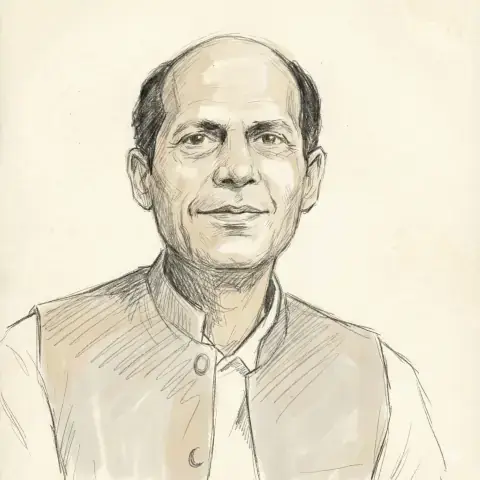
• Barrister Ali Zafar says it aims to stabilise ‘poverty, hardship and hopelessness’
• JUI-F opposes tobacco tax
ISLAMABAD: PTI parliamentary leader in the Senate, Barrister Syed Ali Zafar, on Tuesday rejected the federal budget for 2026-27, describing it as a “budget of broken promises” built on “eleven deadly sins” that would neither provide relief to citizens nor create a foundation for sustainable economic growth.
Opening the debate on the budget in the Senate, Mr Zafar said every budget should pursue two objectives: ensuring benefits reach ordinary people and presenting a credible strategy for economic growth and job creation.
“Unfortunately, this budget fails to achieve either objective. It neither provides meaningful relief to the common citizen nor sets out a credible long-term plan for economic development and job creation,” he said.
The PTI senator argued that the government had neglected 11 critical areas, including a long-term growth strategy, industrialisation, agriculture, exports, youth employment, information technology, energy reforms, water conservation, climate change, population management and education.
Mr Zafar accused the government of repeatedly relying on IMF-backed measures and tax increases instead of addressing structural weaknesses in the economy.
He attributed the government’s failure to incompetence rather than bad intentions.
“One conclusion is unavoidable: the government’s inability to solve the country’s fundamental problems stems from incompetence. The persistent failure to identify and address the root causes reflects not merely poor policy choices but a broader failure of governance and economic management,” he said.
According to him, earlier budgets blamed the PTI and later the IMF, while the latest one shifted responsibility to external factors.
“The real reasons for the government’s failure are much closer to home. The first is incompetence. The second is the absence of political stability,” he said.
The senator claimed the government had produced “10 records of failure”, including record inflation, public debt, debt servicing, unemployment, electricity tariffs, food prices, brain drain, poverty, government expenditure and declining living standards.
He also cited seven indicators that he said were deteriorating: exports, living standards, economic growth, investment, the rupee’s value, business confidence and government credibility.
Criticising the taxation policy, he said the burden continued to fall disproportionately on salaried individuals while other sectors remained outside the tax net.
“The government appears determined to squeeze the last drop of blood from the bones of the salaried class,” he remarked.
Rejecting the government’s description of the budget as a stabilisation budget, he said: “Yes, this is indeed a stabilisation budget — but it is a stabilisation of poverty, a stabilisation of hardship and a stabilisation of the hopelessness faced by ordinary people.”
He also welcomed efforts towards an Iran-US ceasefire and said Pakistan could take pride in facilitating dialogue, while cautioning that the peace process should not be undermined.
Speaking in the debate, JUI-F parliamentary leader Maulana Attaur Rehman criticised the budget and linked economic stability to improvements in law and order, particularly in Khyber Pakhtunkhwa and Balochistan. He said the security situation in Khyber Pakhtunkhwa had deteriorated and that a sense of despair was spreading among the people.
The JUI-F leader also opposed the imposition of tax on tobacco, a major crop in parts of Khyber Pakhtunkhwa. “We want the country’s security and development,” he said.
Referring to political issues, Mr Rehman alleged interference in democratic processes and claimed elections in Gilgit-Baltistan had been rigged, adding that political parties should not be denied a level playing field.
“We are with the country, but our people should not be made despairing. The country’s policies should be in line with the wishes of our people,” he said.
Published in Dawn, June 17th, 2026