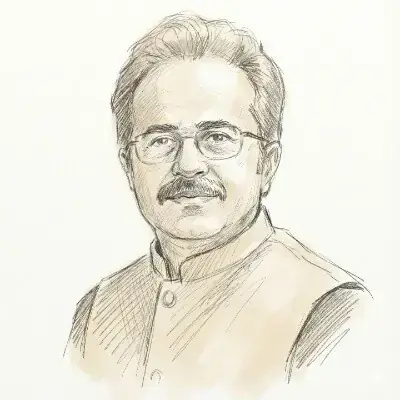
ISLAMABAD: Foreign Secretary Aizaz Ahmed Chaudhry on Thursday said legal diplomacy may be a tool to improve relations between Pakistan and India.
Speaking at a seminar organised by the Research Society of International Law, he said though disputes between the two countries may be political in nature, their solutions can also be sought legally.
International law expert and organiser of the seminar, Ahmer Bilal Soofi, earlier said the trial of seven Pakistani suspects in Mumbai attacks, the Pathankot airbase and the Samjhota Express attack cases, the arrest of RAW official Kalbhushan Yadav, the dispute over rivers and Kashmir were the bones of contention between Pakistan and India.
Mr Soofi said the Mumbai, Pathankot and Samjhota Express attacks cases as well as the arrest of the RAW agent were purely legal in the sense that these were being dealt in accordance with the penal code and the Code of Criminal Procedure.
Foreign secretary says though disputes between two countries may be political, their solutions can be sought legally
He said the government of Pakistan arrested the seven suspects in the Mumbai attacks case and submitted a challan to the Anti-Terrorism Court.
He said under the UNSC resolutions, Pakistan was under an obligation to arrest the suspects and prosecute them in accordance with the law. But the conviction of the suspects is the job of the judge and the state cannot be compelled for a favourable outcome, he added.
Likewise, the government also took serious note of the Pathankot attack and the prime minister chaired a meeting on the issue. He said after the registration of the FIR, a joint investigation team visited India but its members were not given ample time to collect evidence there.
In the RAW agent case, the FIR has been registered and he may be tried under the Pakistan Army Act or the Criminal Procedure Code.
Mr Soofi, however, raised a question over the trial of the accused in the Samjhota Express attack case.
He said 22 witnesses had turned hostile as they had changed their earlier statements recorded with the investigation agency which would benefit them.
He said the water dispute and Kashmir issue may be dealt legally as both were subject to either international conventions or the resolutions of the United Nations Security Council (UNSC).
He said both Pakistan and India were signatories to the Paris Climate Change Conference Agreement 2016 and the UN Framework Convention on Climate Change 1992 which deal with the water-related issues.
Moreover, he said, there is the Indus Water Treaty 1960, which defined the share of both the countries in the rivers.
Regarding Kashmir, the legal expert said since there were 18 resolutions of the UNSC on the issue along with the Simla Agreement and Article 103 of the UN Charter, this may be dealt with through legal diplomacy.
About the Mumbai attacks case, the foreign secretary claimed that since the Indian government was not providing evidence to the Pakistani prosecution, the outcome of the trial had delayed.
“Pakistani government is seeking more material from India,” he said, adding in September last year he wrote a letter to his Indian counterpart regarding the provision of the material but to no avail.
“It appears that the Indian government wants the trial to remain inconclusive so it can continue maligning Pakistan in the international community and the UN,” he said.
On the question of a crackdown on non-state actors, Attorney General of Pakistan Ashtar Ausaf Ali said the government was bringing certain amendments to the anti-terror law besides revamping the criminal justice system to make it more difficult for non-state actors to use Pakistani soil against its own people or any other country.
Published in Dawn, September 2nd, 2016