Garbage dumping along Khanpur canal jeopardises Pindi, Islamabad’s water safety
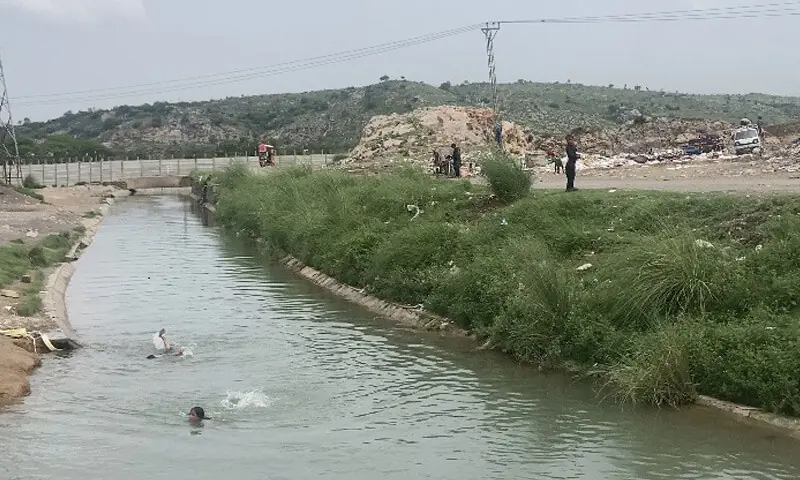

TAXILA: Alarm bells are ringing over the safety of drinking water for millions of residents of the twin cities of Rawalpindi and Islamabad as solid waste is being routinely dumped on the bank of a canal near the Margalla Hills that flows between Khanpur Dam and Islamabad.
An on-ground visit indicated that the stretch of the canal banks passing between the Margalla Hills has allegedly become a convenient dumping site, where domestic and commercial garbage, plastic waste and other refuse are routinely discarded along and into the watercourse.
According to officials of the Rawalpindi Waste Management Company deployed at the site, an average of 60 tons of waste is dumped at the site daily. They said there was no record of nearby housing societies and cantonment areas, as they have their own dumping mechanisms at the same site.
Environmental experts fear that unchecked dumping is gradually transforming a strategic water channel into a pollution hotspot, while the authorities responsible for protecting public water resources have yet to carry out or make public any comprehensive scientific assessment of the canal’s water quality.
RWMC officials deployed at the site say an average of 60 tons of waste is disposed of at the site daily
The concerns have become more acute with the arrival of the monsoon season. Experts say heavy rainfall washes accumulated garbage, contaminated runoff and other waste from dumping sites directly into the canal. They warn that every spell of rain increases the volume of pollutants entering the watercourse, potentially heightening the risk of contamination of water flowing downstream.
They further alleged that strong winds frequently blow plastic bags, disposable packaging and other lightweight waste into the canal, while unchecked bathing and washing at several locations add another source of pollution to a water channel linked to the public drinking water system.
Social activist Kalsoom Choudhry questioned why no visible enforcement action had been taken despite the canal’s strategic importance. She asked whether any department was regularly monitoring the water quality or inspecting the canal to prevent illegal dumping before contamination reaches a level that could pose a threat to public health.
Munaza Peerzada, chairperson of a local NGO, said that where a watercourse linked to public drinking water is exposed to uncontrolled waste disposal, continuous scientific monitoring and timely laboratory analysis are essential to detect contamination and minimise potential risks to consumers.
Residents demanded that the Punjab Environmental Protection Agency (EPA), Water and Sanitation Agency (Wasa), district administration, Capital Development Authority (CDA) and other relevant departments immediately collect water samples from multiple points of the canal and conduct independent laboratory testing. They also called for the results to be released publicly so consumers can be assured about the safety of the water reaching their homes.
They further urged the authorities to identify those responsible for the alleged illegal dumping, prosecute violators under environmental laws and establish permanent monitoring mechanisms, surveillance and effective waste management systems along the canal. They also demanded an immediate ban on bathing and washing in the canal and the installation of protective barriers and warning signs to safeguard the watercourse.
Residents warned that delaying action until contamination is scientifically established would be a costly mistake, arguing that preventive measures should be taken now rather than after a potential public health crisis emerges.
When contacted, Shazia Maryum, Assistant Director of the Punjab Environmental Protection Agency (EPA), said the department would take all relevant stakeholders on board to address the issue. She said coordinated action would be initiated to remove the dumping site near the canal and ensure that no hazardous material enters the watercourse.
“Our priority is to eliminate the dumping site and ensure that no hazardous material finds its way into the canal, endangering the lives of millions of people in Rawalpindi and Islamabad who depend on this water source,” she said.
When contacted, Shehryar Khan, Operations Manager of the Rawalpindi Waste Management Company, refused to comment on the dumping of the city’s solid waste around the canal, saying, “I am not allowed to comment on the issue as our media wing is entitled to speak to the media.” This correspondent contacted Amir Khan, the company’s public relations officer, who also refused to comment on the issue and responded saying, “I am here to issue only press releases and have nothing to do with operational matters.”
Published in Dawn, August 16th, 2026