0
0

Normal life in Gilgit has remained severely disturbed for the past few days due to an upsurge in Shia-Sunni violence. Rival groups traded heavy fire on Wednesday while some houses in the town were also torched. The arson and exchange of fire was reportedly sparked by a series of earlier 'targeted' killings, giving the violence a sectarian hue.
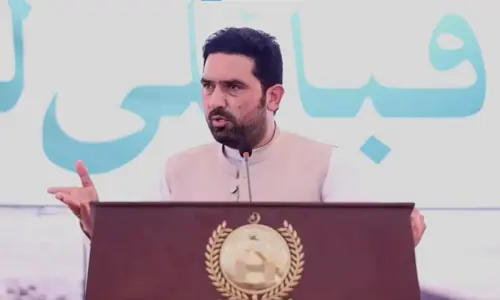
News reports suggest that law-enforcement personnel arrived only after the groups had stopped trading fire. Some observers have said the killings were the result of a personal feud; however, in a country where ethnic and sectarian hatreds are never far from the surface, the slightest disagreement can be given a communal colour. What is disturbing is that the Gilgit-Baltistan chief minister has said some police officials were involved in fanning sectarianism; two policemen were among those taken into custody on Thursday in connection with the investigation of a murder case.
The Gilgit-Baltistan region is no stranger to sectarian turmoil. Though the area has experienced bouts of communal violence since the 1980s, the killing of Shia scholar Agha Ziauddin Rizvi in 2005 worsened the situation, with the last five years marked by periods of intermittent calm followed by spells of violence. Some observers are of the view that the violence in Gilgit-Baltistan is simply a reflection of the ugly wave of sectarianism engulfing the rest of Pakistan. While creating an atmosphere of sectarian harmony and tolerance might be a complicated, long-drawn-out exercise, what the Gilgit-Baltistan government must do is to ensure supremacy of the law and safeguard the lives and property of the citizens. Its efforts must be supplemented by the centre and the security apparatus. The government should take firm action against those who disturb the peace, while those functionaries of the state found involved in fanning hatred should be taken to task.